Economists now overwhelmingly expect Turkey’s central bank to cut its policy rate by 100 basis points to 36% this month, a move that would extend the easing cycle and shape borrowing costs, the lira and inflation expectations heading into year-end.
Turkey Central Bank Seen Cutting Rate to 36%

In a CNBC-e survey of 20 economists and institutions, only one respondent expected no change at the Oct. 22 meeting, underscoring how firmly markets and analysts have settled on a cut despite Turkey’s still-sensitive inflation backdrop.
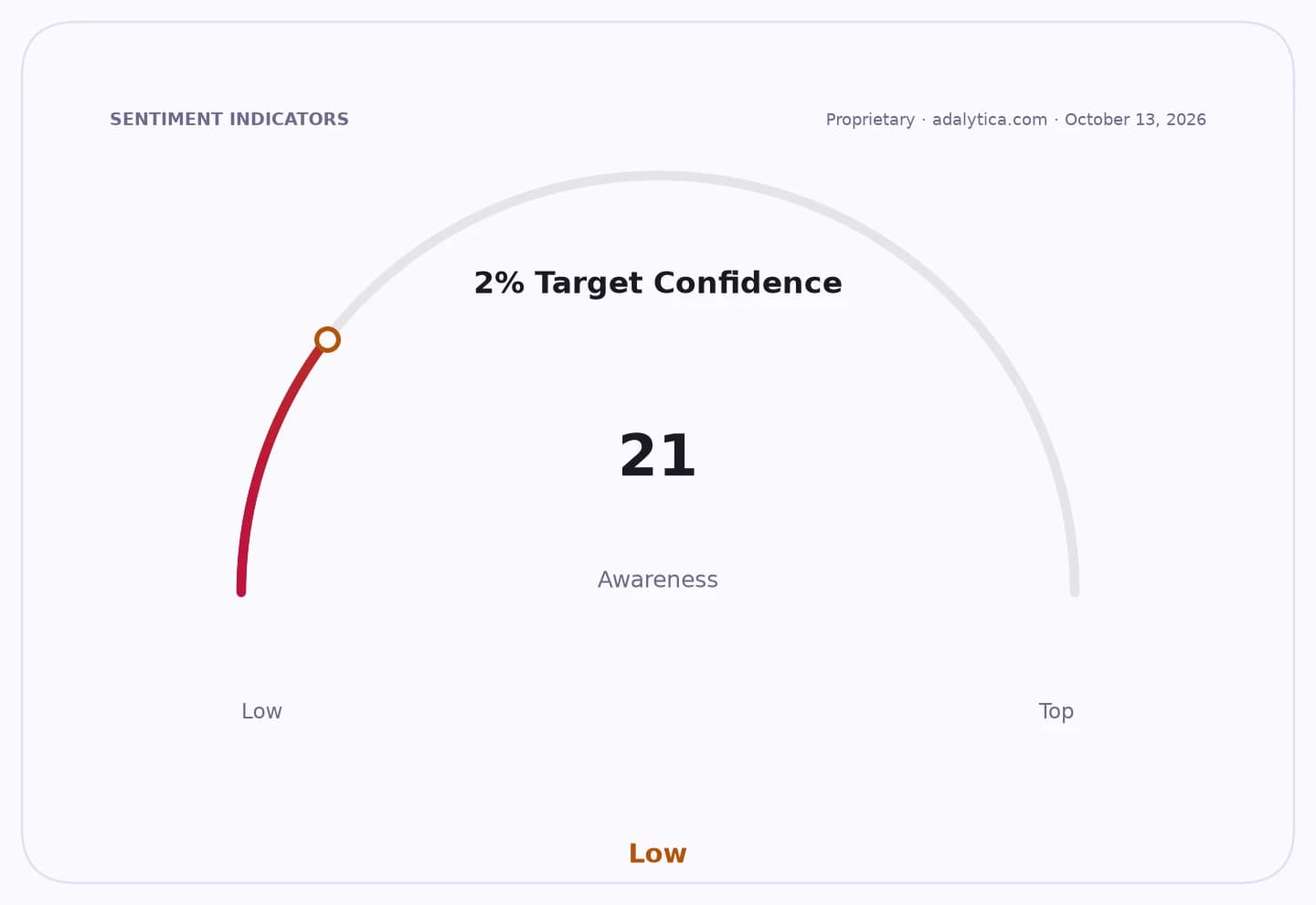
Sentiment IndicatorsⓘProprietary · adalytica.com · October 17, 2026
This is a snapshot — live sentiment, awareness and momentum for 130+ markets update continuously in the dashboard.Open AlphaPulse

The median forecast points to a policy rate of 35% by end-2026 and 29% by end-2027, suggesting participants see room for a sustained loosening path if price pressures continue to cool. The average estimate for October was 36.05%, with calls ranging from 36% to 37%.
For investors, the expected decision matters well beyond local-rate traders. A smaller policy rate typically feeds through to lower lira funding costs, affects demand for Turkish government debt and can shift flows in and out of the currency and equities, especially when global risk appetite is already fragile.

That fragility is visible in market signals around risk assets and inflation. The lira has been trading near 49.5 per dollar, while Treasury yields remain elevated by historical standards, with the U.S. 10-year around 5.1% and the 2-year near 4.8%, a backdrop that keeps emerging-market carry trades sensitive to any surprise from Ankara.
The policy decision, due at 2 p.m. local time on Thursday, Oct. 22, will be closely watched for the size of the cut and for any language on the pace of easing into the final meeting of the year on Dec. 10. A larger-than-expected move could pressure the currency further, while a cautious cut may disappoint borrowers and growth-sensitive sectors.
| Entity | Gains | Losses |
|---|---|---|
| Turkish borrowers | ▲Lower financing costs | ▼ |
| Turkish banks | ▲Loan growth potential | ▼Margin pressure |
| Turkish lira | ▲ | ▼Possible pressure from easing |
| Government bond investors | ▲ | ▼Higher rate volatility |