In Türkiye’s streams, a lone prospector can still pull 3 to 5 grams of gold a day, but the real investment story is that the country’s gold wealth is being left behind by a lack of organized extraction, infrastructure and capital.
Türkiye Gold Sector Lacks Scale and Infrastructure
That matters because gold is not just a store of value in a high-rate, geopolitically tense world — it is also a strategic resource that rewards whoever can move from artisanal scavenging to industrial recovery. The gap between a few grams a day in a creek bed and tonnes a year from a properly built plant is where the economic opportunity sits. Türkiye may have gold in the ground and in its waterways, but the bottleneck is know-how, equipment and scale.
The narrative is captured by Emre Aydın, who turned a childhood hobby into a full-time trade after leaving the military. He says he now consistently extracts 3 to 4 grams a day, sometimes 4 to 5 grams, and can average roughly 0.5 kilogram to 1 kilogram a year depending on field intensity. He also says he and his team have built their own machines, ranging from 10-ton to 100-ton systems, and spend about five days a week in the field.
That is a small-business reality with larger macro implications. Aydın’s model is essentially a proof of concept for Türkiye’s underdeveloped gold field: there is mineral potential, but the country is still operating at a highly fragmented, labor-intensive end of the spectrum. He points to Bursa, İnegöl and Orhaneli as especially promising, arguing that Türkiye’s geology is more favorable than the level of exploration suggests. If that is right, the market is underestimating the upstream buildout opportunity — not only in mining, but in the equipment, processing and services chain that makes production viable.
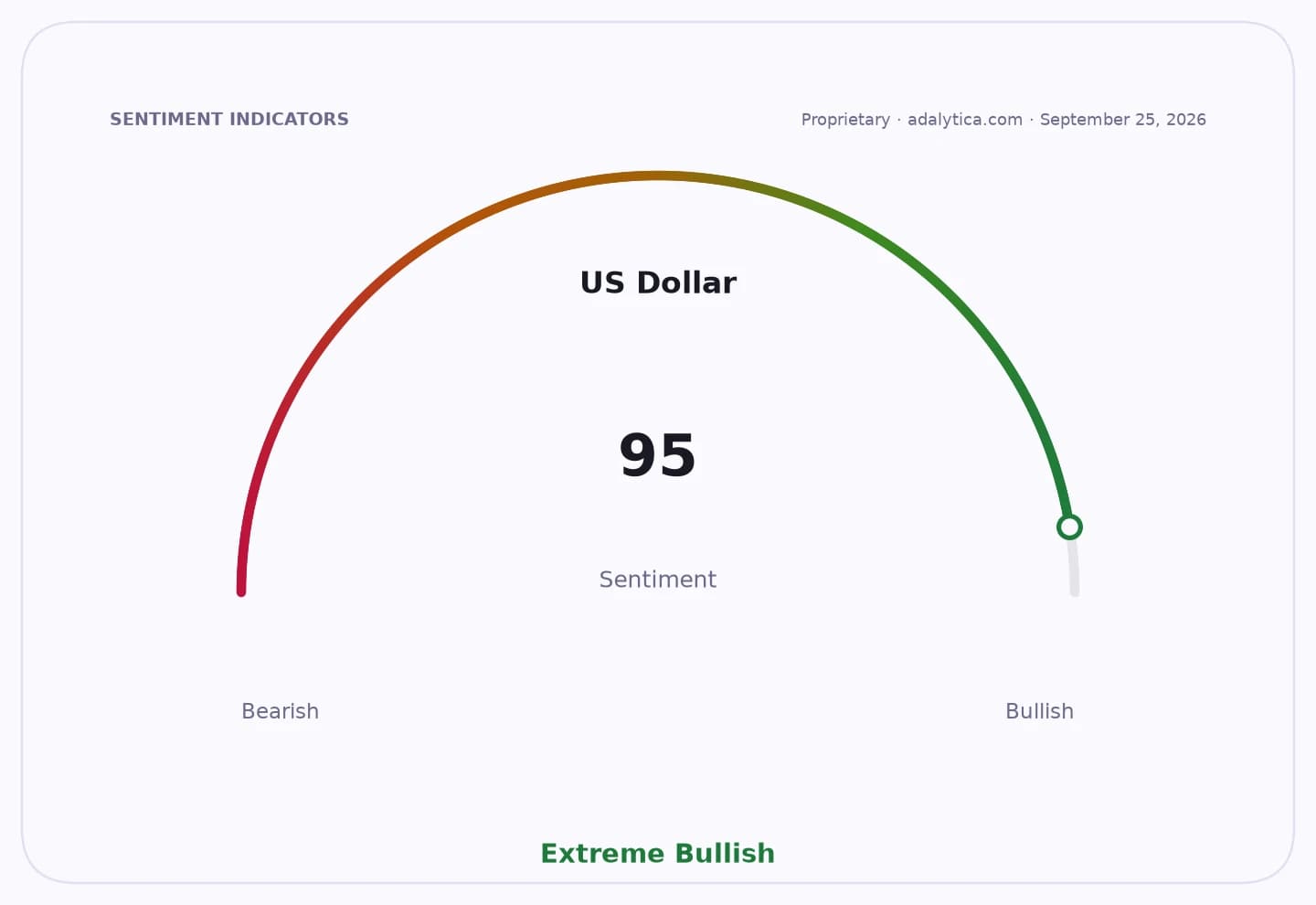
For investors, the relevant lesson is that the highest-return exposure is often not the speck of gold in the stream, but the toll roads around it. In a world where gold prices remain elevated and the U.S. dollar is showing renewed greed in Adalytica.com’s trade signals, marginal producers and new projects can quickly become economic if they can lift recovery rates and lower unit costs. That is exactly why the larger listed miners matter: firms such as Newmont and Anglogold have the balance sheet, scale and processing discipline to turn geology into cash flow, even as artisanal operators struggle with inefficiency and seasonality.
The second-order effect is even more important. If Türkiye’s gold sector begins to formalize, the winners will be machine makers, processing specialists, logistics providers and established miners with local partnerships. The losers are small operators stuck at creek-bed scale, where a few grams a day may provide a living but not a business that can compound. This is a story about resource abundance colliding with execution scarcity — and that is usually where the best long-term investments are born.
The key takeaway: the market should not focus on how little gold one prospector digs up each day, but on how much value can be unlocked when that same geological endowment is industrialized. That is where the asymmetric opportunity lies.
| Entity | Gains | Losses |
|---|---|---|
| Türkiye’s gold sector | ▲Formalized production potential | ▼Fragmented artisanal output |
| Machine builders / plant makers | ▲Demand for 10-100 ton systems | ▼Small manual panners |
| Newmont, Anglogold and peers | ▲Higher gold-price leverage | ▼High-cost marginal producers |
| Local regions like Bursa, İnegöl, Orhaneli | ▲Mining investment and jobs | ▼Underexplored mineral assets |