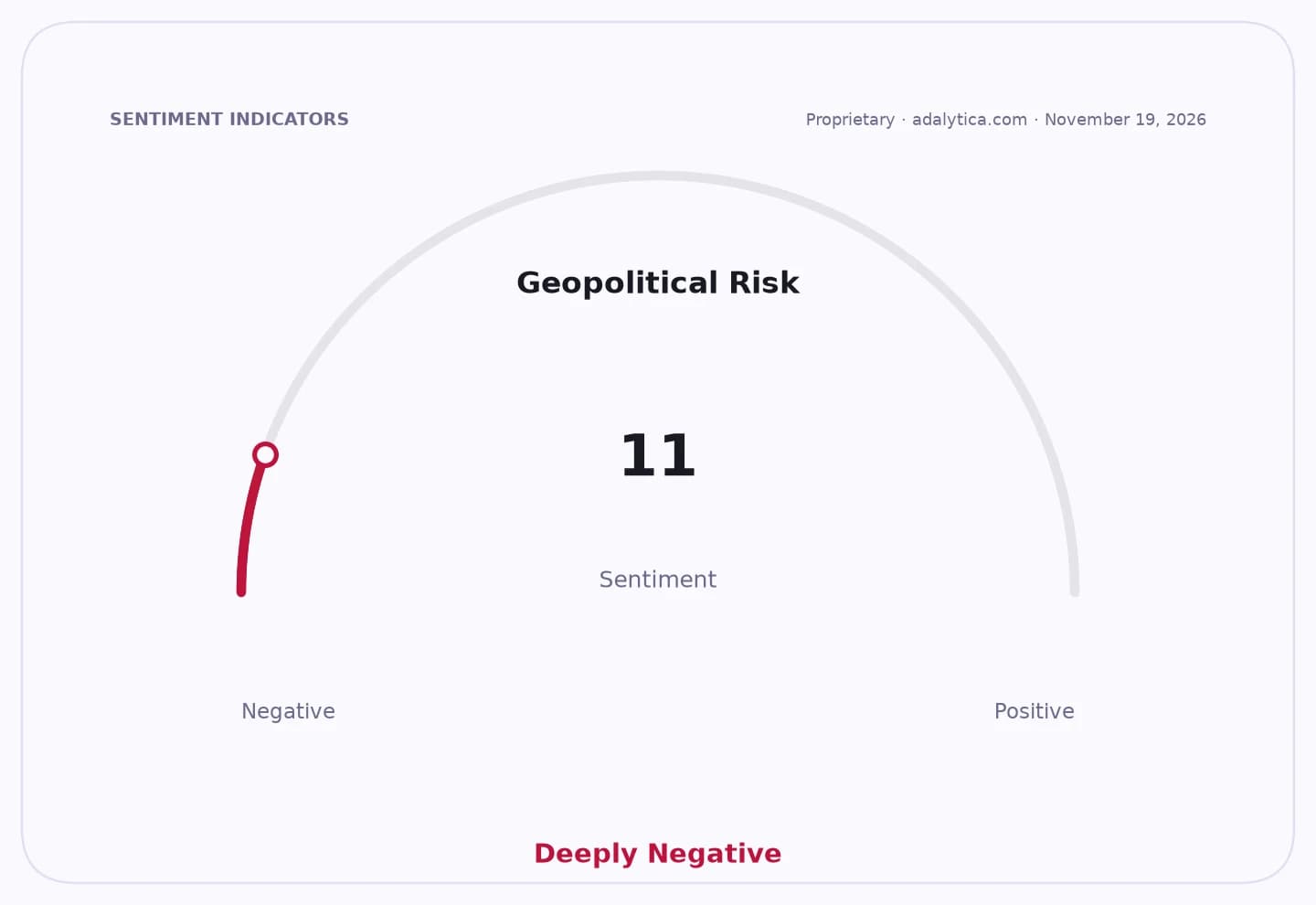
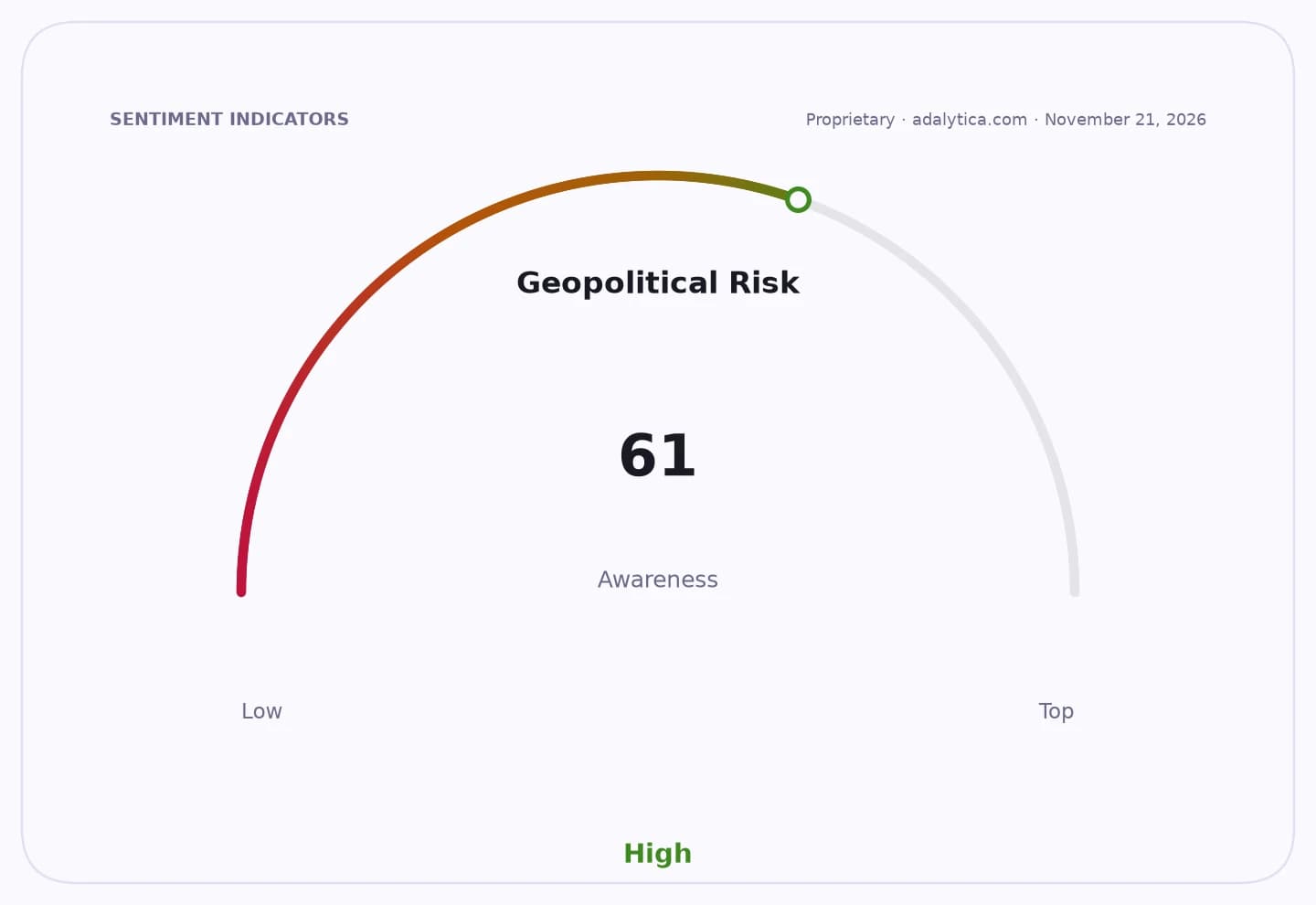
UEFA’s official stance on Russia lands against a jump in global fear gauges, a reminder that geopolitical isolation in sport remains part of a broader market backdrop still sensitive to conflict risk and sanctions spillover.
UEFA Keeps Russia Out of European Competitions
The decision matters economically because football’s governing body is not just making a sporting call; it is reinforcing the commercial exclusion of Russian teams from Europe’s top competitions, with implications for broadcasting rights, sponsorship flows and cross-border event planning. In a market already wary of geopolitical shocks, the move keeps Russia on the sidelines of a lucrative sports ecosystem that feeds European TV packages, ticket sales and advertising demand.
Sentiment Indicators
That context comes as Adalytica’s Global Stability Sentiment gauge sits at 25, or “Fear,” after extreme swings over the past week, underscoring how quickly investors are repricing geopolitical risk. The stock tape shows that sensitivity in sports-linked names as well, with Disney and Comcast both trading higher over the latest sessions even as traders weigh the durability of live-sports-driven revenue against softer linear-TV trends.
Disney closed at $122.36 on Wednesday, above its 50-day moving average of $110.07 and 200-day average of $103.55, while Comcast ended at $25.24, also above its 50-day average of $22.80 but still below its 200-day average of $25.21. Both names have benefited from investor interest in sports and streaming assets, but their filings continue to warn that legacy television audiences are shrinking, leaving live rights and premium events more important to the earnings mix.
For UEFA, the Russia decision keeps pressure on any path back to normal participation and leaves European football’s commercial structure aligned with broader Western policy. For investors, the key is that geopolitical exclusions are not just symbolic: they can reshape media inventory, sponsor exposure and the timing of future revenue recoveries if relations ever thaw.
The next catalyst is whether UEFA’s latest position feeds into broader European sports policy or triggers further market attention around rights-holders and broadcasters tied to premium football inventory.
| Entity | Gains | Losses |
|---|---|---|
| UEFA | ▲policy consistency | ▼Russian re-entry prospects |
| Western broadcasters | ▲stable rights framework | ▼lost Russia-linked inventory |
| Sports sponsors | ▲lower sanction risk | ▼narrower market access |
| Russian clubs/teams | ▲none | ▼exclusion from competition |