Savers in the UK face higher tax bills from April 2027 as the government lifts the rate on savings income and tightens cash ISA rules, a move that raises the cost of holding cash just as households are still navigating a high-rate, high-inflation environment.
UK savings tax rises and cash ISA cap in 2027

The change matters because it directly reduces the after-tax return on deposits and money-market balances for millions of households, while reinforcing the Treasury’s push to pull more savings into taxable channels or longer-term investments. For basic-rate taxpayers, the tax on savings income above the personal savings allowance will rise to 22% from 20%; for higher-rate taxpayers it will increase to 42% from 40%; and for additional-rate taxpayers to 47% from 45%. That comes on top of a separate rise in dividend tax rates that took effect in April 2026, extending the squeeze on income-oriented savers.
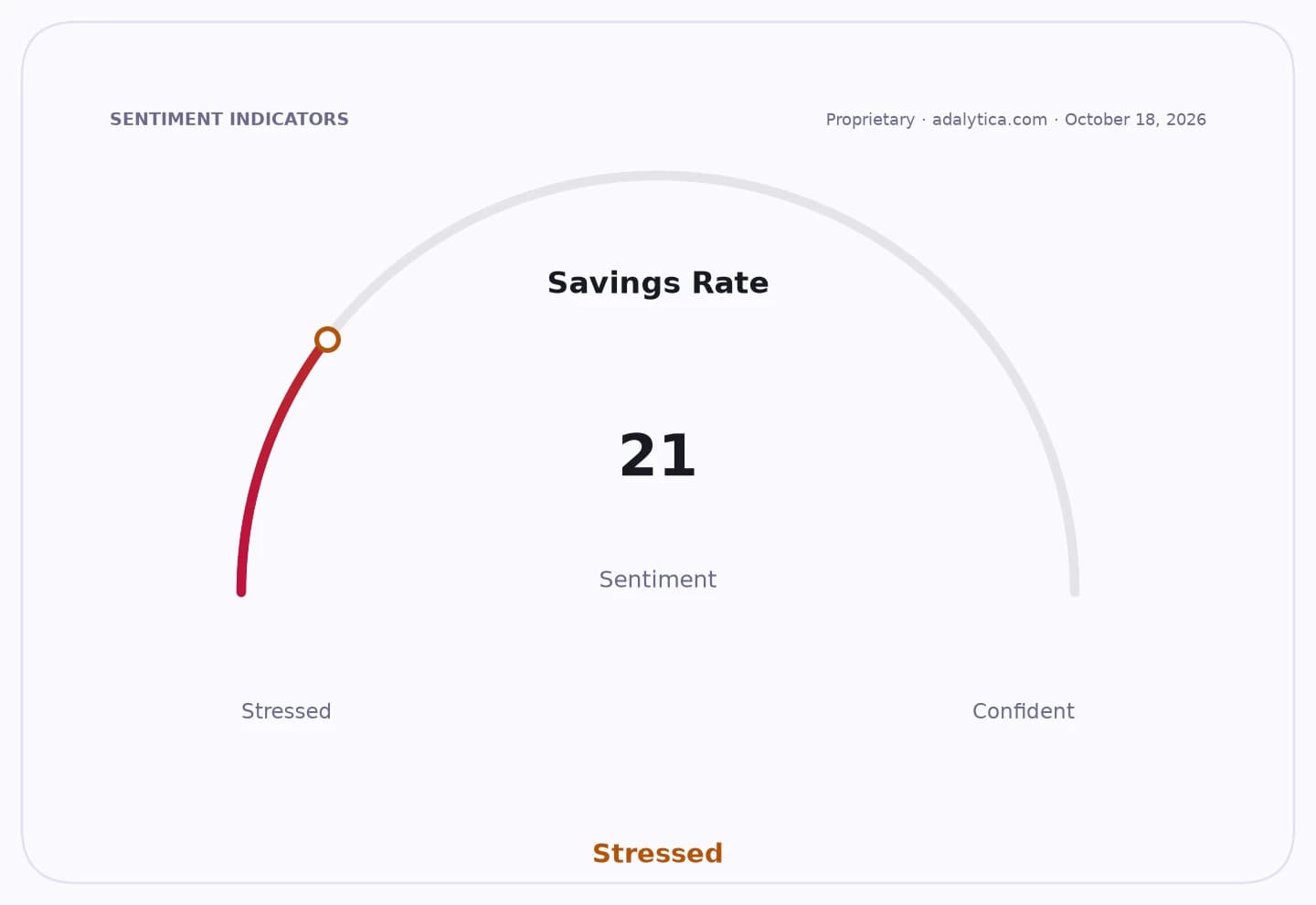
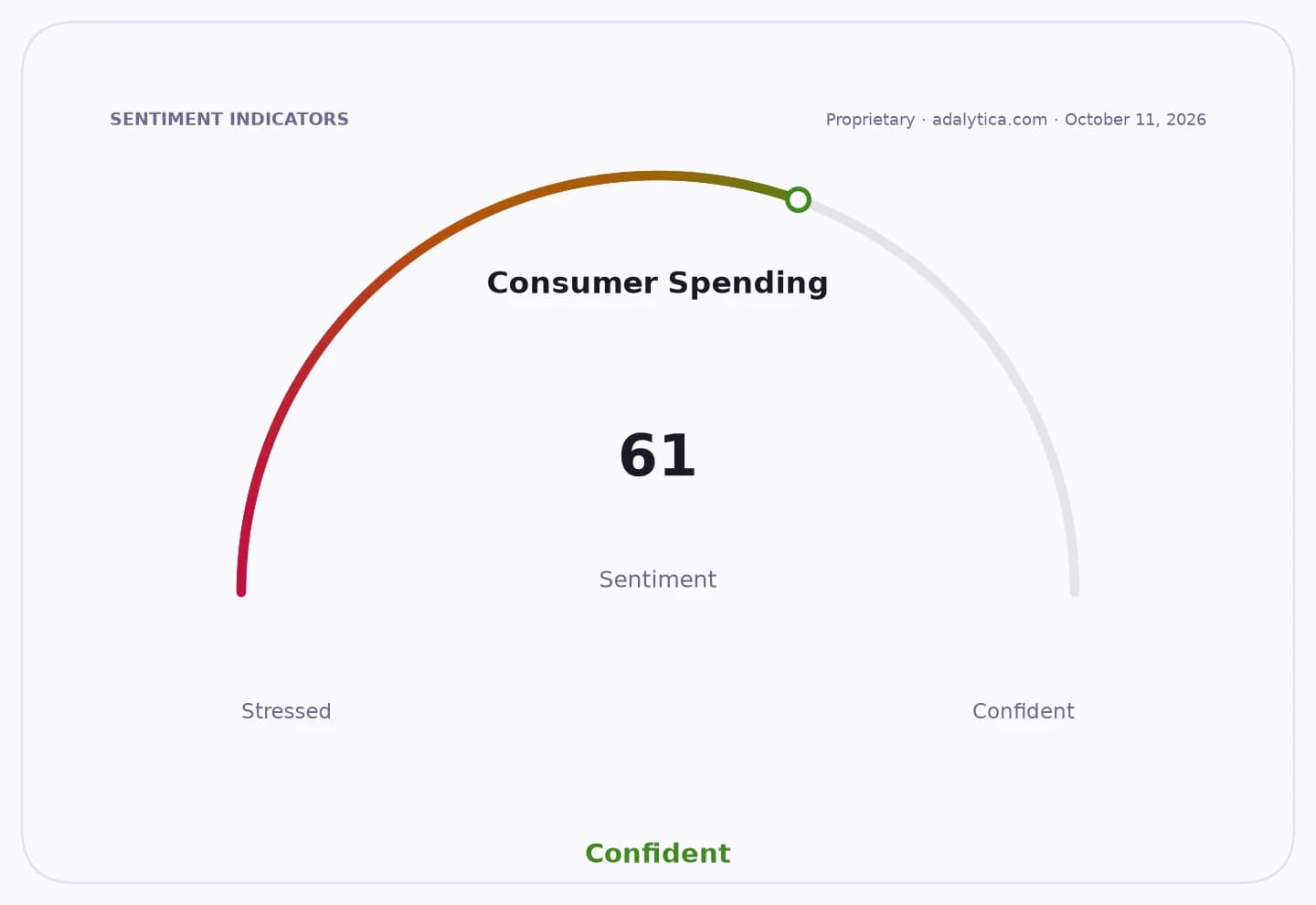
Sentiment IndicatorsⓘProprietary · adalytica.com · October 20, 2026
This is a snapshot — live sentiment, awareness and momentum for 130+ markets update continuously in the dashboard.Open AlphaPulse

The personal savings allowance is unchanged at £1,000 for basic-rate taxpayers and £500 for higher-rate taxpayers, which means the hit is concentrated on those with substantial cash balances or those living off interest income. On a £2,000 interest bill, a basic-rate taxpayer would face £220 of tax rather than £200, while a higher-rate taxpayer would pay £630 instead of £600. Additional-rate taxpayers would see the bill rise to £940 from £900. The sums are modest on a single account, but they compound across households with larger emergency funds, retirees relying on deposit income and savers who have kept money in cash while rates were elevated.
The policy also narrows the appeal of cash ISAs for younger savers. While the overall ISA allowance remains £20,000, the amount under-65s can pay into cash ISAs is due to be capped at £12,000 a year from April 2027, leaving older savers with the full cash ISA limit. That keeps cash ISAs tax-free, but it makes them less flexible as a shelter for people trying to protect interest income from the taxman. Banks such as Paragon are already advising customers to estimate expected interest and move surplus cash into ISAs where possible.
For investors, the shift has broader implications than household tax math. It supports the case for banks and wealth managers that can sell ISA products, managed portfolios and advice, while pressuring cash-heavy savers to seek yield elsewhere. It also fits a wider fiscal backdrop in which governments are trying to raise revenue without overtly targeting wage income, using investment and savings taxation to close budget gaps. That tends to be supportive for equities over time if households redirect money out of deposits and into funds, but it also risks dampening consumer confidence and spending among savers who see their net income reduced.
The bull case for the policy is straightforward: it is a cleaner, less distortionary way to lift revenue than broad-based income tax rises, and it may accelerate the move from low-return cash into productive investment. The bear case is that it punishes prudence at a time when households are still cautious, and it could leave savers with less buffer just as inflation and interest-rate expectations remain volatile. The main catalyst now is whether households respond by shifting more money into ISAs and investment products, or simply absorb another rise in the tax burden on cash.
| Entity | Gains | Losses |
|---|---|---|
| HM Treasury | ▲Higher tax revenue | ▼Anger from savers |
| Banks and wealth managers | ▲More ISA demand | ▼Plain cash deposits |
| Cash savers under 65 | ▲Tax-free shelter options | ▼Higher tax on interest |
| Retirees and higher-rate taxpayers | ▲Existing ISA protections | ▼Larger after-tax income hit |