Malaysia’s Budget 2027 is trying to do two jobs at once: cushion households from persistent cost-of-living pressure while shifting fiscal policy toward productivity, private-sector investment and longer-term growth. That balance matters because the budget comes at a time when consumer spending remains fragile, business costs are elevated and the government still has to keep its deficit on a narrowing path.
Malaysia Budget 2027 Targets Relief and Growth
The budget sets federal expenditure at RM459.8 billion, with RM376.8 billion for operating spending and RM83 billion for development. Revenue is projected to rise 4.7% to RM380.8 billion, while the fiscal deficit target narrows to 3.3% of GDP from 3.6%. For investors, that combination points to a government still willing to support demand, but increasingly conscious that repeated broad-based stimulus would carry a fiscal cost.
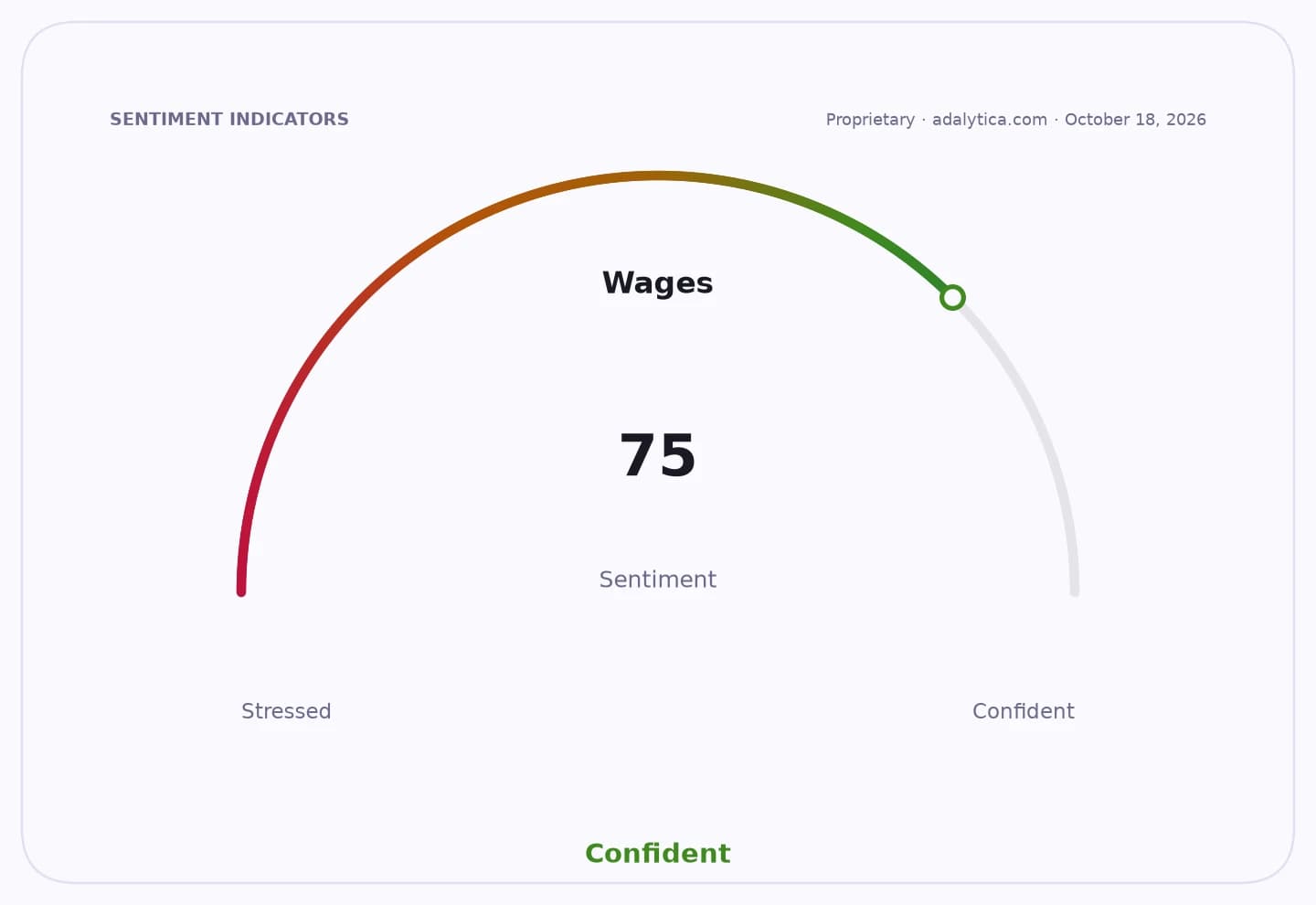
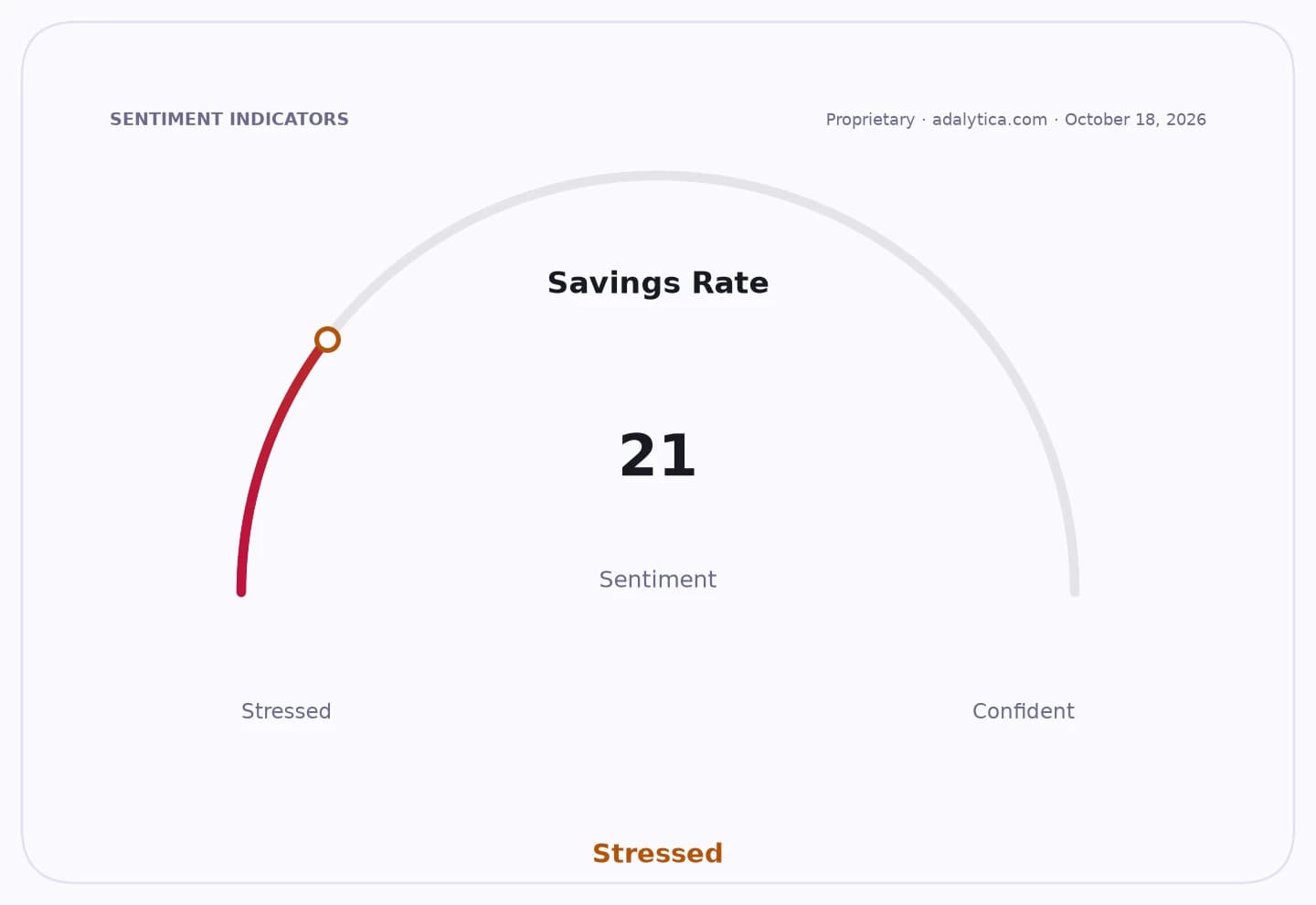
Sentiment IndicatorsⓘProprietary · adalytica.com · October 18, 2026
This is a snapshot — live sentiment, awareness and momentum for 130+ markets update continuously in the dashboard.Open AlphaPulse
The most immediate relief is aimed at households. Funding for Sumbangan Tunai Rahmah and Sumbangan Asas Rahmah rises to RM16 billion from RM15 billion, while income tax relief increases to RM12,000 from RM9,000, alongside cuts in selected personal tax rates. Those measures should help preserve disposable income for lower- and middle-income families facing higher housing, transport, education and healthcare costs. In macro terms, that can support consumption at a time when domestic demand is being asked to do more of the work.
But the more important shift for medium-term growth is the attempt to move beyond redistribution toward capability-building. The budget includes RM6.6 billion in microfinancing, RM450 million for start-up investments and RM32 billion in business-financing guarantees, signaling continued support for small firms that often struggle to access credit. Proposed tax reductions for eligible micro, small and medium enterprises should also improve retained earnings and reinvestment capacity.
That matters because Malaysia’s growth ambitions now depend less on headline investment announcements than on whether local firms can climb the value chain. Foreign direct investment into semiconductors, advanced manufacturing and digital services is helpful, but the domestic payoff depends on supplier development, skills transfer and local participation in higher-value activities. If financing is channeled into firms that can scale, export and adopt new technology, the budget could strengthen domestic industrial depth. If not, the gains will remain concentrated in foreign-owned enclaves.
The energy and infrastructure component of the budget carries similar economic logic. The extension of green investment tax incentives to 2030 gives companies more certainty over capital spending, while Tenaga Nasional’s planned RM15 billion grid investment is relevant to Malaysia’s push into advanced manufacturing and digital infrastructure, both of which depend on reliable power. For investors in utilities, engineering and clean-energy equipment, that suggests a steadier pipeline of projects. For the broader economy, it supports the supply conditions needed for higher-value production.
The budget also reinforces the case that labor-market policy is now central to competitiveness. Investment in education, technical and vocational training, digital skills and artificial intelligence is meant to narrow the mismatch between the workers firms need and the workers they can find. Programs such as Bakat MADANI, which targets 30,000 employment opportunities, are part of that effort. The economic payoff will depend on whether training translates into higher productivity and better-paying jobs rather than short-lived placement numbers.
For markets, the budget is less about a sudden macro re-rating than about incremental improvement in policy credibility. A smaller deficit target, still-manageable spending growth and a clearer emphasis on productivity should help support Malaysia’s sovereign narrative. At the same time, the reliance on targeted household transfers rather than sweeping consumption subsidies suggests the government is still trying to avoid a permanent expansion in recurrent spending.
The risk is execution. Malaysia has often had sound policy intent but uneven delivery. If financing fails to reach productive firms, if infrastructure projects slip, or if skills programs do not align with employer demand, the growth dividend will be limited. Conversely, if the government can turn budget allocations into higher real incomes, stronger local suppliers and more efficient energy and logistics networks, Budget 2027 could mark a step toward a more durable growth model.
For investors, the key takeaway is that the budget supports consumption in the near term, but its real importance lies in whether it can shift Malaysia from relief-driven policy to an investment-led expansion with better margins, better jobs and a narrower fiscal deficit.
| Entity | Gains | Losses |
|---|---|---|
| Malaysian households | ▲Short-term cost relief | ▼Less room for blanket subsidies |
| MSMEs and startups | ▲Cheaper funding, tax support | ▼Pressure to prove productivity gains |
| Utilities and green-energy players | ▲Grid and clean-investment visibility | ▼Higher execution and capex demands |
| Government finances | ▲Narrower deficit path | ▼Limited flexibility if growth disappoints |