Taiwan’s opposition-backed push for a NT$20,000 cash handout has moved a step closer to becoming a flashpoint over fiscal policy, with the legislature voting to send the proposal to a second reading and cross-party talks.
Taiwan lawmakers advance NT$20,000 cash handout bill

The immediate economic issue is not the size of the payout alone, but what it says about how Taipei intends to use stronger-than-expected tax revenues and how much room the government has to support consumption without compromising budget discipline. A one-off transfer of NT$20,000 would be materially larger than the Cabinet’s NT$10,000 proposal and, if enacted, would put more money directly into households at a time when politicians are arguing over how to share the gains from Taiwan’s AI-led growth.
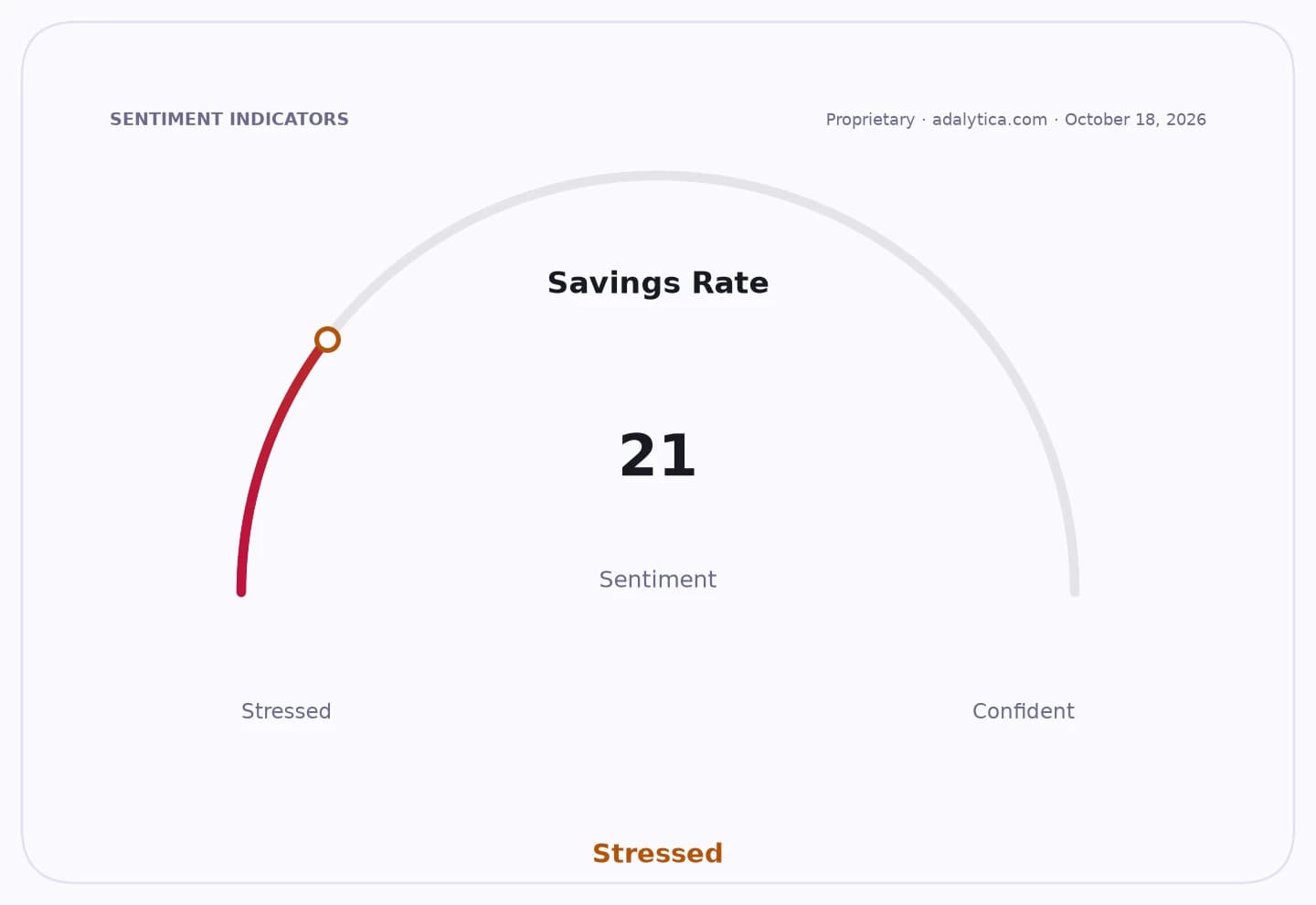
Sentiment IndicatorsⓘProprietary · adalytica.com · October 19, 2026
This is a snapshot — live sentiment, awareness and momentum for 130+ markets update continuously in the dashboard.Open AlphaPulse
Lawmakers voted 52 to 40 along party lines to advance the KMT bill, with the Taiwan People’s Party caucus abstaining. Under the current schedule, the measure could reach general consideration as early as Nov. 17, keeping the issue live ahead of local elections on Nov. 28.
The KMT argues that Taiwan’s economy is running well ahead of forecasts and that the public should receive the benefit of the revenue windfall. KMT caucus whip Fu Kun-chi said tax revenue is expected to exceed projections by more than NT$1 trillion this year, framing the handout as a return of excess collections to households and a way to lift domestic demand beyond the technology sector.
That argument matters because Taiwan’s growth has increasingly been driven by AI-related exports and semiconductor investment, leaving broader consumption and non-tech industries more exposed to policy support. A larger cash transfer could briefly lift retail sales and services activity, particularly in sectors that have not benefited as much from the technology boom. But it would also deepen the political dispute over whether one-time windfalls should be returned to voters immediately or reserved to protect fiscal flexibility.
The Cabinet has already proposed a NT$10,000 handout as part of next fiscal year’s budget, with spokesperson Michelle Lee urging the legislature and executive branch to pursue the same goal through a legally and constitutionally sound process. The government wants the budget reviewed quickly so payments can be made before the Lunar New Year, while also preserving funding for a separate monthly child allowance.
That sets up a broader contest between fiscal pragmatism and political spending pressure. Democratic Progressive Party lawmakers say the legislature should not unilaterally raise spending, while the KMT is leaning on the optics of returning surplus tax revenue to voters. The constitutional question is as important as the economic one: if the legislature expands payouts without executive agreement, it risks setting a precedent that could weaken budget planning and complicate future fiscal policy.
For investors, the direct market impact is likely to be limited unless the bill becomes part of a broader fiscal package, but the policy debate still matters. A bigger handout would support near-term consumption and could help domestically oriented companies, while also reinforcing expectations that Taiwan will keep using fiscal tools to cushion household demand. For Taiwan-focused assets, the more important takeaway is that the policy mix is becoming more politically contested even as growth remains strong.
The debate also comes at a time when Taiwan is trying to balance strong external demand, uneven domestic demand and growing pressure to show that the gains from the AI cycle are being shared more broadly. If the KMT succeeds, the message to markets will be that election-year politics can override the Cabinet’s preferred fiscal path. If the government holds the line at NT$10,000, investors may read that as a sign that Taipei still wants to preserve room for future spending rather than distributing the full revenue upside immediately.
| Entity | Gains | Losses |
|---|---|---|
| Households | ▲Larger cash transfer | ▼Delayed payout if stalled |
| KMT | ▲Electoral leverage | ▼Fiscal credibility if overreaches |
| DPP Cabinet | ▲Budget discipline | ▼Political pressure on handout size |
| Domestic retailers/services | ▲Short-term demand boost | ▼Limited if spending is capped |