Ukraine’s carrot prices have dropped for a third straight week as farmers rush to unload surplus produce, a sign that the country’s traditional vegetable market is moving from shortage toward oversupply.
Ukraine carrot prices fall for third straight week

Producers are now offering carrots at 12 to 18 hryvnias a kilogram, about 20% cheaper than a week earlier, according to EastFruit. For consumers, that is welcome relief after a period of sharp increases. For farmers, it is a margin squeeze that could get worse if they cannot clear stock before it loses quality.
That matters because this is not just a one-off price wobble. EastFruit said current carrot prices are still about 46% higher than at the start of autumn 2025, but the direction has turned decisively lower as trade activity remains weak and buyers push for discounts. The issue is especially acute for medium-grade carrots that are not suitable for long-term storage, forcing growers to sell in small batches and often at whatever price they can get.
In economic terms, the story is a reminder that even in a wartime economy, basic food markets can swing quickly when supply outruns demand. A glut of root vegetables can ease household food inflation, but it also shifts income away from farmers and traders, especially those with limited storage or bargaining power. If the market cannot absorb the excess, prices tend to stay under pressure rather than rebound quickly.
For investors, the takeaway is broader than carrots. Agricultural pricing in Ukraine is still highly sensitive to seasonal supply, logistics and storage constraints, which can create sharp swings in producer returns and consumer costs. That is why food inflation can cool unevenly even when some staples get cheaper, and why commodity-focused investors should pay attention to local oversupply signals as much as to national inflation headlines.
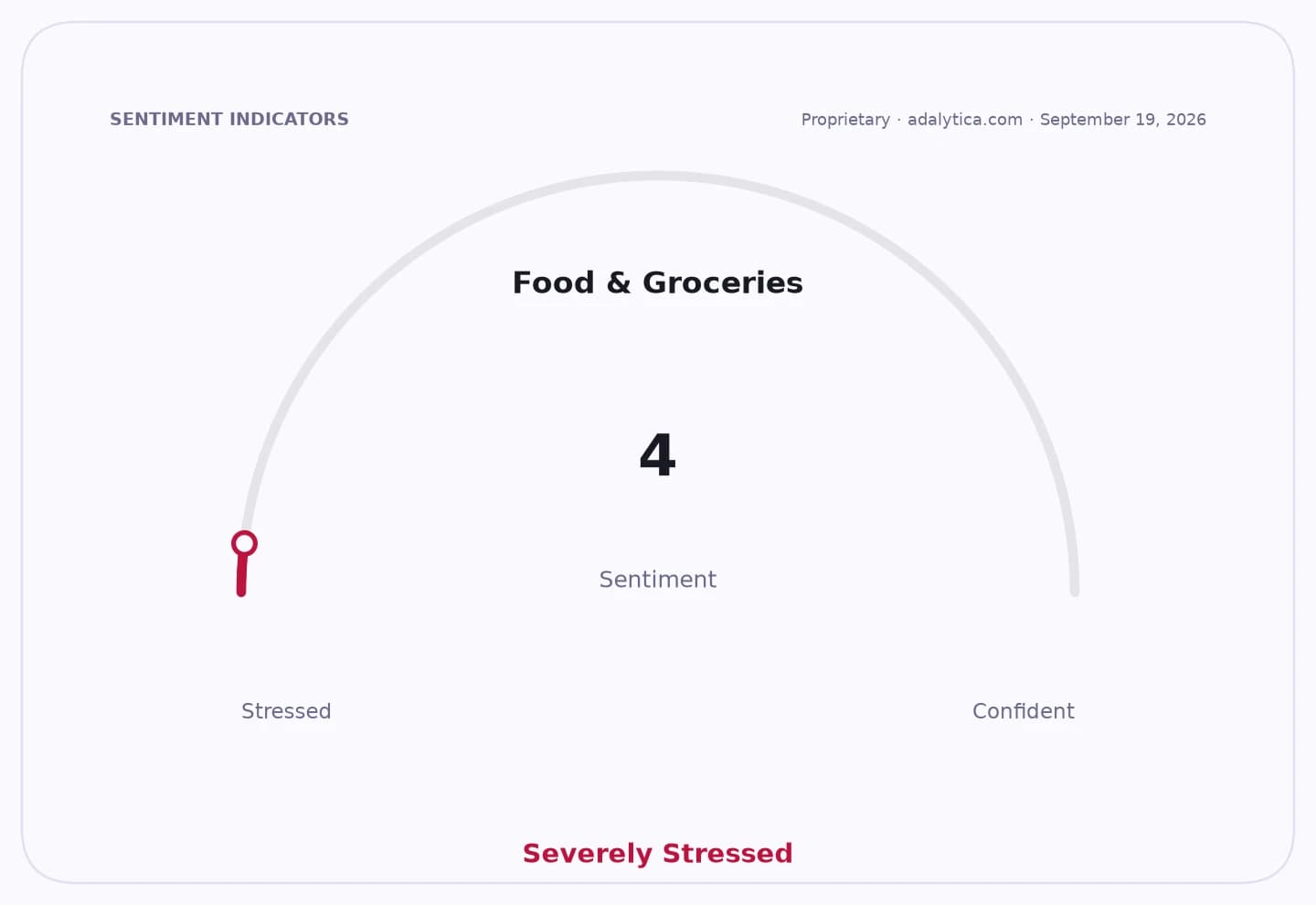
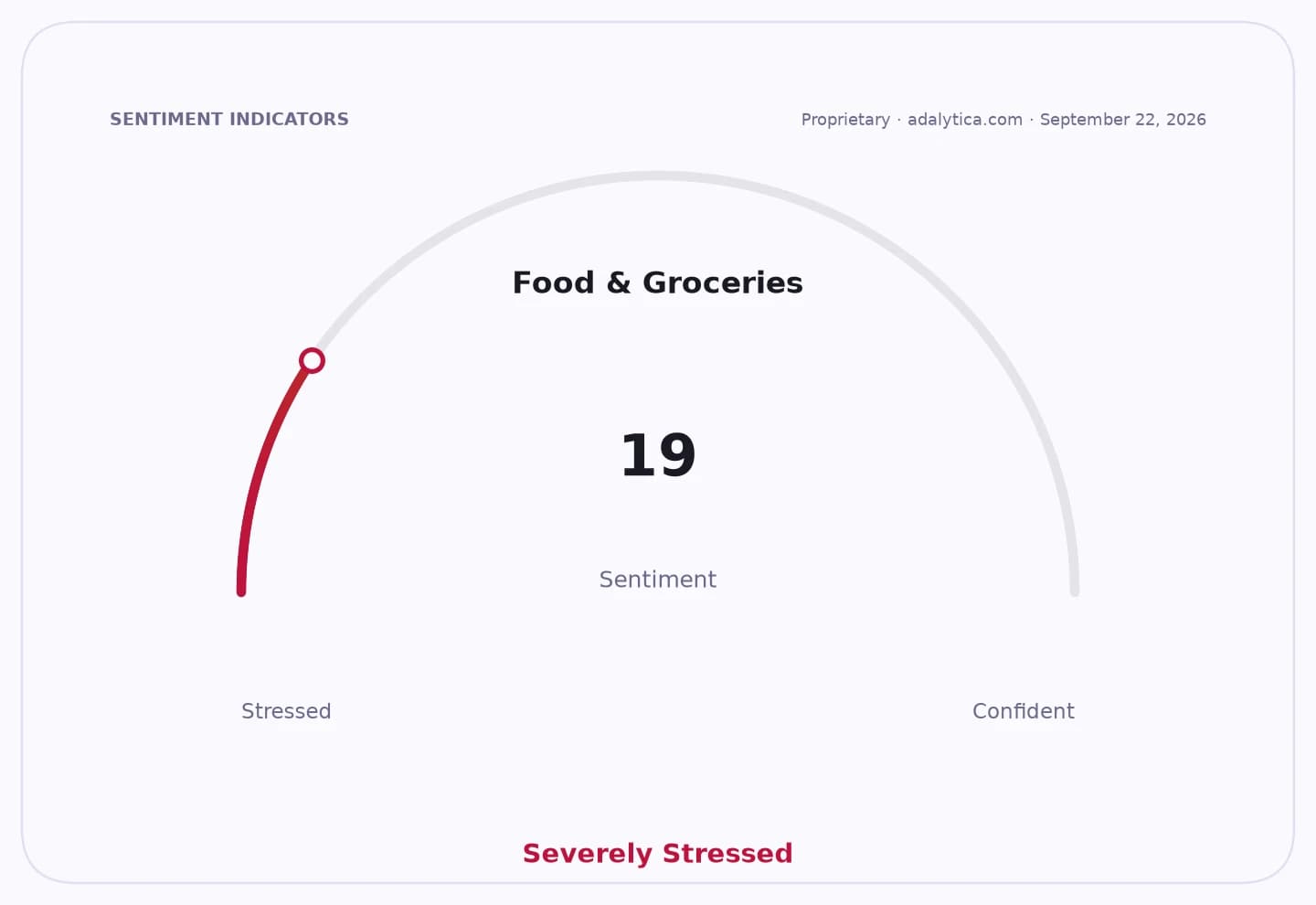
Adalytica’s Food and Grocery Spending Sentiment gauge is in extreme fear, underscoring how fragile consumer appetite can be when food prices are moving sharply in either direction. While that is not a direct market signal, it fits the broader picture: households are cautious, farmers are under pressure, and traders are waiting for demand to catch up.
The near-term outlook still looks soft. Unless sales improve or harvest volumes ease, carrot prices could remain under pressure, making this a story worth watching for anyone tracking Ukraine’s food costs, farm incomes or the next move in agricultural commodities.
| Entity | Gains | Losses |
|---|---|---|
| Consumers | ▲Lower vegetable bills | ▼None immediately |
| Farmers | ▲Faster cash turnover | ▼Lower margins |
| Traders | ▲Buying power on discounts | ▼Weak resale prices |
| Buyers/households | ▲Cheaper carrots | ▼Farm supply instability |