Russia is escalating a campaign against Ukraine’s digital backbone, striking data centers and telecom infrastructure in a move that could make it harder for Kyiv to keep its military, economy and civilian communications running under wartime pressure.
Ukraine Data Centers Hit by Russian Strikes
That matters because modern war is now fought as much through networks as through trenches. Data centers are the backbone for mobile billing, secure communications, cloud storage and drone coordination. Disrupt them, and you don’t just slow down internet access — you raise the cost of doing business, complicate command-and-control, and weaken the systems that let Ukraine’s armed forces move information quickly enough to fight a highly mobile war.
Sentiment IndicatorsⓘProprietary · adalytica.com · September 30, 2026
This is a snapshot — live sentiment, awareness and momentum for 130+ markets update continuously in the dashboard.Open AlphaPulse
According to Russian and Ukrainian reports cited in the source, recent strikes hit the Kyiv-based data centers “Kyivstar,” “Parkovyi,” “New-Telco” and “United DS.” After the attacks, outages were reported in Kyiv, and some infrastructure allegedly remained without power. The attacks follow earlier hits on the “Be-mobile” data center, suggesting this is no longer an isolated series of raids but a sustained effort to degrade the country’s telecommunications network.
The economic stakes are just as important as the military ones. Ukraine has only about 40 to 50 data centers, with roughly 70% concentrated in Kyiv and the surrounding region, according to one quoted estimate. If that infrastructure keeps coming under fire, businesses could face interruptions in internet-based payments, logistics and document processing. In a country trying to keep commerce functioning during a grinding war, even partial disruptions can be expensive and persistent.
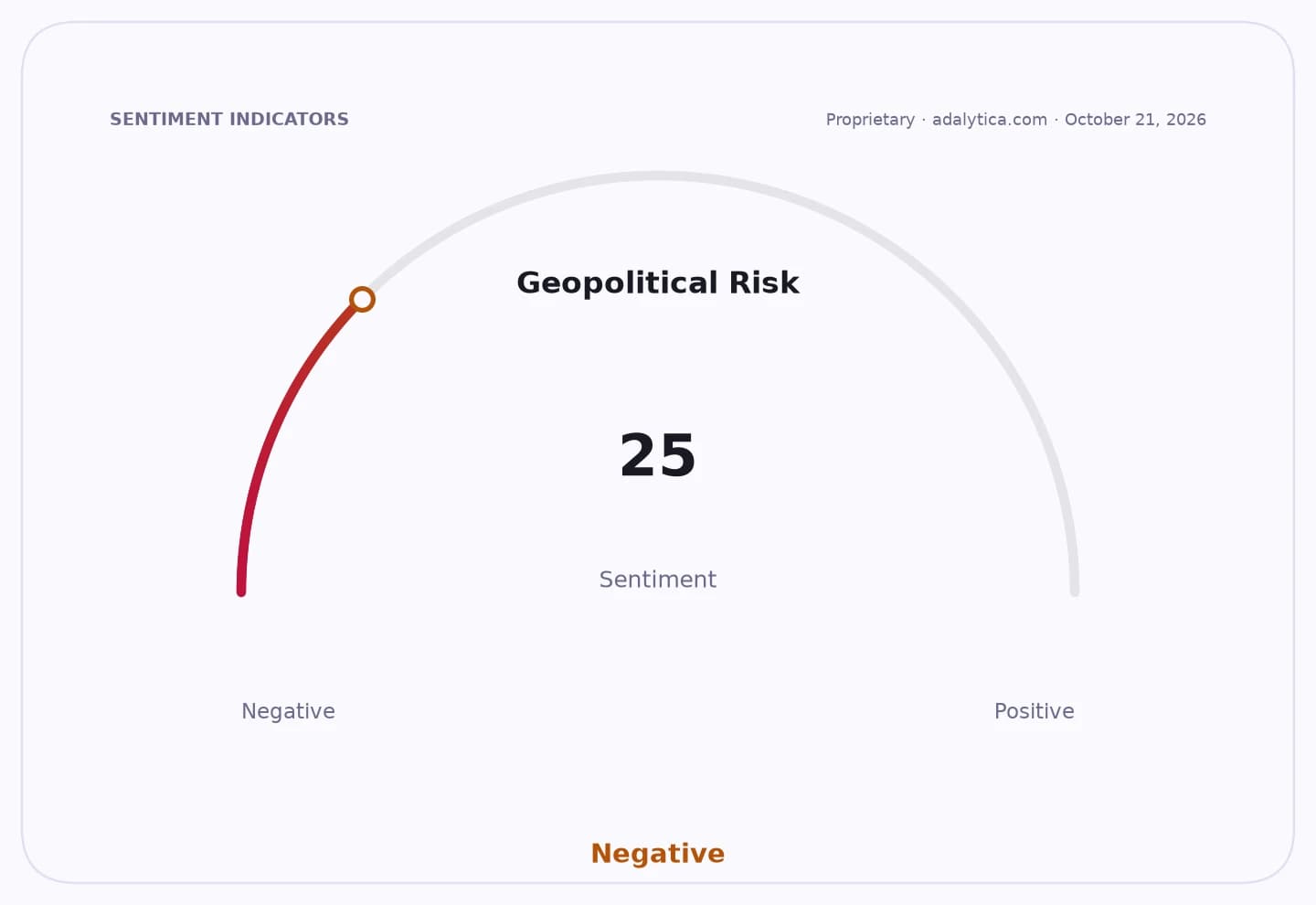
Geopolitical Risk — 30-day sentimentadalytica.com
Explore this data interactively — full history, time series and cross-market comparisons.Open AlphaPulse
There is also an investor lesson here, even if the immediate impact is geopolitical rather than market-driven: critical digital infrastructure has become a strategic asset. That means cybersecurity, cloud resilience, telecom redundancy and disaster recovery are no longer back-office issues. They are frontline defenses. The conflict is underscoring why companies and governments alike are investing heavily in backup systems, distributed networks and cyber defense.
For technology providers and defense-oriented firms, the broader message is clear. Demand for resilient communications, cloud protection and secure infrastructure should remain strong as governments adapt to a world where physical attacks and cyber operations increasingly overlap. OpenAI’s expanded cyber defense support for Ukraine fits that same narrative: resilience is becoming a competitive advantage.
The risk, of course, is that the campaign widens before Ukraine can fully adapt. If Russia keeps hitting the same digital chokepoints, the pressure on civilian life, military logistics and the wider economy could deepen. For long-term investors, the smarter takeaway is not to trade the headlines, but to recognize the structural trend: the companies that help build and protect resilient digital infrastructure are likely to matter more, not less, in the years ahead.
| Entity | Gains | Losses |
|---|---|---|
| Russia | ▲Disrupts enemy communications | ▼Faces wider escalation risk |
| Ukraine military | ▲More cyber-defense support | ▼Weaker command and control |
| Telecom and data-center security firms | ▲Higher demand for protection | ▼Greater attack exposure |
| Ukrainian businesses and consumers | ▲More urgency for backups | ▼Internet and payment disruptions |