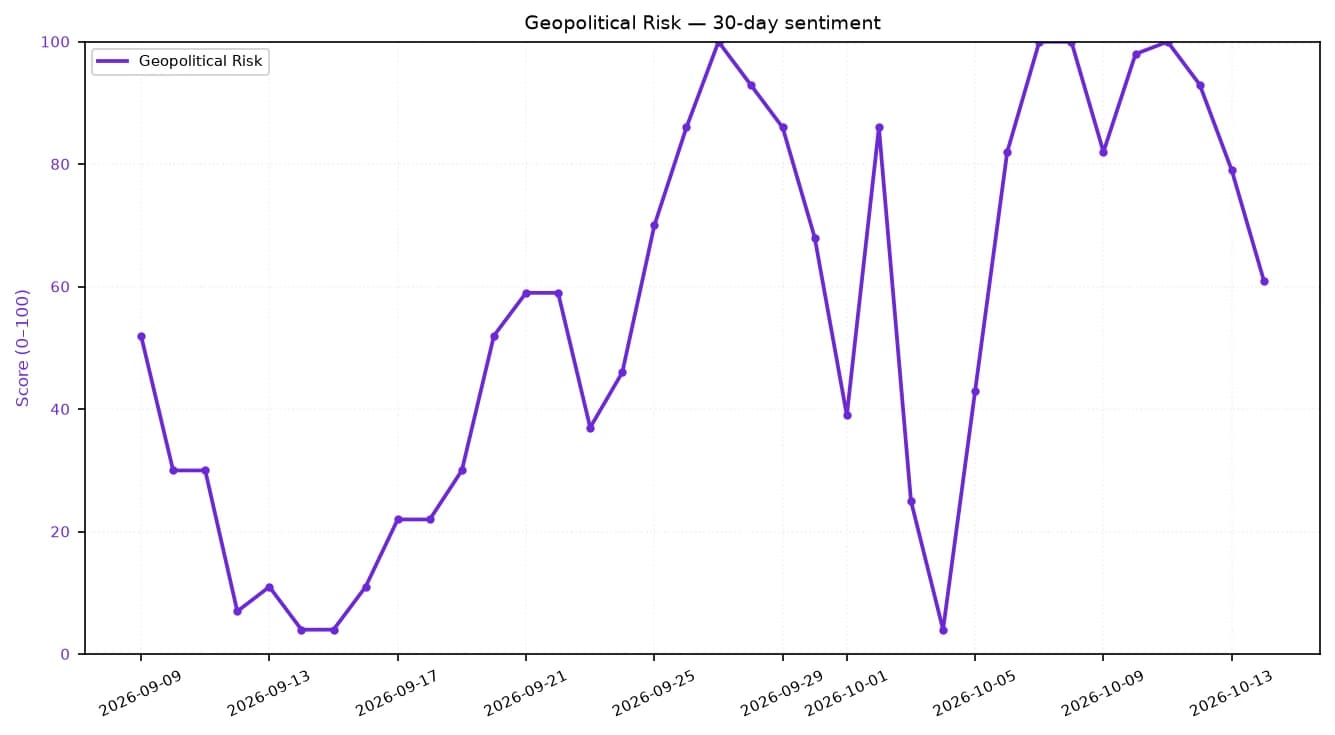
A second fire at a Starlink ground facility in Bulgaria, following a similar attack near Warsaw, has intensified concerns that satellite communications infrastructure supporting Ukraine is being targeted in a widening campaign of sabotage across Europe.
Starlink facilities fire attacks in Bulgaria and Poland
The incidents matter because Starlink has become part of the wartime communications backbone for Ukraine and a strategically sensitive node in a broader contest over space-enabled military connectivity. Damage to ground stations does not just disrupt internet access; it can temporarily degrade command, logistics and battlefield resilience, while also forcing governments to devote more resources to protecting private infrastructure that has become intertwined with national security.
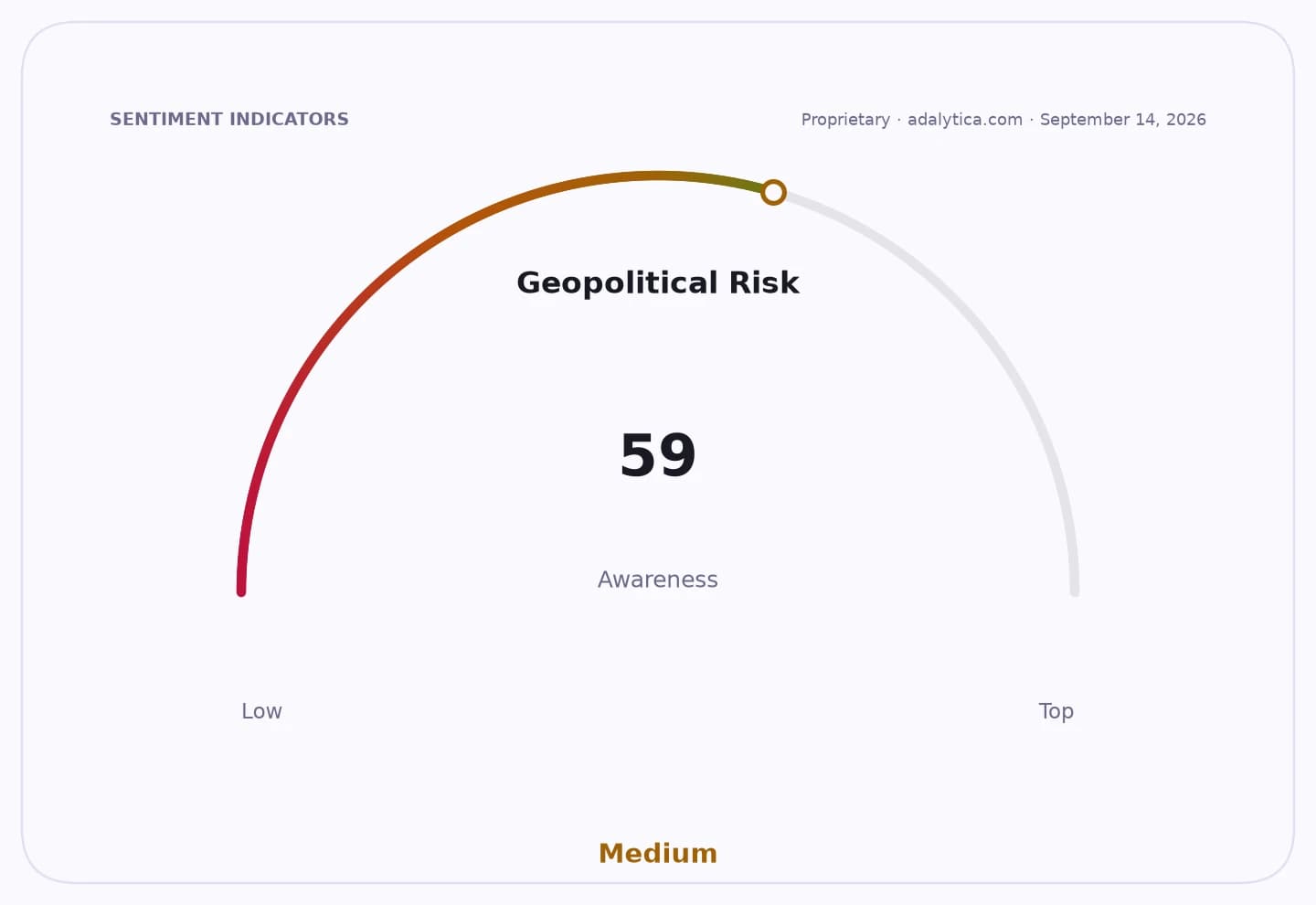
Sentiment IndicatorsⓘProprietary · adalytica.com · October 15, 2026
This is a snapshot — live sentiment, awareness and momentum for 130+ markets update continuously in the dashboard.Open AlphaPulse
In Bulgaria, officials said a fire broke out on 9 October at a facility near Sofia, with the head of the national security agency saying deliberate sabotage could not be ruled out and warning that similar attacks may recur. Opposition politicians said 11 of 17 antennas were set alight at a secret site linked to SpaceX and used by Ukraine in the war against Russia. The government has tightened protection around such facilities, but ministers also stressed the site is privately owned, underscoring a recurring policy problem: critical military-adjacent assets often sit outside the direct perimeter of state protection.
The Bulgarian case follows a 23 September arson attack on a Starlink station near Warsaw that briefly disrupted operations after fire damaged a substation and generator. Polish authorities have treated that case as attempted sabotage, and Prime Minister Donald Tusk has called it another act of hybrid warfare. Two Turkish nationals were detained in Germany in connection with the Polish probe, with Polish officials saying more suspects have since been held and that charges could include sabotage on behalf of a foreign state.
For investors, the immediate market impact is limited, but the strategic implications are broader. Starlink’s network remains operationally valuable and difficult to replace, which supports demand for resilient satellite communications and related cybersecurity, physical-security and defense services. At the same time, repeated attacks raise the risk of tighter regulation, higher insurance costs and greater government scrutiny for SpaceX and any counterparties reliant on its infrastructure.
The bigger narrative is that the war in Ukraine is increasingly spilling into Europe through low-visibility sabotage aimed at logistics, energy and communications assets. If the pattern holds, the pressure will build on NATO governments to harden privately operated infrastructure that now serves as a security asset, not just a commercial one.
| Entity | Gains | Losses |
|---|---|---|
| SpaceX/Starlink | ▲Higher strategic relevance | ▼More security and regulatory pressure |
| Ukraine and allies | ▲Awareness of vulnerabilities | ▼Communications resilience under threat |
| European governments | ▲Case for tighter protection | ▼Higher protection costs |
| Saboteurs/hostile actors | ▲Disruption leverage | ▼Greater counterintelligence scrutiny |