Ukraine’s rising inflation is eroding household income and cutting into the real return on hryvnia deposits, even as banks offer nominal rates high enough to generate only a slim cushion after taxes.
Ukraine inflation cuts real hryvnia deposit returns
That is the central economic message from a new warning by Ukrainian banker Sergey Mamедov, who said top deposit programs now pay as much as 17.5% a year. After the 23% tax on interest income, that leaves a nominal yield of about 13.5%. With annual inflation at 10% in September, savers still have some positive real return, but the margin is narrow and could disappear if prices keep accelerating.
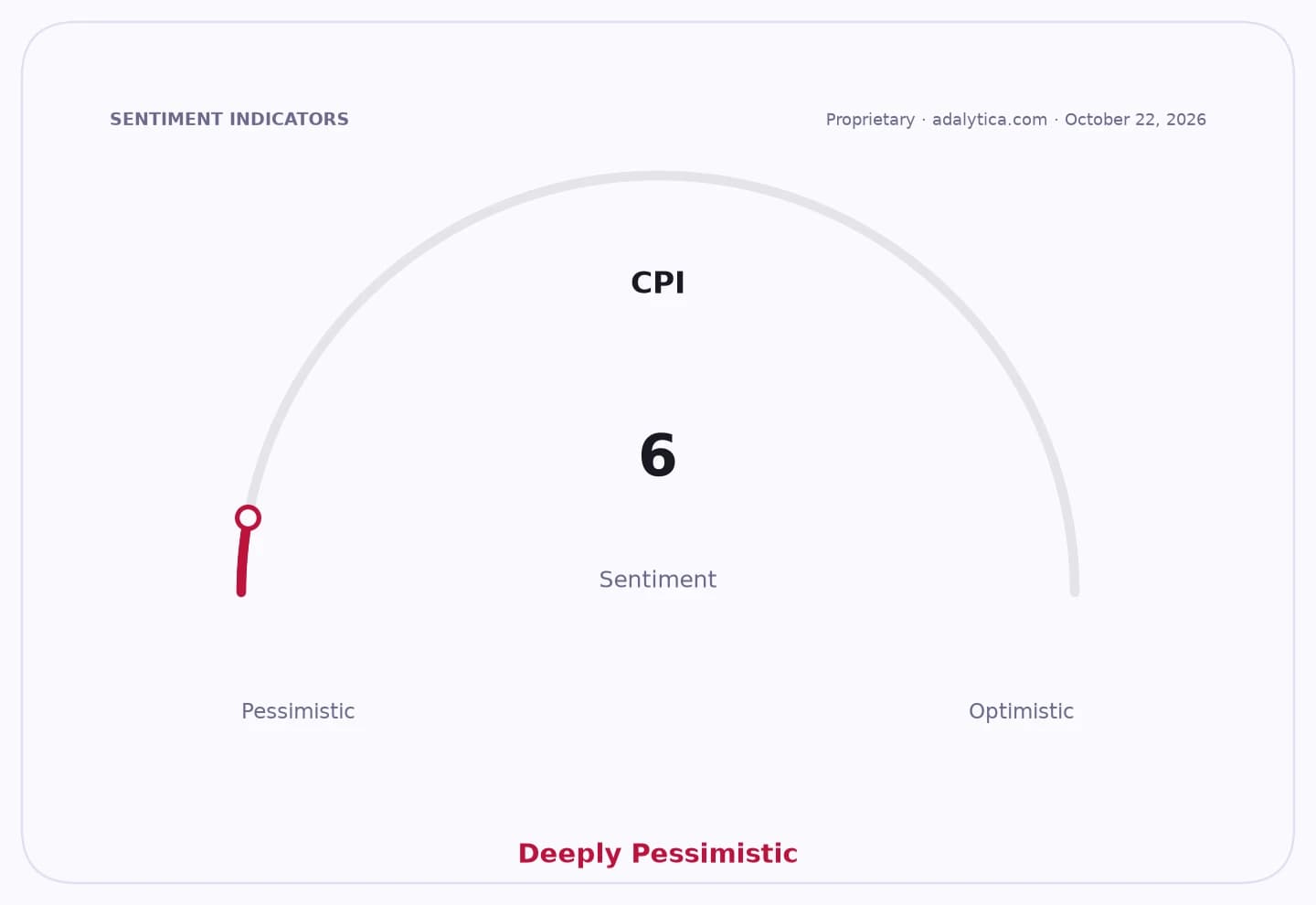
Sentiment IndicatorsⓘProprietary · adalytica.com · October 23, 2026
This is a snapshot — live sentiment, awareness and momentum for 130+ markets update continuously in the dashboard.Open AlphaPulse
The timing matters for an economy still under wartime strain. Ukraine’s consumer inflation accelerated to 10% in September from 8.1% in August, with prices up 2.1% on the month, according to the state statistics service. ICU, the investment group, expects inflation to peak at 12% over the winter and not return to single digits until the third quarter of 2027, underscoring how long depositors may have to wait for any meaningful real income protection.
For households, the headline inflation rate understates the strain in day-to-day spending. Eggs jumped 43.6% in September, education services rose 17.4% and clothing and footwear climbed 8.5%, while vegetables and fruit got cheaper. That mix means families with heavy food or schooling costs may feel a much steeper squeeze than the national CPI suggests, reducing disposable income and limiting consumer demand.
The driver is not just prices, but war economics. Russian strikes on energy infrastructure are forcing firms to spend more on generators, fuel, logistics and security, and those costs are being passed through to consumers. A weaker currency also raises the cost of imported goods, equipment and raw materials, keeping price pressure broad-based even when underlying demand is not especially strong.
For investors, the implication is that hryvnia deposits remain one of the few local instruments offering positive after-tax carry, but only just. If inflation pushes toward ICU’s winter peak, the real yield on retail deposits could compress sharply, making cash less attractive and raising the odds that households seek dollar savings, shorter-duration instruments or higher-risk assets. That would add pressure to the banking system’s funding mix and complicate policymakers’ efforts to anchor inflation expectations.
The broader narrative is one of shrinking purchasing power in an economy where survival costs are increasingly shaping financial behavior. Banks can advertise double-digit rates, but real returns will depend on whether inflation stabilizes. If it does not, the apparent safety of deposits will remain nominal rather than economic.
| Entity | Gains | Losses |
|---|---|---|
| Ukrainian banks | ▲Deposit inflows | ▼Margins if rates rise further |
| Hryvnia savers | ▲Slight positive carry | ▼Purchasing power |
| Consumers | ▲Cheaper fruit and vegetables | ▼Higher food, energy, schooling costs |
| Importers and firms | ▲None | ▼Higher input and logistics costs |