US business activity surged to a more than five-year high in September, but the same burst of demand is straining supply chains and pushing prices higher, reinforcing the case that the Federal Reserve still has an inflation problem even as growth remains firm.
US business activity hits five-year high in September
S&P Global’s flash composite purchasing managers’ index rose to 58.4 from 56.0 in August, the strongest reading since July 2021 and well above the 50 mark that separates expansion from contraction. The survey pointed to a roughly 5% annualized pace of growth, far above the 1.5% expansion in the second quarter, and matched by a sharp rise in new orders, backlogs and hiring.
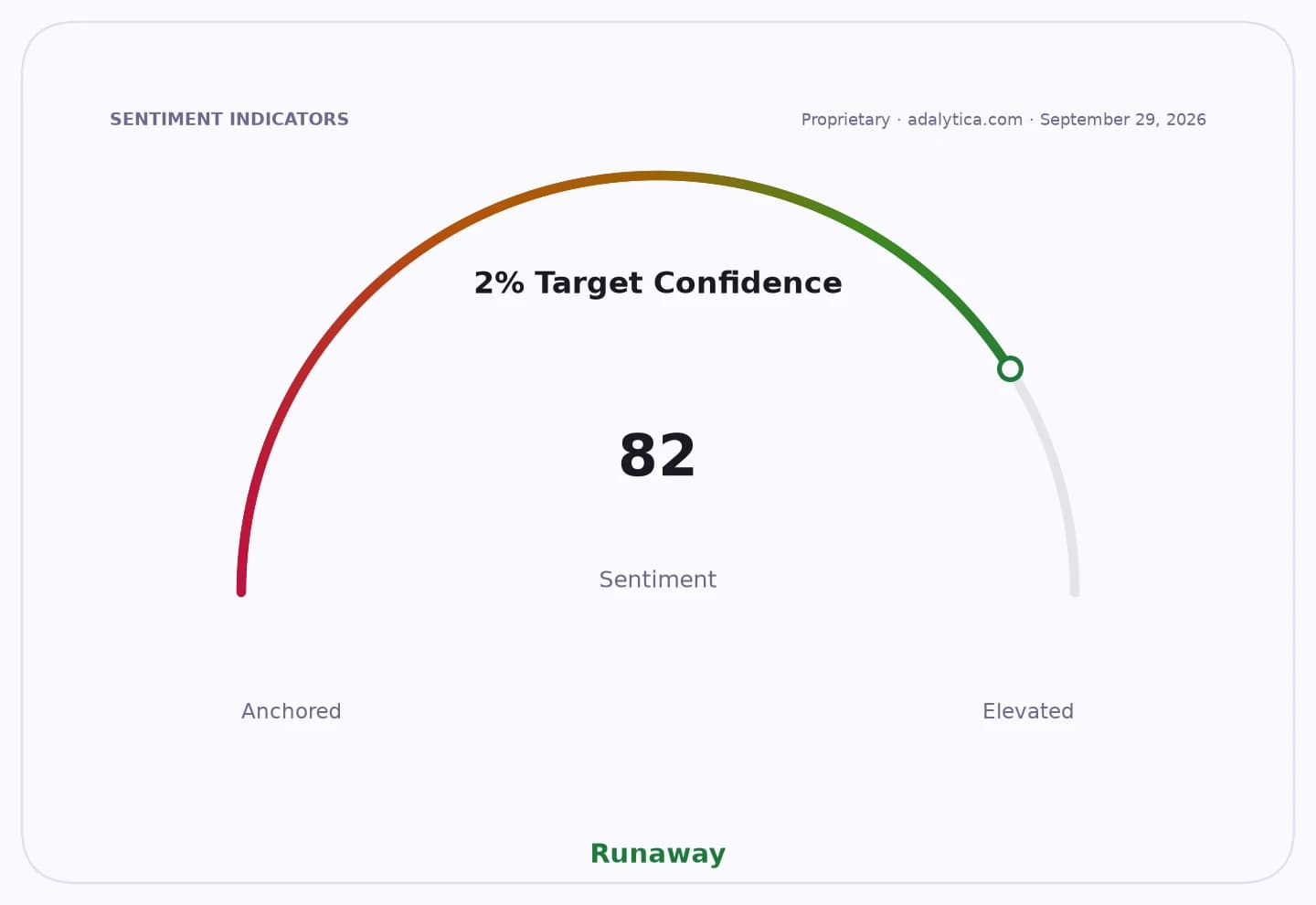
Sentiment IndicatorsⓘProprietary · adalytica.com · September 29, 2026
This is a snapshot — live sentiment, awareness and momentum for 130+ markets update continuously in the dashboard.Open AlphaPulse
That matters because the report shows the economy is not slowing enough to give policymakers much room to ease off. Instead, demand is running into capacity constraints, with suppliers reporting longer delivery times and businesses struggling to find staff, a combination that lifts pricing power and keeps inflation sticky.
Input costs accelerated as the survey’s prices-paid gauge jumped to 66.4, the highest since October 2022, from 59.9 in August. Companies also reported the most widespread supply-chain delays since July 2022, which S&P Global said reflected a lack of operating capacity that fed through to higher prices.
Chicago Fed President Austan Goolsbee said earlier this week that supply shocks were proving more persistent and that strong demand was adding to the pressure, a view echoed by the survey. The data come as the Atlanta Fed’s GDP tracker points to 5.1% growth, suggesting the economy is moving well above trend despite the Fed’s efforts to cool activity.
Treasury and equity markets are already signaling the tension. The 10-year yield has climbed to about 5.26%, while long-duration bond funds such as the iShares 20+ Year Treasury Bond ETF have slipped below their 50-day and 200-day moving averages, a technical setup that reflects rising rate pressure. Consumer staples have held up better than broader risk assets, but even defensive stocks are wobbling as investors weigh the prospect of tighter financial conditions for longer.
The backdrop is a supply shock tied to the US-Israeli war with Iran, now in its seventh month, and a diesel-price spike that is raising transport costs. For investors, the combination of faster growth and hotter inflation raises the risk that the Fed stays restrictive longer, with the next move likely to hinge on whether supply bottlenecks ease or demand keeps running hot into year-end.
| Entity | Gains | Losses |
|---|---|---|
| US services and manufacturing firms | ▲Stronger orders and pricing power | ▼Higher input costs and delays |
| Federal Reserve hawks | ▲Case for tighter-for-longer policy | ▼Rate-cut expectations |
| Bond investors | ▲Higher yield carry | ▼Price losses on Treasuries |
| Consumers and importers | ▲None | ▼Higher prices and tighter supply |