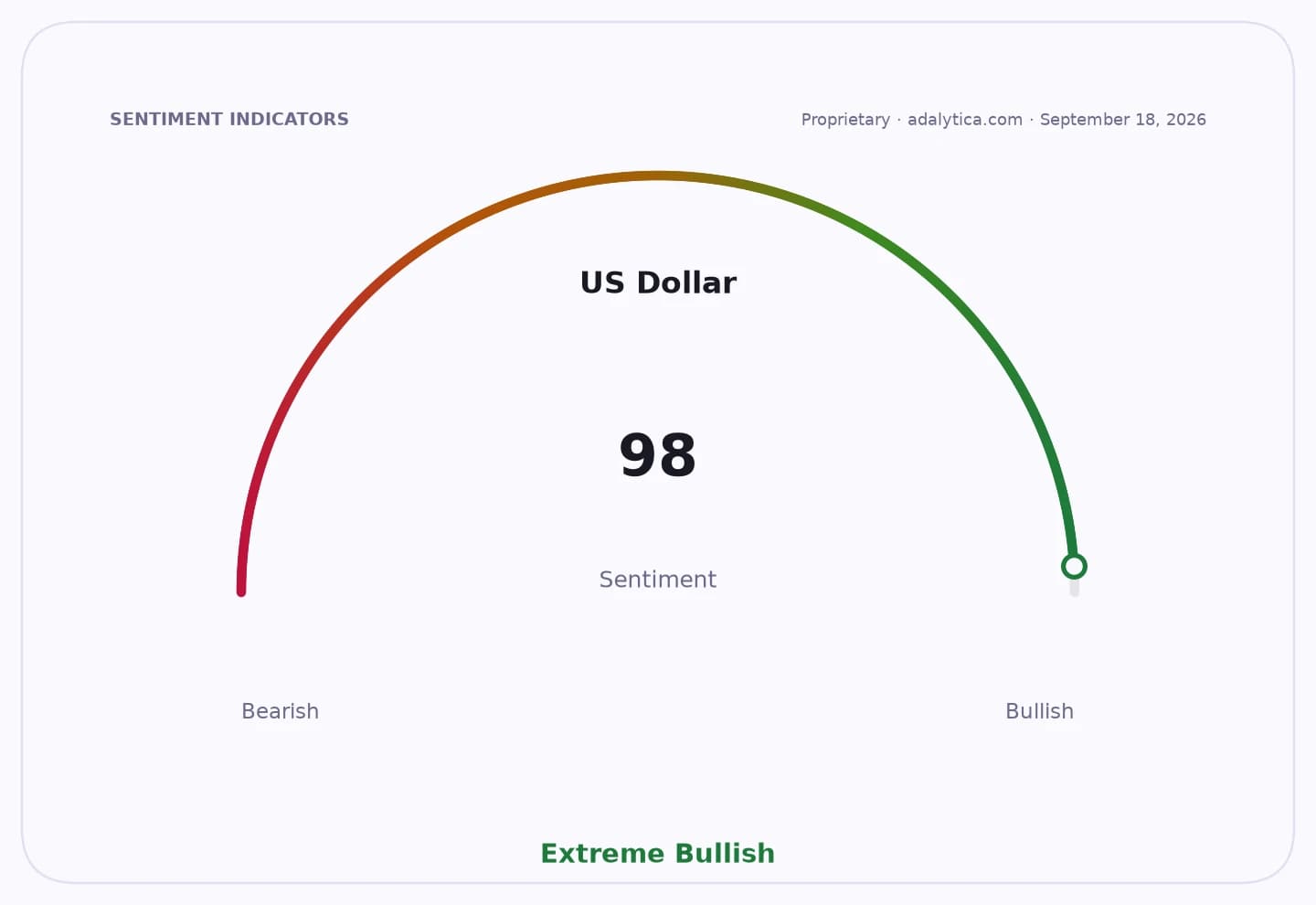
The U.S. dollar climbed to its strongest level against the Canadian dollar since early August, with traders continuing to favor the greenback over a loonie that is being weighed down by softer oil-linked and rate-sensitive sentiment.
U.S. Dollar Hits August High Versus Canadian Dollar

That move matters because USDCAD near 1.40 is not just a chart point; it reflects a widening policy and growth premium for the dollar at a time when investors are still debating how long the Federal Reserve can keep financial conditions tight. For Canada, a weaker currency can cushion exporters but also raises the cost of imported goods, complicating the Bank of Canada’s inflation fight and leaving domestic rate expectations vulnerable if the loonie keeps slipping.
Sentiment IndicatorsⓘProprietary · adalytica.com · September 19, 2026
This is a snapshot — live sentiment, awareness and momentum for 130+ markets update continuously in the dashboard.Open AlphaPulse

The pair was last around 1.40, the highest since early August, after spending much of the recent period clustered near that level. Technicals also point to a market that is leaning dollar-positive: USDCAD is trading around its 50-day moving average, while momentum indicators have turned firmer after a mid-year selloff in the Canadian dollar.
For investors, the message is clear. A stronger dollar generally tightens global financial conditions, pressures commodity currencies and can act as a headwind for Canadian assets tied to domestic demand. By contrast, U.S. multinationals and dollar-based cash flows remain comparatively insulated, and currency-hedged strategies may look more attractive if this breakout holds.
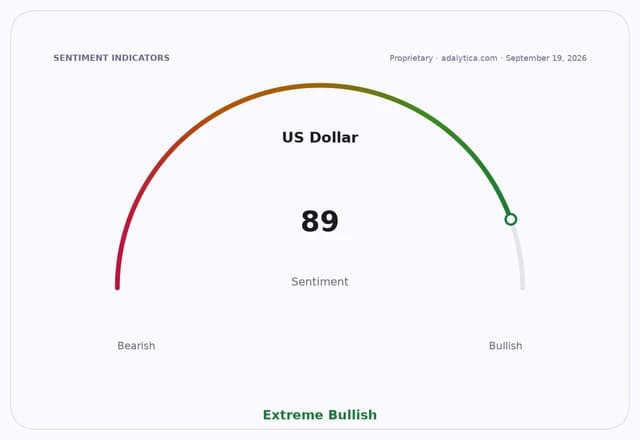
The move is also part of a broader dollar story. Adalytica’s U.S. Dollar Trade Signals show extreme greed, suggesting positioning has swung strongly in favor of the currency even as FX volatility signals remain neutral. That combination often leaves room for short-term consolidation, but it does not erase the bigger theme: the market is still paying up for U.S. yield and U.S. resilience.
If the dollar can stay above 1.40 against the loonie, traders may start treating the level as a new floor rather than a ceiling. In that case, the next opportunity is likely to come from the same asymmetry that is already visible here: hold dollars, hedge Canada, and look for the lagging beneficiaries of a stronger U.S. currency.
| Entity | Gains | Losses |
|---|---|---|
| US dollar | ▲Stronger buying power | ▼— |
| Canadian exporters | ▲More price competitiveness | ▼FX translation drag |
| Canadian consumers | ▲— | ▼Higher import costs |
| U.S.-based investors | ▲Dollar support | ▼— |