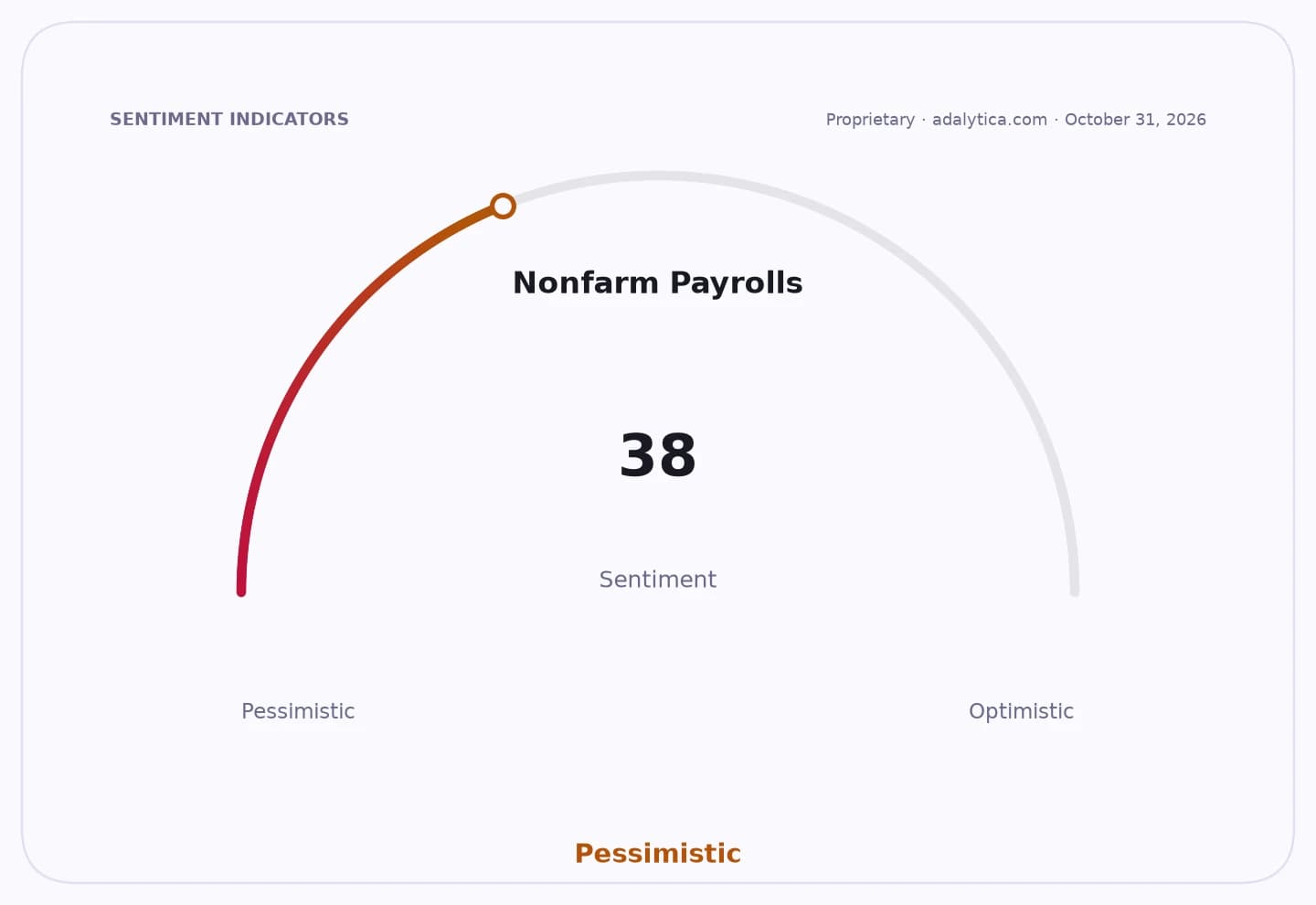
The number of U.S. job openings climbed to 7.523 million in September, a larger-than-expected increase that points to a labor market that is cooling only gradually and remains tight enough to keep wage pressure and Federal Reserve policy debates in focus.
U.S. Job Openings Rise to 7.523 Million in September

Openings rose by 333,000 from August, topping the 7.15 million economists had expected and reversing some of the prior month’s softness. Hiring also edged higher to 5.402 million, while quits jumped to 3.365 million, the highest since March 2025, a sign workers still feel confident enough to leave jobs for better pay or conditions.
Sentiment Indicators

The report matters because job vacancies remain one of the clearest gauges of labor demand. A stronger-than-expected reading suggests employers are still looking for workers across parts of manufacturing, construction and wholesale trade, even as broader economic growth has been moderating.
For the Fed, the data complicates the case for faster policy easing. A labor market that is still generating elevated openings and strong quit rates is less likely to force an immediate shift toward aggressive rate cuts, even with unemployment at 4.2% in September and the federal funds rate now sitting at 3.75%, according to the data context.
JTSJOL vs UNRATE — macro contextadalytica.com
Explore this data interactively — full history, time series and cross-market comparisons.
Job Market
Investors are likely to read the release as mildly supportive for equities tied to consumer spending and cyclical growth, but less friendly to bonds if it reinforces the idea that the economy is not weakening sharply. Financials moved higher in recent trading, with the SPDR S&P Regional Banking ETF, or XLF, rising to $59.20 in the latest data, while the iShares 20+ Year Treasury Bond ETF, TLT, hovered around $81.76, reflecting ongoing sensitivity to rate expectations.
The broader message is that the U.S. labor market is still balanced on the strong side rather than breaking down. That leaves the next payrolls report and any fresh inflation data as the main catalysts for markets trying to price the Fed’s next move.
| Entity | Gains | Losses |
|---|---|---|
| U.S. employers | ▲More labor demand visibility | ▼Higher wage pressure |
| Job seekers | ▲More openings and turnover options | ▼Less leverage if hiring slows |
| Treasury bulls | ▲Less immediate rate-cut urgency | ▼Bond prices if yields rise |
| Equity investors | ▲Reassurance on growth resilience | ▼Faster-for-longer rates risk |