The most economically important fight in the U.S. midterms is no longer just about taxes or inflation: it is about whether lawmakers keep embracing the corporate spending surge behind data centres, digital assets and campaign financing that is reshaping market power in Washington.
U.S. midterms spotlight data centers and crypto
Those pressures are converging in seven closely watched races, where the immediate stakes extend beyond control of the Senate. The outcome will help determine whether states and Congress lean harder into restrictions on data-centre buildouts, tolerate even deeper crypto lobbying, or move to curb the influence of billionaires such as Elon Musk, whose donations have become a defining feature of an election cycle on track to be the most expensive in U.S. history.
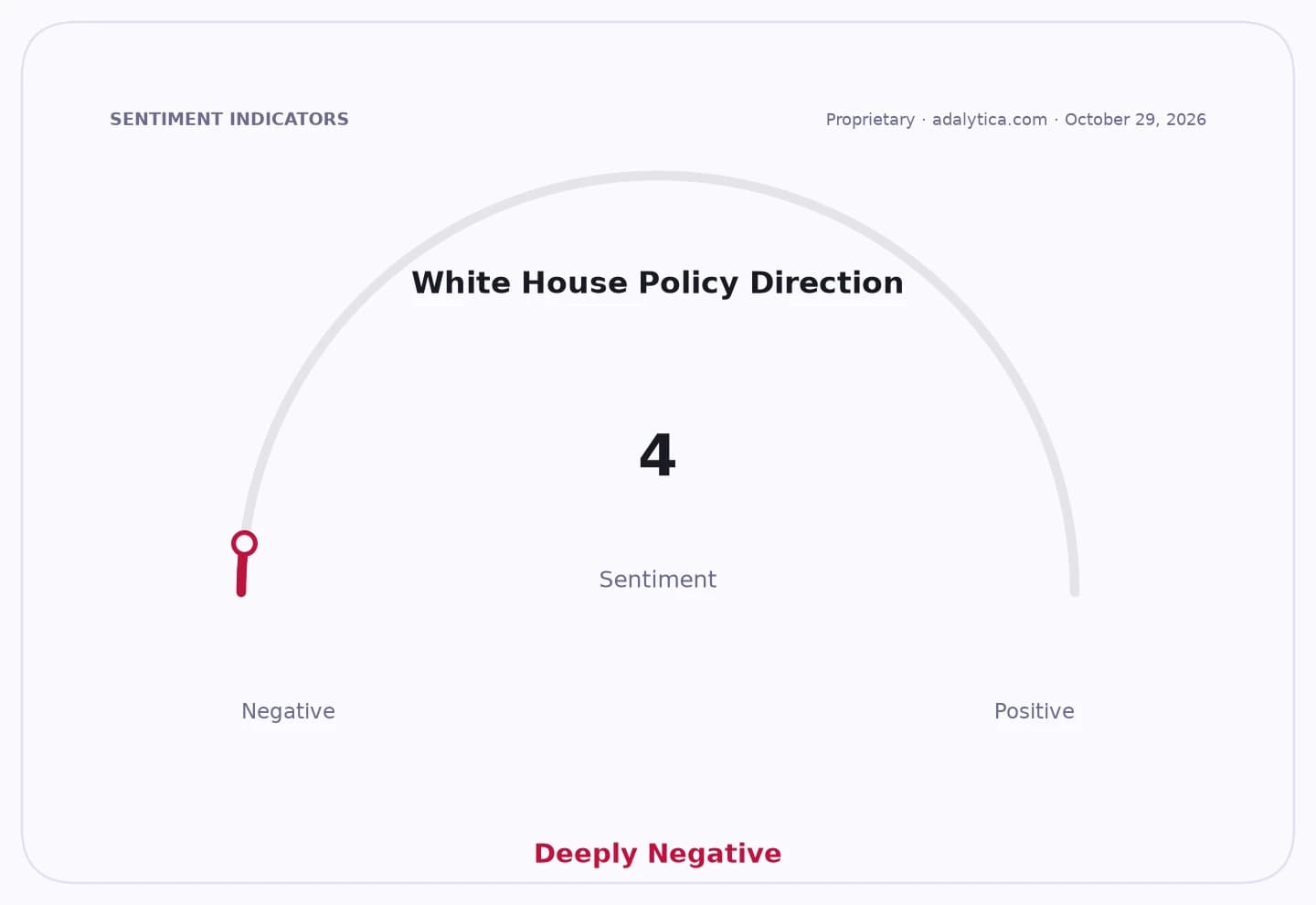
Sentiment Indicators
The political fight matters because it feeds directly into capital allocation. Data centres have become one of the largest drivers of investment by Microsoft, Amazon and Alphabet, with the three companies continuing to channel billions into servers, network equipment and new facilities. Their latest filings underline how central those outlays are to cloud growth and AI demand. But the backlash highlighted in Pennsylvania suggests that local resistance is no longer a sideshow: if governors and senators begin imposing moratoriums, audits or tighter siting rules, the cost and speed of AI infrastructure expansion could be affected.
That is why Pennsylvania stands out as more than a state-level contest. Democratic Governor Josh Shapiro has shifted from broad support for data centres to new rules on them, while Republican challenger Stacy Garrity is attacking what she calls giveaways to Amazon and other out-of-state firms. A broader regulatory turn would matter not just to hyperscalers but also to suppliers tied to the buildout, from power equipment groups to utilities and industrial names with exposure to grid expansion.
The same political economy is at work in the Senate contests in Ohio, Texas and elsewhere. In Ohio, crypto money has become a blunt-force political tool, with the sector spending heavily against Democrat Sherrod Brown, a longstanding critic of digital assets. Brown’s race matters because it is a test of whether industry-funded ad campaigns can neutralize a lawmaker who once chaired the Senate banking committee and shaped the debate over financial regulation. For investors, a Brown loss would be read as a sign that crypto’s influence in Washington is strengthening just as the industry seeks a more permissive framework.
Texas shows the other side of the campaign-finance story. Democrat James Talarico has made corruption and Musk’s spending the centrepiece of his challenge against Republican Ken Paxton, arguing that one billionaire is trying to buy a Senate seat. The race is a reminder that influence spending itself has become an electoral issue, not just a background fact. If voters respond to that message, it could sharpen pressure for tighter disclosure rules or spending limits in future cycles.
The Alaska race has its own investor relevance because it blends a hotly contested Senate seat with questions about election integrity. The Justice Department’s lawsuit over two Dan Sullivans on the ballot and Trump’s allies’ suggestions that the vote could be “stolen” show how procedural disputes can become politically combustible when control of the Senate is tight. In a narrowly divided Congress, any legitimacy crisis can delay confirmation fights, regulatory appointments and budget negotiations.
Iowa and Michigan reinforce the central theme: this is a referendum on Trump’s political brand in states where inflation, energy costs and foreign policy are feeding voter anger. In Iowa, Republican Ashley Hinson’s effort to distance herself from the president reflects the sensitivity of red-state incumbents to higher prices and fatigue with tariffs and war-related fuel costs. In Michigan, anti-Muslim rhetoric surrounding Abdul El-Sayed and the late intervention by Democrat Haley Stevens in support of Republican Mike Rogers underline how fractured coalitions can decide a seat that could help determine Senate control.
For markets, the key issue is not simply which party wins more seats, but whether the next Congress is more hostile to the corporate currents now shaping growth investment. A pro-business outcome could leave the AI buildout, crypto lobbying and campaign-finance ecosystem largely intact. A backlash outcome could slow permitting, raise compliance costs and increase scrutiny of the biggest spenders in technology and finance.
That makes the midterms a test of whether Washington will continue to accommodate the companies and industries financing the next phase of growth — or start pushing back against them.
| Entity | Gains | Losses |
|---|---|---|
| Big Tech builders | ▲Faster AI/data-centre expansion | ▼Regulatory delays, moratoriums |
| Crypto industry | ▲More permissive policy climate | ▼Sherrod Brown-led resistance |
| Billionaire donors | ▲Greater political leverage | ▼Stricter campaign-finance scrutiny |
| Local voters/state regulators | ▲More oversight of siting and spending | ▼Fewer corporate incentives |