Home contract signings are still slipping under the weight of high borrowing costs, and that matters because the housing market can’t really heal until mortgage rates do.
US Pending Home Sales Slip as Mortgage Rates Rise

Pending home sales rose 0.3% in August from July, but they were down 4.7% from a year earlier, the National Association of Realtors said. That was worse than economists expected and reinforces the same basic message investors have been hearing for months: affordability is still the brake pedal on US housing.
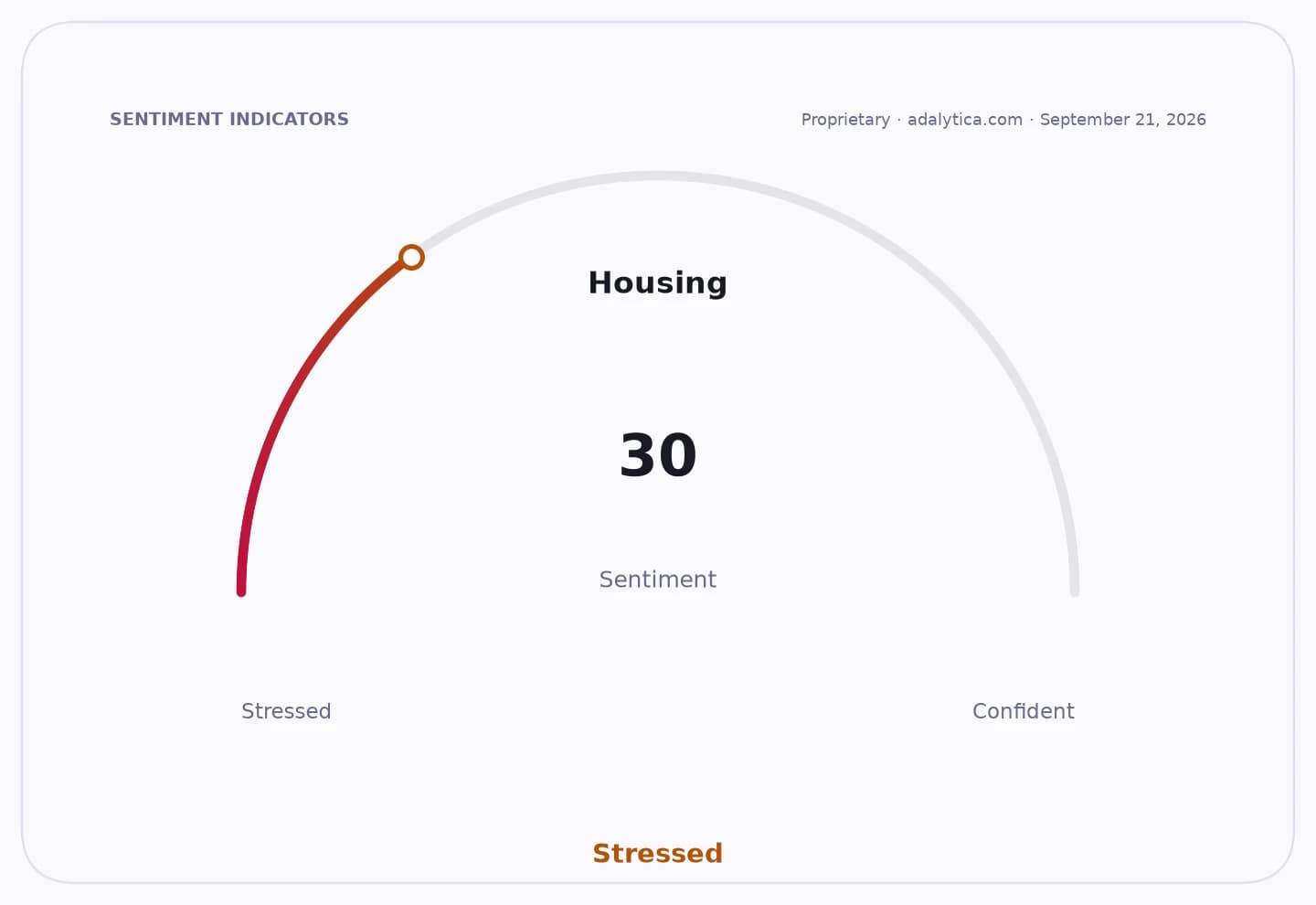
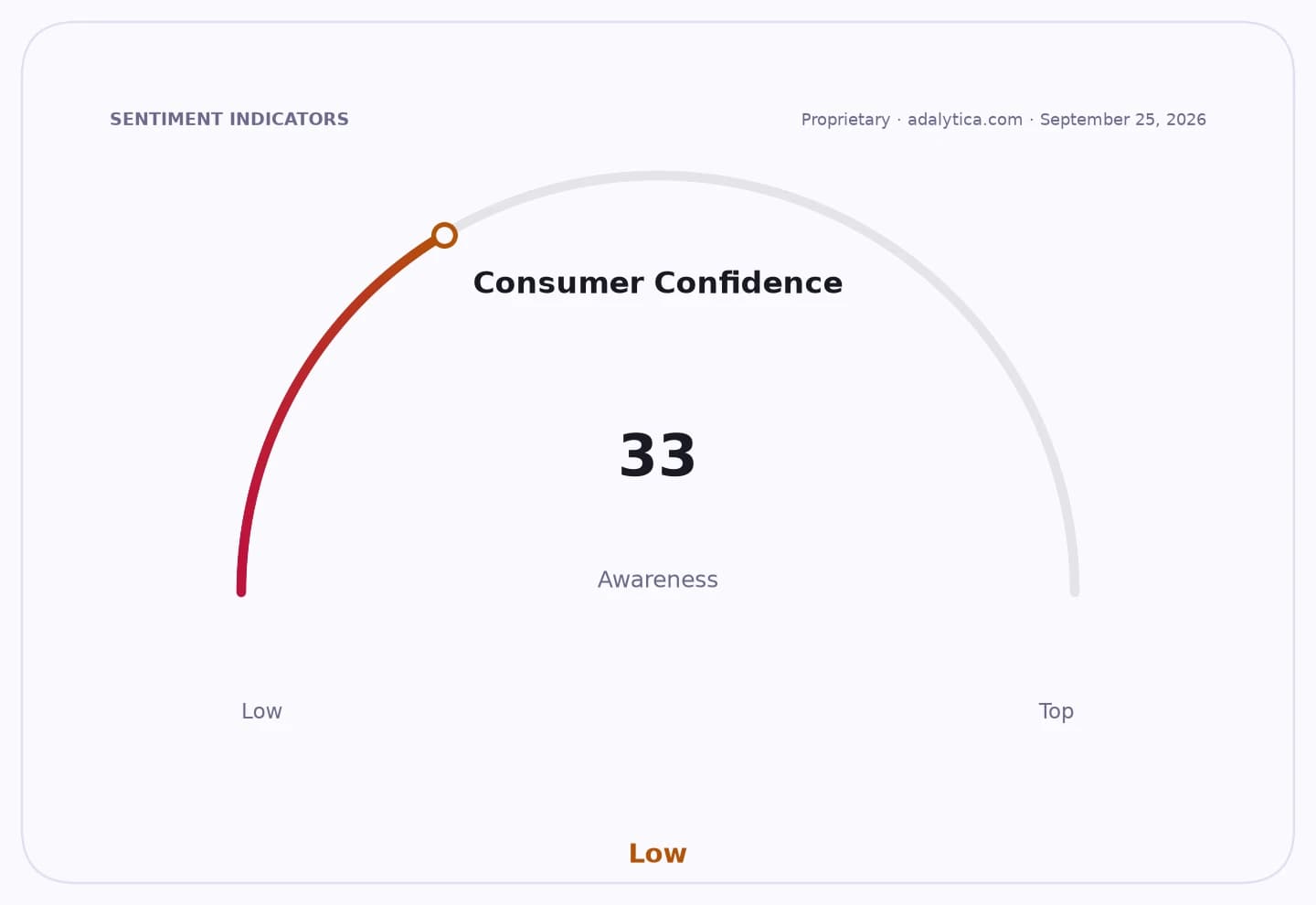
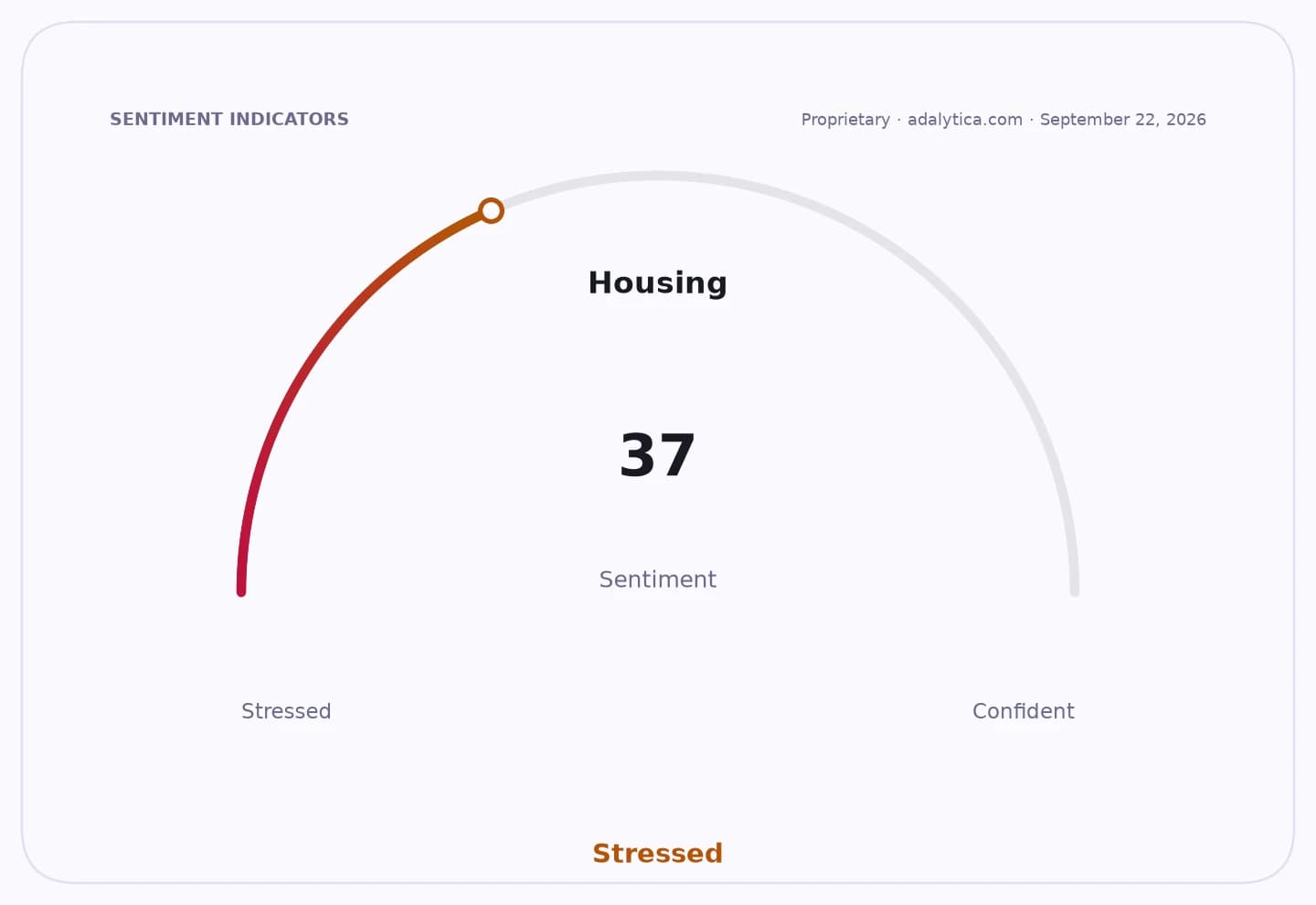
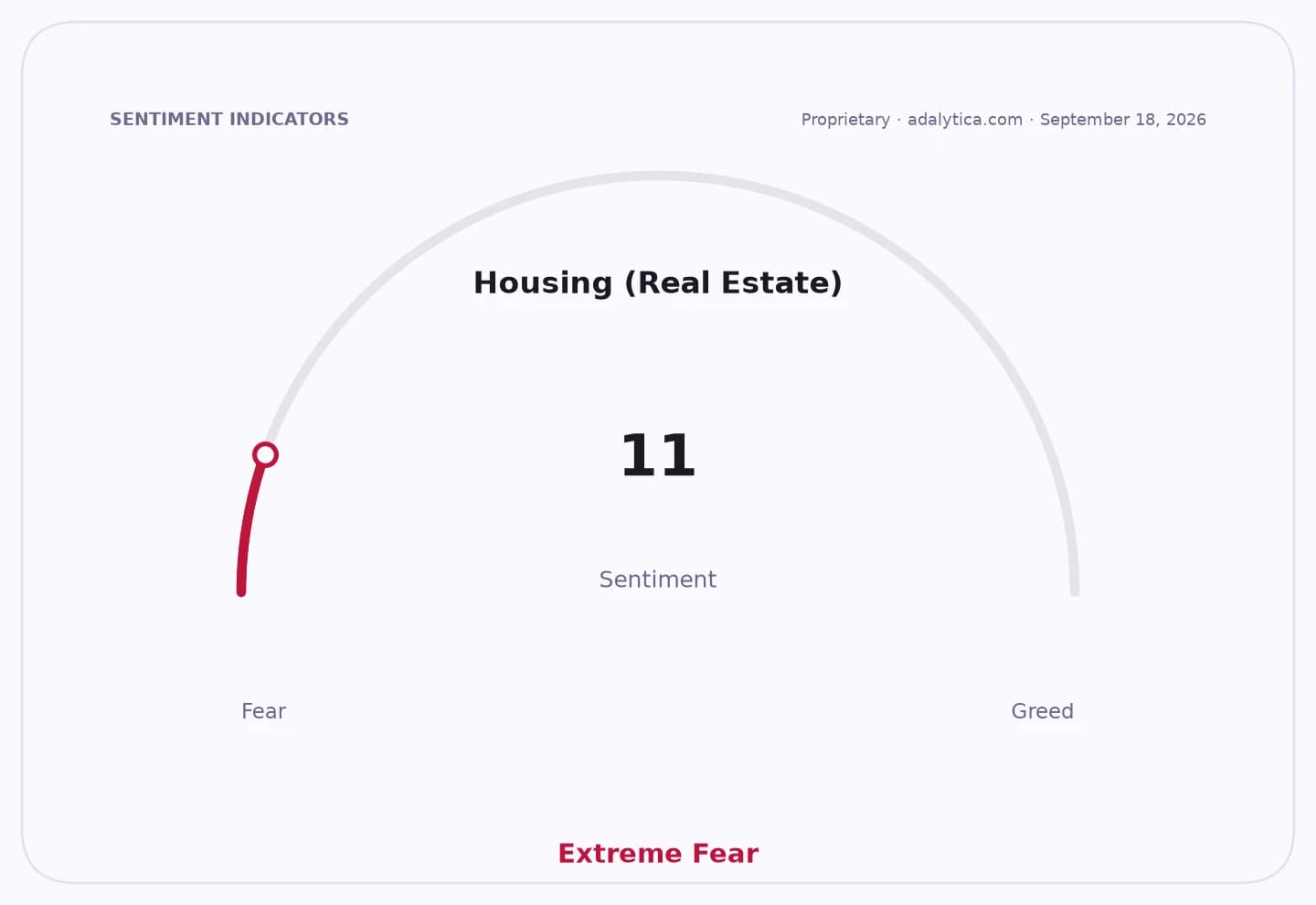
Sentiment IndicatorsⓘProprietary · adalytica.com · September 19, 2026
This is a snapshot — live sentiment, awareness and momentum for 130+ markets update continuously in the dashboard.Open AlphaPulse
The problem is not just that rates are high, but that they have stayed high long enough to reshape buyer behavior. Mortgage rates ended August around 6.7% and have since pushed closer to 7%, a level that keeps monthly payments elevated even when home-price growth cools. NAR chief economist Lawrence Yun said buyers did step back into contracts in August, but higher rates were still overwhelming the boost from wage and job gains.
That combination leaves the housing market in a slow-moving standoff. Sellers are less willing to cut sharply, buyers cannot comfortably stretch, and transaction volumes remain stuck well below normal. Yun said contract signings are still about 30% below typical pre-pandemic levels, which tells you this is not a temporary pause but a longer affordability reset.
For investors, the key question is not whether housing is weak — it is — but which parts of the market can still compound through the slowdown. Builders, mortgage lenders and home-related retailers all live and die by turnover, so sluggish contract activity usually means slower revenue growth and more pressure to use incentives. That is already visible in the stocks tied to the housing cycle: the iShares US Home Construction ETF, or ITB, has fallen well below its 50-day moving average, while the SPDR S&P Homebuilders ETF, or XHB, is also trading under both its 50-day and 200-day moving averages. Rocket Companies, a proxy for mortgage origination volume, has weakened too, reflecting how little room there is for lenders when rates stay near 7%.
The broader economic read-through is just as important. Housing is one of the most interest-rate-sensitive parts of the economy, so weak pending sales are another sign that financial conditions remain restrictive even as the economy avoids a hard landing. Adalytica’s Housing and Rent Inflation Sentiment snapshot was neutral, but the sharp drop in its change metrics underscores how quickly the tone around housing can sour when rates jump.
The long-term lesson for investors is straightforward: if you want exposure to housing, think in years, not months. A downturn in transactions can create better entry points for patient buyers, but only for businesses with real balance-sheet strength, pricing power and enough scale to survive a prolonged affordability squeeze. Until mortgage rates ease meaningfully, home sales are likely to stay subdued — and that makes housing a watchlist story, not a rush-to-buy story.
| Entity | Gains | Losses |
|---|---|---|
| Homebuyers with cash or large down payments | ▲Better negotiating power | ▼Fewer bargains overall |
| Sellers and existing homeowners | ▲Little to none | ▼Slower sales, more price pressure |
| Homebuilders and mortgage lenders | ▲Potential future rebound | ▼Softer volume and tighter margins |
| Housing ETF investors | ▲Selective long-term entries | ▼Near-term cycle risk |