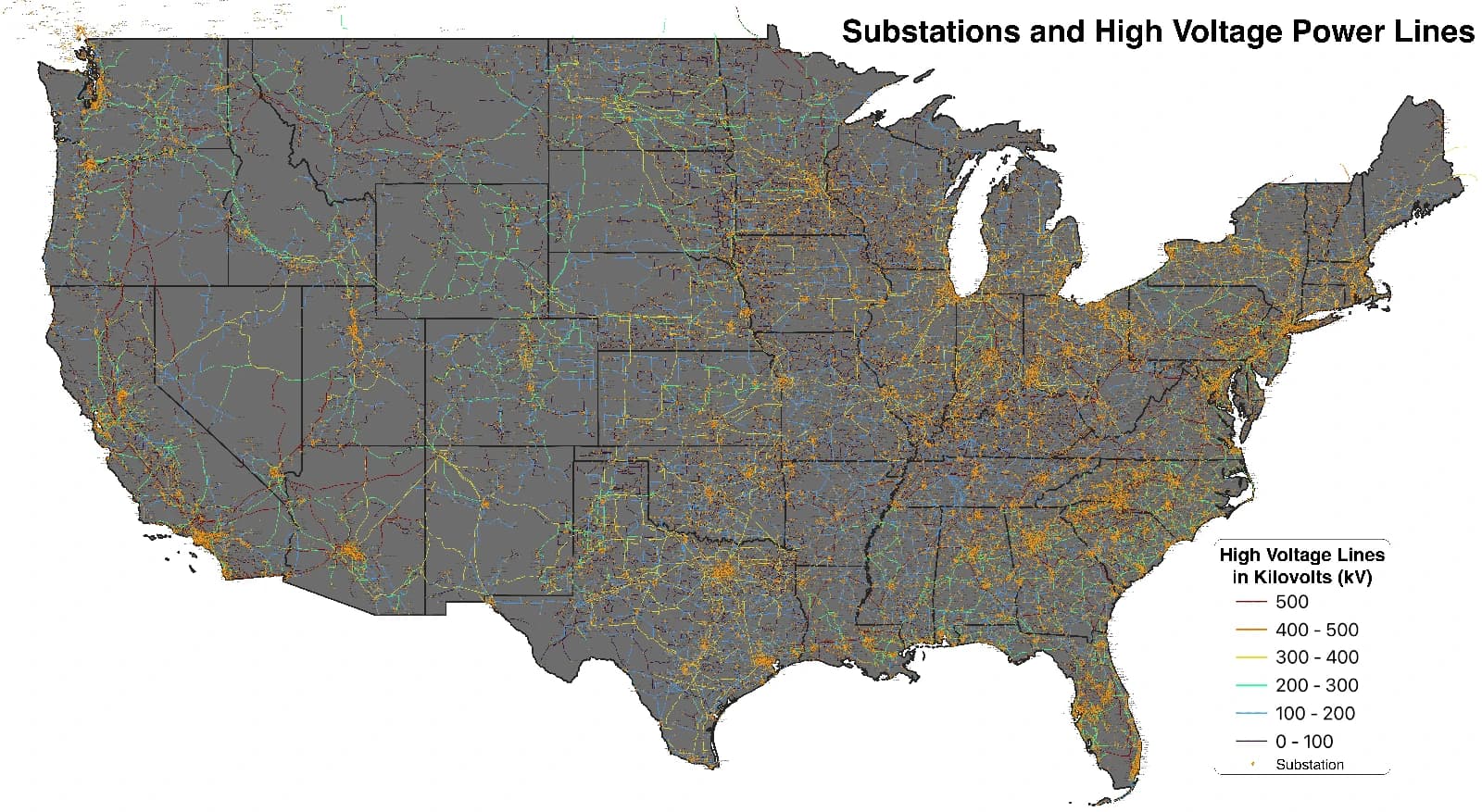
The U.S. Senate has approved a bipartisan energy permitting bill that could materially lower the cost and timing risk of building power plants, transmission lines and other infrastructure at a moment when electricity demand is rising fast and grid bottlenecks are becoming a bigger economic constraint.
U.S. Senate Passes Energy Permitting Bill
The 62-33 vote sends the measure to the Republican-controlled House and, if enacted, would tighten deadlines for federal environmental reviews, curb opportunities to challenge permits in court and accelerate planning for transmission buildout. Economically, that matters because long approval timelines have been one of the biggest drags on U.S. infrastructure investment, keeping projects expensive and slowing the addition of capacity just as data centers, manufacturing and electrification are lifting power demand.
Sentiment Indicators
A key provision also shifts more of the cost burden for grid upgrades onto large AI data centers, which have become a flashpoint in Washington as their electricity use surges. That could ease pressure on household power bills and on utilities that otherwise would have to spread those costs more broadly, while also forcing hyperscalers and other operators to rethink where and how quickly they expand. For investors, the bill potentially improves the economics of utilities, transmission developers, nuclear and gas generators, and renewable projects waiting in the queue for permits.
The market implications are immediate even before final passage. Utilities and energy infrastructure stocks tend to benefit when permitting risk falls, because faster approvals improve visibility on capital deployment and cash flows. The flip side is that some developers could face greater legal and environmental opposition if the bill compresses review periods too sharply, keeping the measure politically contentious despite its bipartisan support.
The legislation also lands against a broader macro backdrop in which inflation, rates and power demand are already central to market pricing. A buildout that takes years to complete is less valuable than one that can move through the regulatory pipeline faster, especially with the 10-year Treasury yield near 5.1% and oil around $89 a barrel, levels that keep capital costs and energy-system economics in sharp focus. Adalytica’s U.S. equity signals show the S&P 500 leaning toward greed even as sentiment remains fragile, suggesting investors are still sensitive to policy shifts that can change earnings visibility in rate-sensitive sectors.
The House will now decide whether the bill can clear one of the last major legislative hurdles before the next Congress convenes in 2027. If it does, the biggest winners are likely to be utilities, grid builders and project developers with long backlogs; the biggest losers could be opponents of faster federal review, data center operators absorbing more grid costs, and communities that argue the bill weakens environmental oversight.
| Entity | Gains | Losses |
|---|---|---|
| Utilities and grid builders | ▲Faster project approvals | ▼Less pricing power over delays |
| AI data centers | ▲Faster power access | ▼Higher grid upgrade costs |
| Energy developers | ▲Shorter permitting timelines | ▼More legal risk from compressed reviews |
| Environmental groups and local challengers | ▲— | ▼Weaker review and appeal leverage |