The U.S. unemployment rate is still low by historical standards, but that headline masks a more troubling reality for younger workers with degrees: the job market is not delivering the kind of easy entry and upward mobility that has traditionally rewarded higher education.
U.S. unemployment cools for young degree holders

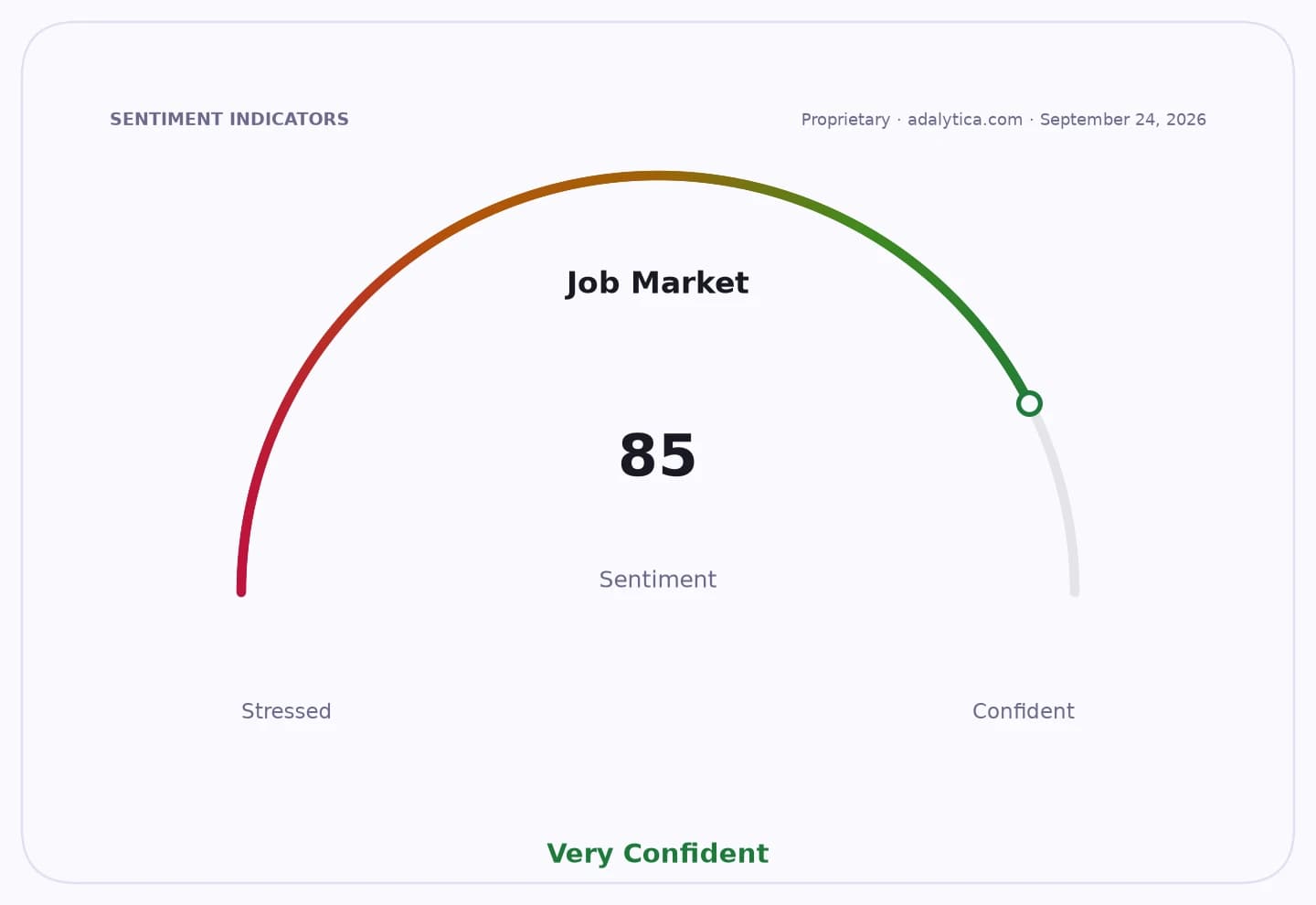
The unemployment rate is forecast to edge down to 4.02% in September from 4.1% in August, underscoring a labor market that remains broadly resilient. Nonfarm payrolls are still rising, with employment projected at 159.1 million in September, up from 158.9 million in August. On paper, that looks like stability. In practice, it is a labor market that is cooling just enough to keep hiring selective, especially for new entrants and early-career professionals.
Sentiment IndicatorsⓘProprietary · adalytica.com · September 6, 2026
This is a snapshot — live sentiment, awareness and momentum for 130+ markets update continuously in the dashboard.Open AlphaPulse
That matters economically because young, educated workers are often the first to feel the squeeze when employers become cautious. Companies may keep experienced staff and delay hiring into support, entry-level and graduate roles. That creates a bottleneck: the economy can look healthy overall while a key cohort struggles to get traction. For households, that can mean delayed homebuying, postponed family formation and weaker spending growth over time. For the broader economy, it is a warning that labor-market strength is not evenly shared.
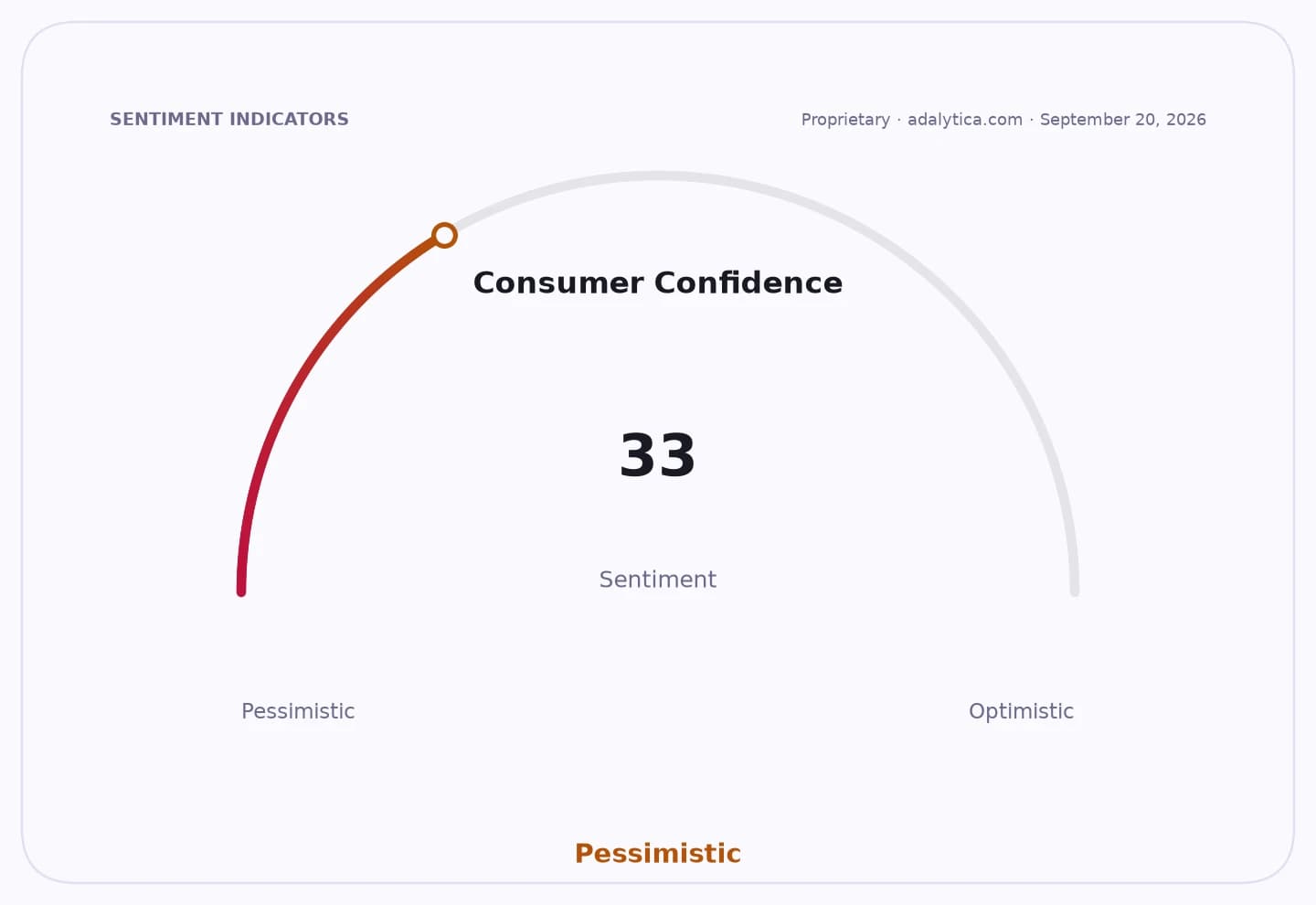
The gap between aggregate data and lived experience is especially important for investors. A 4.1% unemployment rate and steady payroll growth usually support risk assets by signaling that recession is not imminent. But if employment opportunities are narrowing for educated youth, that can weigh on consumer confidence, borrowing demand and the earnings outlook for everything from banks to retailers. It also helps explain why investor sentiment can look constructive on the surface while consumer confidence remains under pressure.
That tension shows up in the market too. Industrial-sector stocks have held up better than many cyclical areas, but recent trading in the XLI and IWM exchange-traded funds suggests investors are still sorting through a split economy. The broader industrial benchmark has remained above its 200-day moving average, a conventional technical signal that the longer-term trend is intact, even as recent weakness has pulled momentum lower. Small-cap stocks, tracked by IWM, have also been volatile, reflecting sensitivity to hiring, credit and consumer demand. Regional banks, represented by KRE, have seen sharper swings, which is what you would expect when confidence in local lending and employment prospects is uneven.
The deeper narrative is straightforward: the labor market is no longer in the boom phase that lifted almost everyone, and highly educated young people are learning that a degree is not a guarantee of a fast start. That is not a collapse, but it is a meaningful shift. In an economy where payrolls are still growing and unemployment is near 4%, investors should pay attention not just to the headline rate, but to who is getting hired, who is waiting, and how long that waiting lasts.
For long-term investors, the key takeaway is to focus on businesses with pricing power, durable demand and a real ability to compound through changing labor conditions. This kind of uneven labor market can last longer than people expect, and it is worth watching closely.
| Entity | Gains | Losses |
|---|---|---|
| Employers | ▲More hiring leverage | ▼Less pressure to raise pay |
| Young degree holders | ▲Few obvious gains | ▼Slower career starts |
| Industrials (XLI) | ▲Stable labor backdrop | ▼Slower momentum growth |
| Small caps & regional banks (IWM, KRE) | ▲Some credit demand | ▼Softer confidence and hiring |