Veeva Systems is emerging as a key beneficiary of the shift from electronic health records as passive databases to AI-enabled workflow platforms, a transition that could reshape how hospitals, life sciences companies and software vendors capture value in healthcare.
Veeva Eyes AI Workflow Upside
The economic stakes are clear: if AI is embedded inside clinical and commercial workflows rather than bolted on as a separate tool, the winner is likely to control more of the software stack, collect more usage-based revenue and deepen customer lock-in. That matters in a sector where providers are under pressure to cut administrative costs, improve throughput and prove return on investment before adopting new AI systems.
Sentiment IndicatorsⓘProprietary · adalytica.com · July 23, 2026
This is a snapshot — live sentiment, awareness and momentum for 130+ markets update continuously in the dashboard.Open AlphaPulse
The latest market action in Veeva underscores both the opportunity and the risk. The stock has retraced sharply from a peak above $306 in early October 2025 to $184.55 on July 22, 2026, even after rebounding from a November low near $235.74 and then a deeper trough around $151.43 in April. The shares remain below the 200-day moving average of $207.37, a sign the longer-term trend is still fragile, while the 50-day moving average at $172.90 suggests the recovery has only begun to stabilize. RSI readings near 50 point to a market that is no longer oversold, but not yet fully convinced the turnaround is durable.
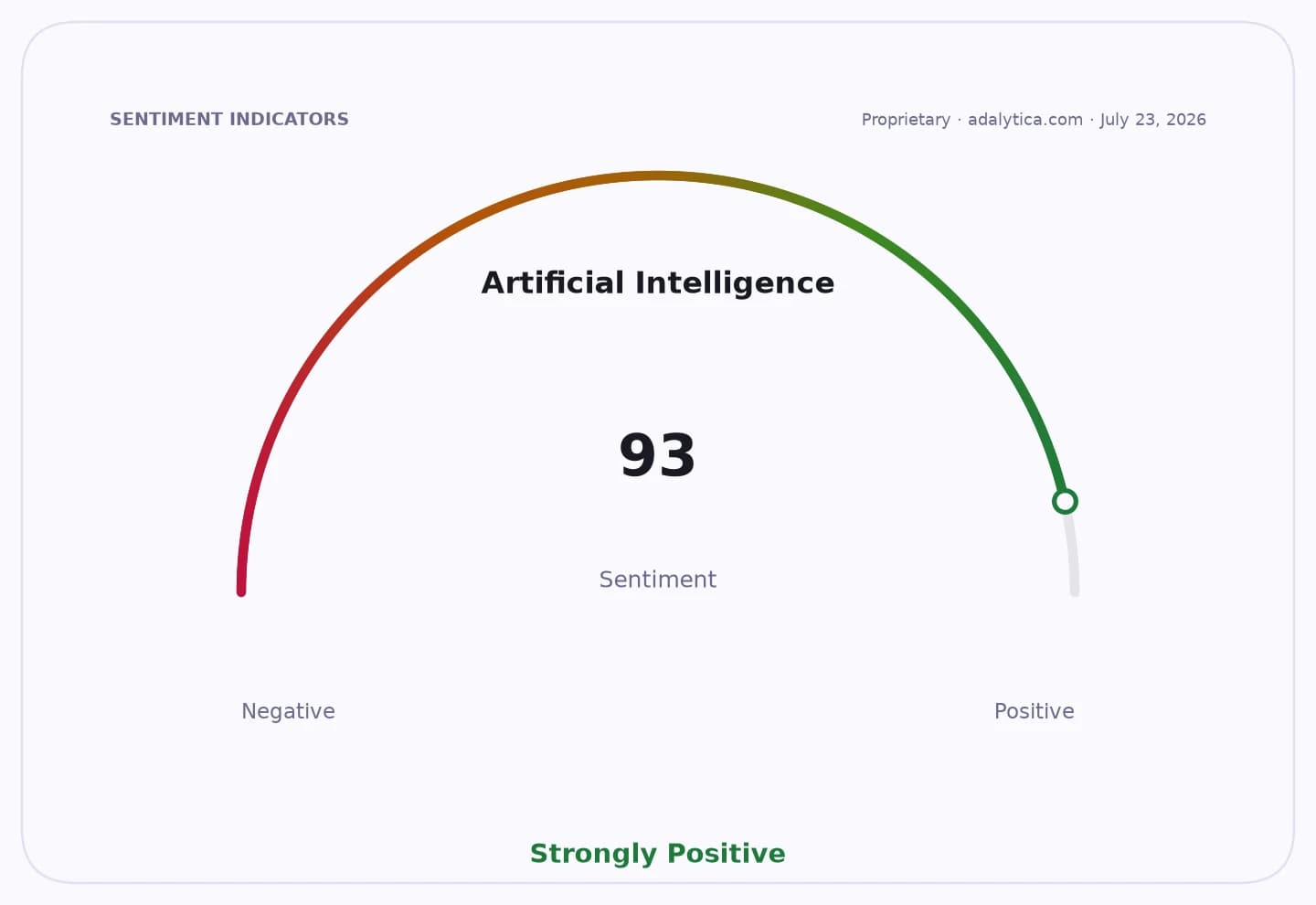
That disconnect between the strategic narrative and the stock’s uneven recovery reflects a broader debate around AI in healthcare: whether the technology will create durable product differentiation or simply add cost, complexity and regulatory risk. Investor enthusiasm for healthcare AI is running high, as reflected in the extreme-greed reading on the broader AI sentiment gauge, but providers are still demanding governance, auditability and cost control before they let agents sit inside core systems. The Reuters/Bloomberg-style answer is that the market is still pricing the integration challenge, not just the promise.
For Veeva, the appeal is obvious. The company sits at the intersection of regulated healthcare software and enterprise workflow, which makes it a natural candidate for an “engagement layer” built around AI agents, task orchestration and clinician-facing interfaces. If it can help customers move from record-keeping to action-taking — for example, surfacing next-best steps, automating documentation or routing tasks inside the EHR environment — that could lift retention, expand average revenue per account and support higher margins over time.
But the bear case is just as real. Healthcare buyers are sensitive to token costs, data privacy and liability, and the company’s own filings warn that AI offerings can trigger scrutiny over privacy, security, confidentiality, bias and inaccuracy. The more deeply AI is embedded in clinical workflows, the more reputational damage a model error could inflict. That raises the bar for adoption and makes governance a competitive moat as much as a compliance burden.
The broader industry backdrop favors vendors that can prove control over cost and performance. Epic’s Agent Factory and similar tools are pushing the market toward a model in which AI is not a standalone product but a layer inside existing records systems. That creates a winner-takes-more dynamic for incumbent platforms with trusted distribution, but it also means software vendors must absorb the operational burden of monitoring model quality and keeping spend predictable for customers.
Microsoft and Oracle sit on the other side of the same trend. Both are investing heavily in AI infrastructure and healthcare-adjacent cloud services, but their recent share-price swings show that investors are also weighing execution risk and the cost of building AI capability at scale. Oracle’s sharp drop from the mid-300s to around 126 and Microsoft’s retreat from above 460 to about 390 show that even the strongest AI franchises are not immune to doubts about monetization, margins and timing.
For investors, the key question is whether healthcare AI becomes a feature or a platform. If it remains an add-on, the value will accrue to the lowest-cost infrastructure and cloud providers. If it becomes the primary way clinicians and commercial teams interact with healthcare data, the companies that own the engagement layer — and the workflow data that flows through it — could command richer multiples and greater pricing power.
| Entity | Gains | Losses |
|---|---|---|
| Veeva Systems | ▲deeper workflow lock-in | ▼near-term multiple compression |
| Hospitals and providers | ▲lower admin burden | ▼higher implementation risk |
| Microsoft and Oracle | ▲AI infrastructure demand | ▼engagement-layer share gain |
| Legacy EHR workflows | ▲modernization pressure | ▼relevance in AI-native care |
