Americans are spending more time on the road in the morning, with vehicle miles traveled rising to 293,049 in May and a forecast 307,807.8 for July, a sign that commute and broader travel demand are strengthening even as consumer confidence remains deeply depressed.
Vehicle miles traveled rise as consumer confidence stays weak

That matters because road traffic is one of the clearest real-time gauges of household mobility, gasoline consumption and discretionary spending. More miles driven typically translate into higher fuel demand, more wear-and-tear spending and stronger activity for ride-hailing, car services and toll-road operators.
Sentiment IndicatorsⓘProprietary · adalytica.com · September 9, 2026
This is a snapshot — live sentiment, awareness and momentum for 130+ markets update continuously in the dashboard.Open AlphaPulse

The latest reading on vehicle miles traveled was up 4.62% in May and follows a 35.22% jump in April from the prior comparison period, extending a rebound from the 2020 pandemic collapse. At the same time, the personal savings rate sits at 3.0%, near the lower end of its long-run range, suggesting households have less cushion even as they keep moving.
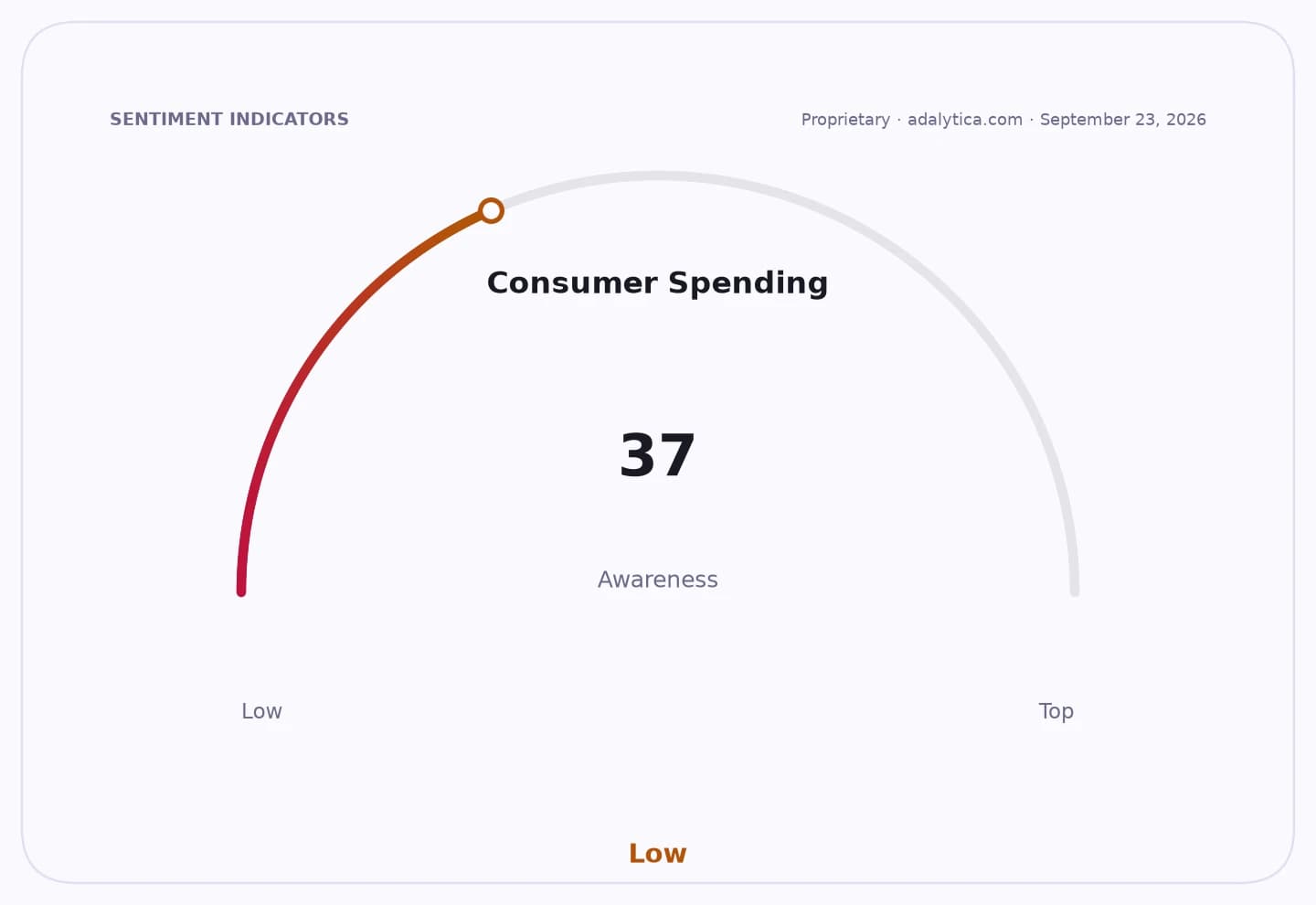
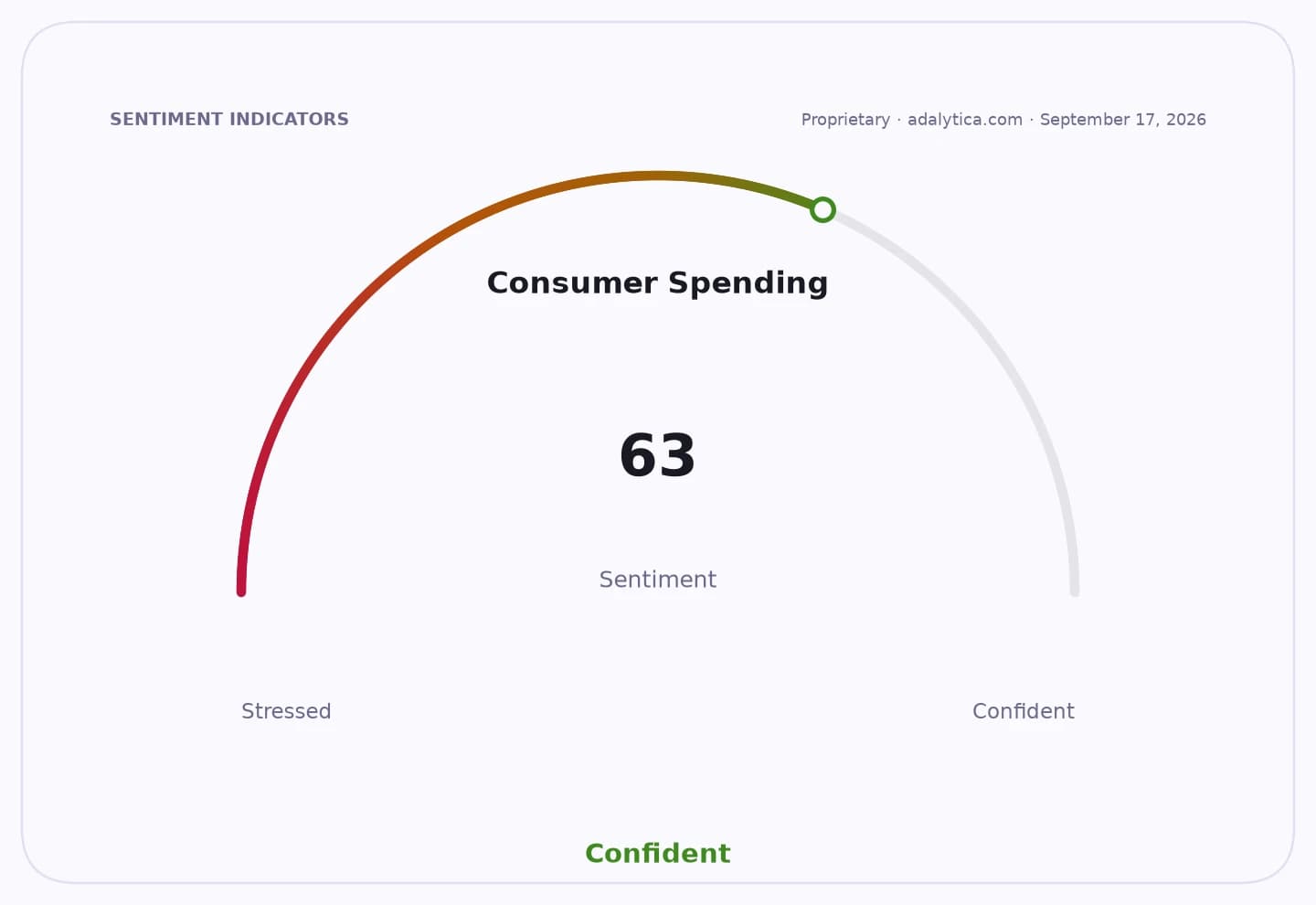
The tension is important for investors: consumers are traveling more, but they are not feeling better. Adalytica’s consumer confidence recession sentiment remains in “Extreme Fear” at 15, while retail goods spending sentiment has fallen to 4, also “Extreme Fear,” indicating that the transportation recovery is not being matched by broad optimism about spending.
VMT vs PSAVERT — macro contextadalytica.com
Explore this data interactively — full history, time series and cross-market comparisons.Open AlphaPulse

That split shows up in ride-hailing stocks. Uber is down to $71.08 from $78.82 on Aug. 28, while Lyft has dropped to $14.90 from $16.72 on Sept. 4, suggesting investors are still pricing in pressure on demand and pricing power despite the pickup in road usage. Both shares remain below their 200-day moving averages, underscoring the market’s caution.
Higher traffic can also ripple through the broader economy as a modest inflationary tailwind through fuel, maintenance and insurance costs. With the 10-year Treasury yield near 4.79%, investors are still balancing evidence of resilient activity against the risk that firmer mobility keeps parts of the consumer basket sticky.
The next test is whether the improvement in road use feeds through to spending and earnings at mobility, auto, energy and travel-related companies, or whether it stalls as weak sentiment and high borrowing costs keep households on a tight leash.
| Entity | Gains | Losses |
|---|---|---|
| Gas stations and refiners | ▲Higher fuel demand | ▼ |
| Uber and Lyft riders | ▲More available service demand | ▼Higher competition for rides |
| Uber and Lyft | ▲More trip volumes | ▼Softer investor sentiment |
| Consumers with tight budgets | ▲ | ▼Higher commuting and vehicle costs |