Victoria’s race to keep its credit rating is becoming a test of how much taxpayers are willing to pay for the state’s growing debt burden, with borrowing costs and market access now more economically significant than the travel bill that triggered political outrage.
Victoria debt rating and borrowing costs

Former treasurer Jaclyn Symes’ New York trip — at a cost of almost $45,000 to taxpayers — is minor beside the scale of Victoria’s fiscal challenge. The state’s debt is heading toward $199 billion, and the bigger issue for investors is whether that load keeps pushing up funding costs at a time when global sovereign credit is under pressure from large deficits and political uncertainty.
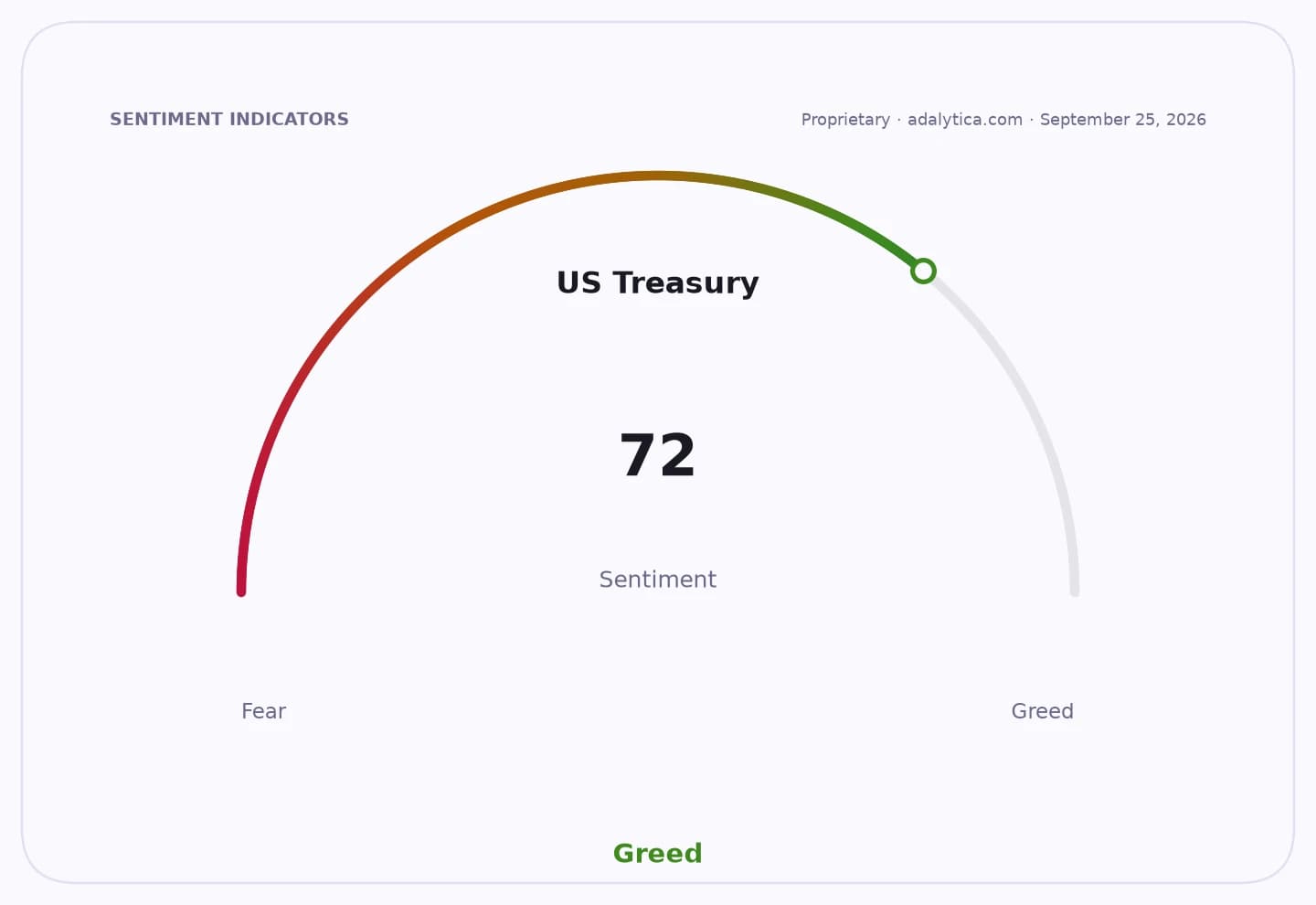
Sentiment IndicatorsⓘProprietary · adalytica.com · September 20, 2026
This is a snapshot — live sentiment, awareness and momentum for 130+ markets update continuously in the dashboard.Open AlphaPulse
The financial stakes are straightforward. Higher debt raises the risk premium lenders demand, and for a state with persistent borrowing needs, even small changes in rates can compound into billions of dollars over time. That matters in an environment where the US 10-year Treasury yield is close to 5%, leaving global borrowers more exposed to refinancing pressure than in the years of ultra-low rates. A steeper yield curve also suggests markets still expect tighter monetary conditions to persist, keeping funding expensive for heavily indebted issuers.
For Victoria, protecting the rating is less about optics than preserving access to cheap capital. A downgrade would likely feed through to wider spreads on future bond issuance and could squeeze budgets already under strain from interest costs, infrastructure commitments and public services. The state’s problem is not just the absolute size of debt, but the speed at which it has expanded and the degree to which that expansion narrows policy flexibility.
That is why the trip matters to investors. State-backed borrowers rely on credibility as much as cash flow, and ratings agencies tend to punish jurisdictions where debt trajectories outpace revenue growth or where political pressure weakens fiscal discipline. The recent downgrade of France by Scope Ratings is a reminder that large deficits and instability can translate quickly into higher borrowing costs, even for developed markets with deep capital access.
The market backdrop is mixed but still cautionary. Investor sentiment around the S&P 500 has slumped into fear territory in Adalytica’s trade-signal snapshot, while the US dollar has moved into extreme-greed readings, both of which point to a market more defensive than celebratory. In that setting, credit-sensitive borrowers face less tolerance for fiscal slippage, especially when investors can still earn higher returns in government paper with little credit risk.
USB, BAM and MCO were all lower in the latest sessions, reflecting a broader repricing in financial markets rather than anything Victoria-specific, but the move underscores how quickly rate expectations and credit concerns can hit lenders, asset managers and ratings-linked businesses. For Victoria, the message is that defending a rating in person may satisfy politics, but the real verdict will come from bond desks and agencies watching whether the debt path stabilises.
The immediate question is whether the state can show a credible medium-term plan that convinces ratings firms it can slow debt growth without sacrificing essential spending. If it cannot, the next bill will not be a flight to New York — it will be higher interest costs paid over years by Victorian taxpayers.
| Entity | Gains | Losses |
|---|---|---|
| Victoria government | ▲Preserves market confidence | ▼Faces scrutiny over debt and spending |
| Victorian taxpayers | ▲Lower downgrade risk if rating holds | ▼Pay travel costs and future debt service |
| Bond investors | ▲Potentially steadier credit profile | ▼Exposed if debt keeps rising |
| Ratings agencies | ▲Greater relevance and leverage | ▼Criticism if outlook shifts suddenly |