Vietnam’s company formation in the first eight months of 2026 showed a more capital-intensive recovery, with new registrations rising 36.2% in value even as the labor tied to those firms fell 15.4%, a sign that entrepreneurs are deploying larger sums into fewer workers while the number of closures remains elevated.
Vietnam company formation rises with more capital
That mix matters because it suggests Vietnam’s growth story is being powered by bigger, more capital-rich businesses rather than a broad-based surge in hiring. For an economy that the IMF now sees expanding 7.5% this year, up from an earlier 7.1% estimate, the shift points to resilience, but also to a more uneven expansion beneath the headline growth rate. The ADB’s 7.2% forecast and its view that Vietnam can withstand global supply-chain shocks underscore why the country continues to attract investment even as the world economy slows.
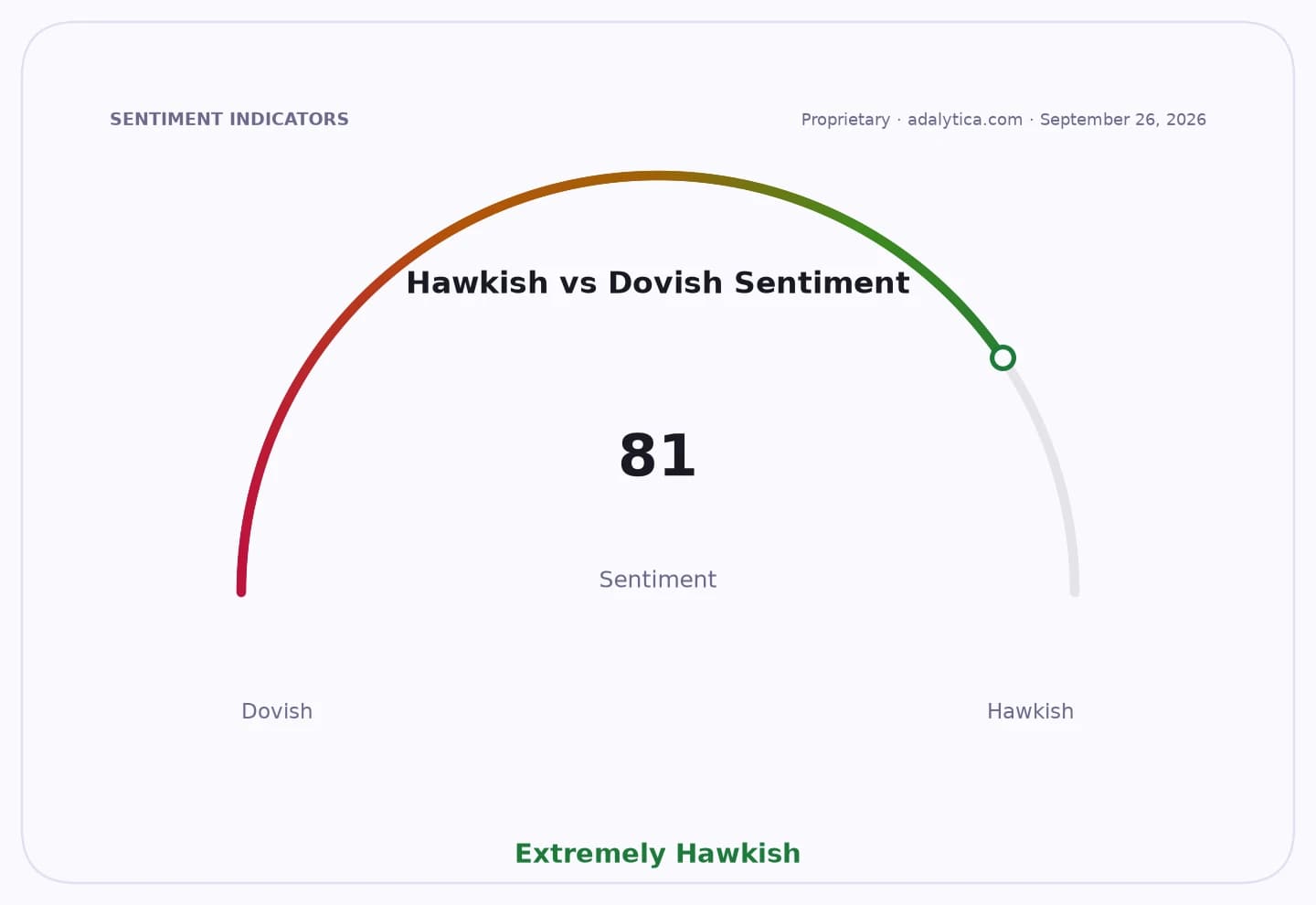
Sentiment IndicatorsⓘProprietary · adalytica.com · September 5, 2026
This is a snapshot — live sentiment, awareness and momentum for 130+ markets update continuously in the dashboard.Open AlphaPulse
Through August, nearly 138,100 new firms were registered with 1.708 quadrillion dong in capital and about 657,700 workers, according to the statistics office under the finance ministry. Average capital per new company rose to 12.4 billion dong, up 26.4% from a year earlier, while total additional capital injected into the economy reached almost 4.4 quadrillion dong, up 5.7%.
The labor figures are the more cautionary read. New firms registered fewer workers even as capital rose, a pattern that typically reflects either more automation, more asset-heavy sectors, or a concentration of formation in larger entities. That can support productivity and margins over time, but it is less supportive for near-term job creation and household income growth. In macro terms, it also hints that domestic demand may need time to catch up with investment momentum.
The churn on the other side of the ledger was still substantial. In the eight-month period, more than 88,000 businesses temporarily suspended operations, about 28,600 were waiting to complete dissolution procedures and more than 40,800 finished liquidation, with monthly exits averaging 19,700 firms. That leaves the net picture weaker than the raw startup count suggests, even though the combined total of newly formed and returning firms still reached nearly 206,400.
By sector, services remained the main engine of formation with about 102,600 new firms, but the faster growth rates came from industry and construction, up 19.8%, and agriculture, forestry and fisheries, up 24.1%. That distribution fits the broader narrative of Vietnam’s role in regional supply chains: manufacturing-linked activity is still expanding, even as global trade and geopolitical risks keep the outlook fragile.
For investors, the implications are two-sided. The bull case is that Vietnam remains one of Asia’s more resilient growth markets, with strong capital formation, rising average firm size and continued foreign and domestic interest despite a soft global backdrop. The bear case is that the gains are concentrated, employment creation is lagging and the high rate of business exits could restrain consumption, credit demand and small-business confidence.
The next test will be whether the capital being committed now turns into sustained operating revenue, hiring and export capacity in the final four months of the year. If it does, Vietnam’s 2026 growth upgrade will look durable. If not, the numbers will read more like a narrow investment cycle than a broad economic expansion.
| Entity | Gains | Losses |
|---|---|---|
| Large new firms | ▲More capital per company | ▼Higher startup competition |
| Vietnam economy | ▲Stronger investment base | ▼Uneven job creation |
| Workers/households | ▲Potential future hiring | ▼Slower near-term employment gains |
| Small firms exiting market | ▲Fewer viable rivals | ▼Business closures, liquidation costs |