A Vietnamese court ruling that cut back a bank’s claim on a credit-card debt of 30 million dong after the borrower had already paid nearly 100 million dong underscores a bigger issue for lenders: high revolving-card rates can quickly turn consumer balances into lawsuits, but banks still cannot stretch interest calculations beyond what regulators and contracts allow.
Vietnam court limits bank credit-card debt claim

The case matters because it sits at the intersection of household leverage, bank lending discipline and consumer protection. In a period when credit cards are a high-margin growth product for banks, the ruling is a reminder that aggressive late-fee and overdue-interest practices can be reined in by the courts, limiting how far lenders can monetize stressed borrowers. That is economically important in Vietnam, where rising consumer credit use supports consumption but also raises the risk of debt traps if repayment schedules are opaque.
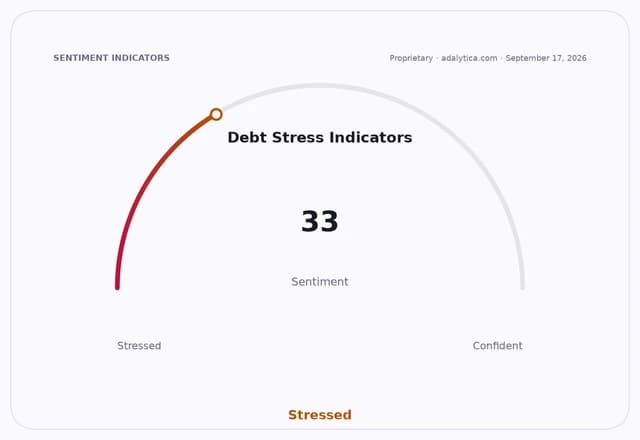
Sentiment IndicatorsⓘProprietary · adalytica.com · September 17, 2026
This is a snapshot — live sentiment, awareness and momentum for 130+ markets update continuously in the dashboard.Open AlphaPulse
According to the court record, the borrower signed for a credit-card limit of 30 million dong in March 2021 at an in-limit interest rate of 2.48% a month. Over time, he transacted more than 121.1 million dong and paid more than 97 million dong, yet the bank still sought more than 60.2 million dong by August 2025 after moving the account into delinquency and applying overdue interest at 150% of the in-limit rate.
The key fight was over how the bank calculated the overdue balance. The lender had grouped principal, in-limit interest and late fees into a new “principal” balance and then charged interest on top of it, effectively pushing the monthly rate to about 4.15%, above the agreed 3.72% overdue rate. The court found that approach inconsistent with Vietnam’s central-bank guidance and a 2019 judicial resolution, and it refused the bank’s request for the extra 3.7 million dong. The appellate court then left standing a judgment requiring the borrower to pay just over 56.4 million dong.
For investors, the lesson is not about a single consumer lawsuit. It is about pricing risk in unsecured lending. Credit-card portfolios can look attractive when balances grow and interest income rises, but the economics depend on enforceability, collections and the legal ceiling on compounding charges. If courts increasingly scrutinize how overdue interest is applied, banks may have to rely more on cleaner underwriting, better payment discipline and stronger collections rather than fee stacking.
That is also why the ruling resonates beyond Vietnam. It reflects a broader tightening in consumer-credit oversight just as households in many markets are leaning on revolving debt more heavily. For banks, the upside remains in card penetration and digital lending. The downside is that every point of yield can be challenged if it is not transparently documented and legally defensible.
The investment takeaway is straightforward: the best long-term winners in consumer finance are not the lenders that charge the most, but the ones that can scale unsecured credit without court risk, reputational damage or rising bad debts. That favors institutions with disciplined underwriting, transparent pricing and strong collection platforms, while penalizing lenders that depend on aggressive late-fee economics to make the math work.
| Entity | Gains | Losses |
|---|---|---|
| Borrower | ▲Reduced payout | ▼Still owes 56.4 million dong |
| Bank S. | ▲Recovered judgment | ▼Lost extra 3.7 million dong |
| Courts/regulators | ▲Stronger enforcement | ▼More scrutiny of bank billing |
| Consumer lenders | ▲Clearer rules | ▼Less room for fee compounding |