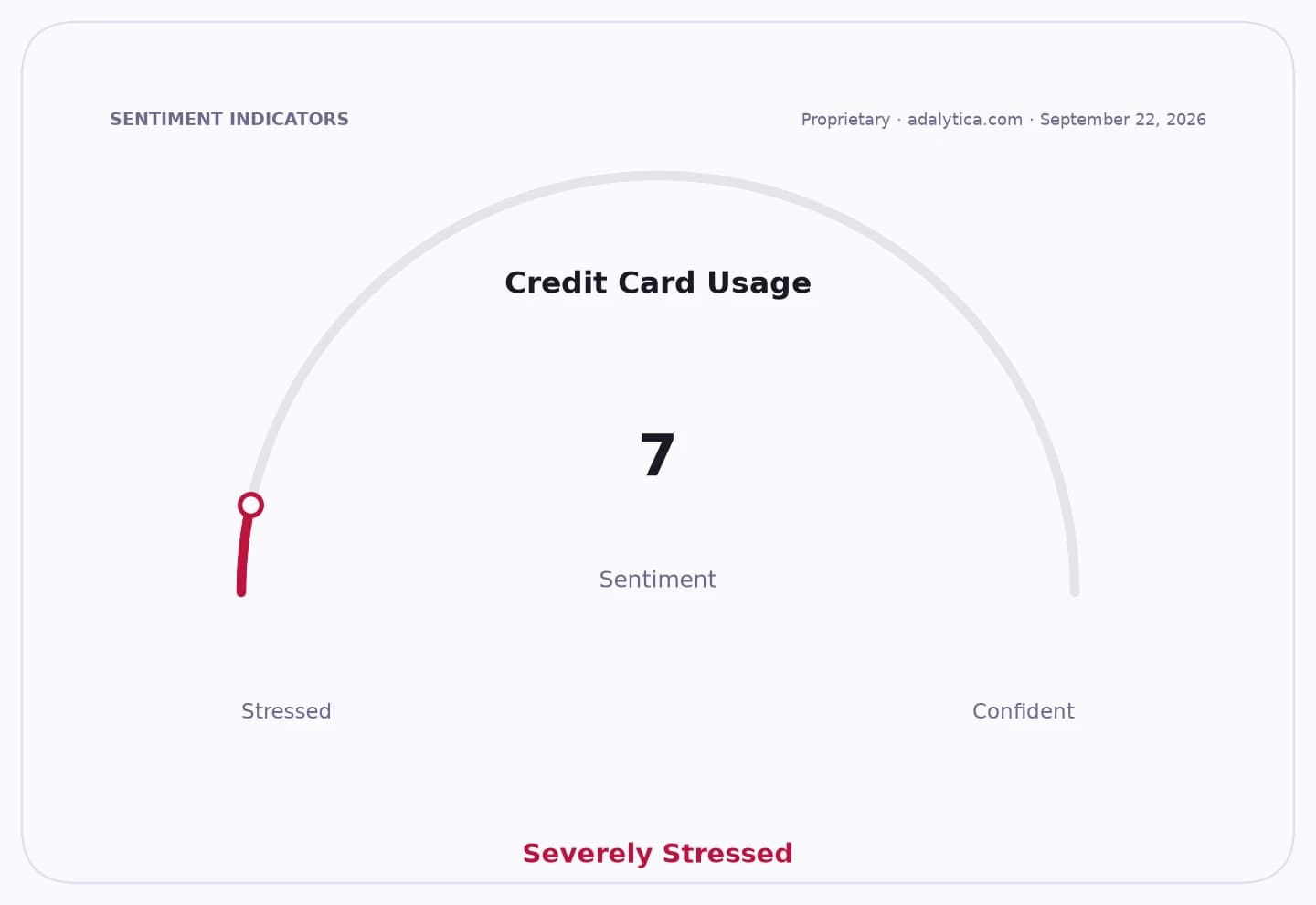
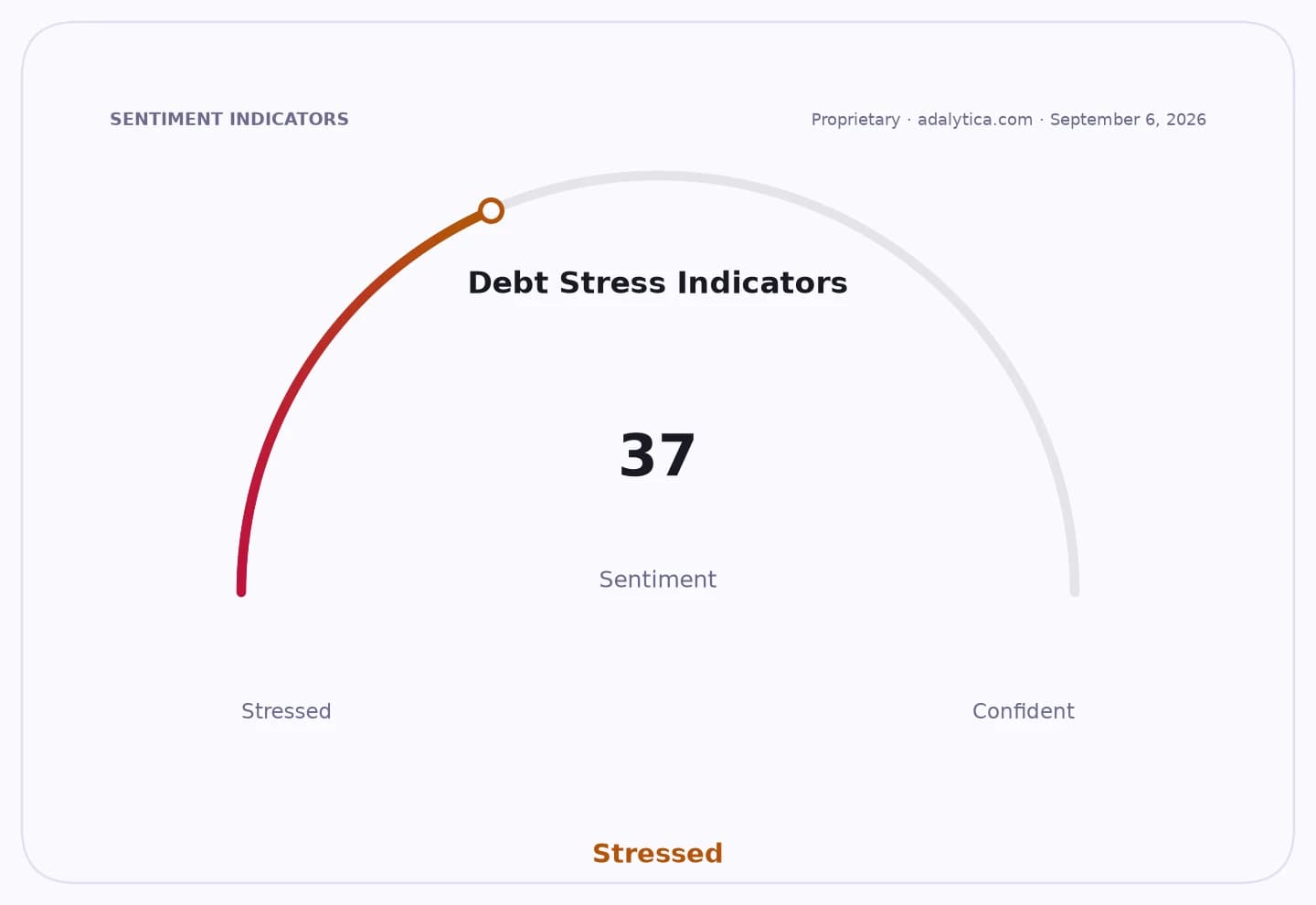
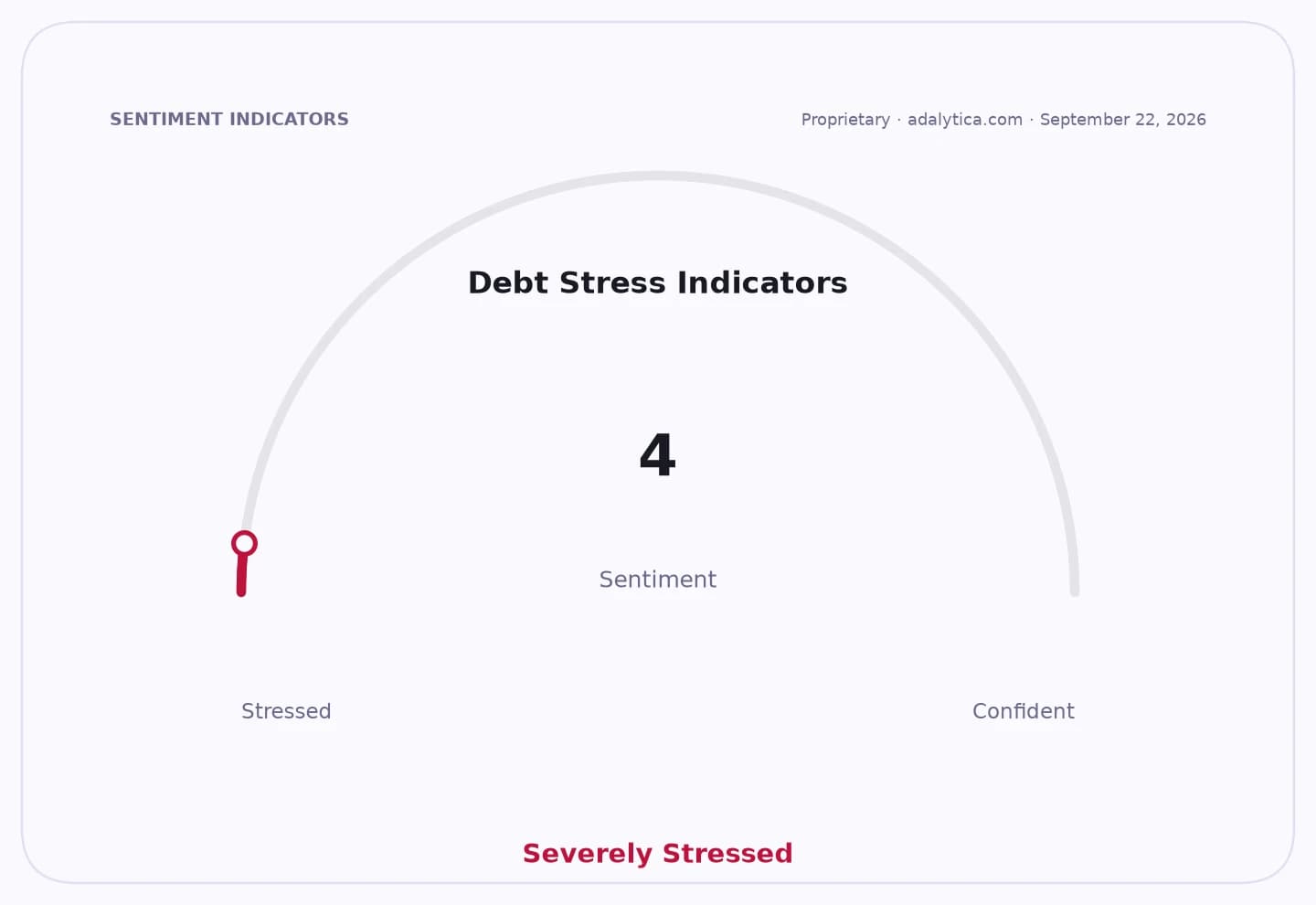
Banks can contact a borrower’s relatives or other supplied contacts about a delinquent loan, but they cannot disclose the borrower’s debt details without risking a privacy violation.
Banks may contact relatives about delinquent loans
That distinction matters because it sits at the intersection of consumer protection, collections practice and trust in the banking system. In an environment where household debt stress can quickly spill into missed payments, lenders want a way to find borrowers who stop answering calls or change numbers. Regulators and consumers, meanwhile, want a clear line between locating a customer and exposing private financial information to third parties.
Sentiment IndicatorsⓘProprietary · adalytica.com · September 25, 2026
This is a snapshot — live sentiment, awareness and momentum for 130+ markets update continuously in the dashboard.Open AlphaPulse
Banking expert Emin Karimov told Sonxeber.az that when customers provide phone numbers, e-mail addresses and other contact details while taking out a loan, they are typically informed those contacts may be used if the borrower cannot be reached. He said the purpose is to reconnect with the customer when direct contact fails, not to broadcast loan details to relatives.
In practical terms, that means a bank may call a borrower’s first-degree relatives or other contacts supplied in the application if the borrower is overdue, unreachable, out of the country or has changed numbers. But telling those relatives about the size of the debt, the delay, or the borrower’s wider financial condition can cross into unlawful disclosure, depending on the law and the specific consent given.
For lenders, the commercial significance is straightforward: collections efficiency depends on contactability. For consumers, the risk is reputational pressure and potential abuse if banks or agents use family contacts to shame borrowers into paying. For investors in the broader financial sector, the issue is more than a legal footnote. It speaks to delinquency management costs, regulatory scrutiny and the quality of unsecured consumer lending as household balance sheets come under strain.
That is why the latest guidance matters beyond one complaint. If banks overstep, they invite legal disputes and tighter oversight. If they cannot reach borrowers at all, recoveries suffer and charge-offs rise. In other words, this is a collections problem, a data-privacy problem and a credit-cycle warning all at once.
The investment takeaway is that lenders with disciplined servicing practices, compliant collections infrastructure and lower consumer credit stress are better positioned than those relying on aggressive third-party tactics. As debt pressure rises, the winners will be banks that can recover cash without crossing the privacy line.
| Entity | Gains | Losses |
|---|---|---|
| Banks | ▲Better borrower reach | ▼Compliance risk |
| Borrowers | ▲Privacy protections | ▼Collection pressure |
| Regulators | ▲Clearer enforcement scope | ▼More complaints to police |
| Consumer lenders | ▲Stronger servicing standards | ▼Higher delinquency costs |