Gold prices in Vietnam fell sharply on Sept. 17 even as international bullion extended its rally, widening the gap between local and global markets and underscoring how domestic pricing has become detached from spot trends overseas.
Vietnam Gold Prices Fall as Global Bullion Rises
The split move matters because it hits households and retail buyers in Vietnam differently from global investors. While world gold rose 28 dollars to $4,366 an ounce, SJC bars, Doji and PNJ all cut quoted prices by 700,000 dong per tael, with some ring products down as much as 500,000 dong. That pushed the local premium to about 7.8 million dong per tael, or roughly $300, a sign that domestic supply, dealer positioning and retail demand are now doing as much as international safe-haven flows in setting the final price.
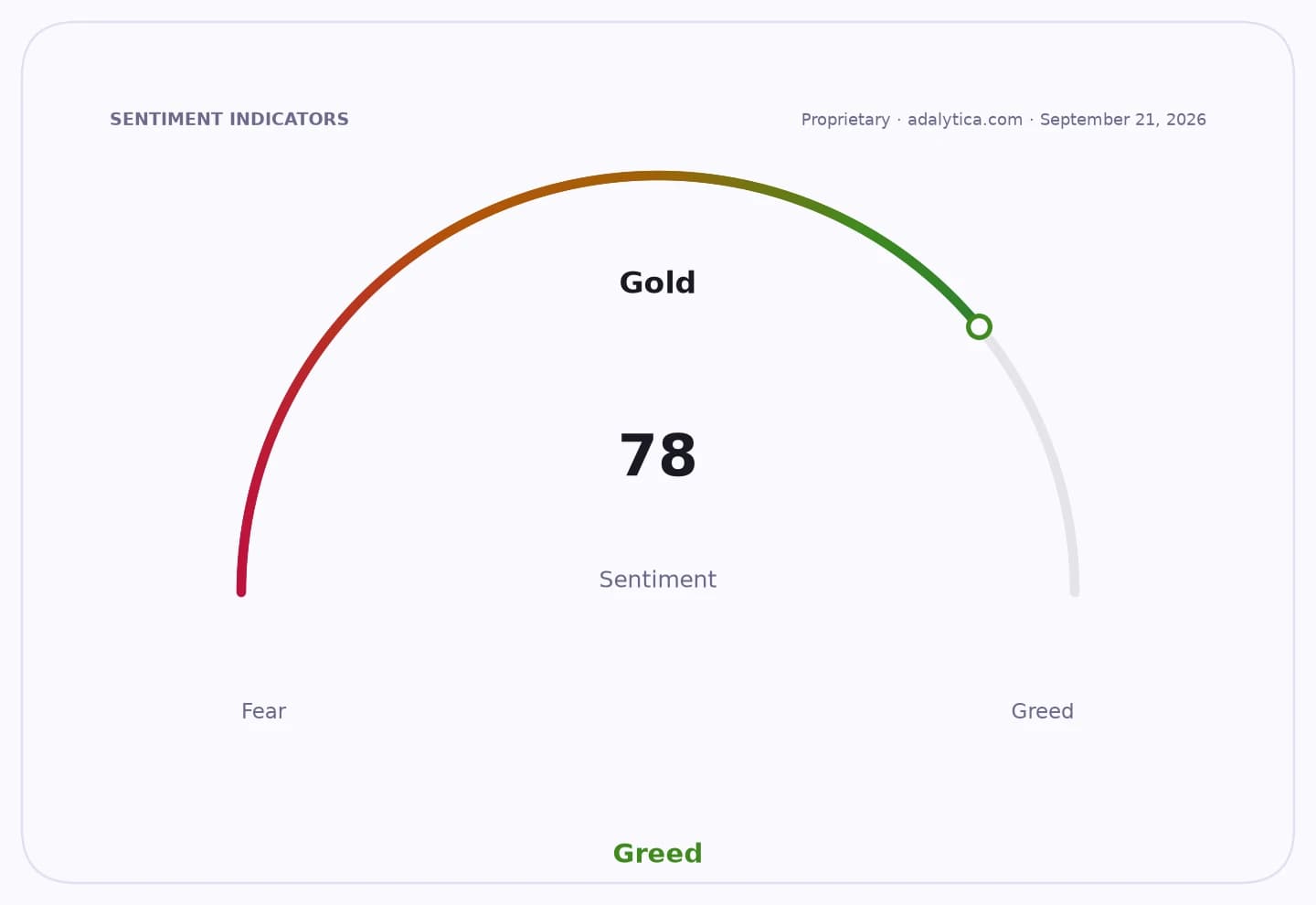
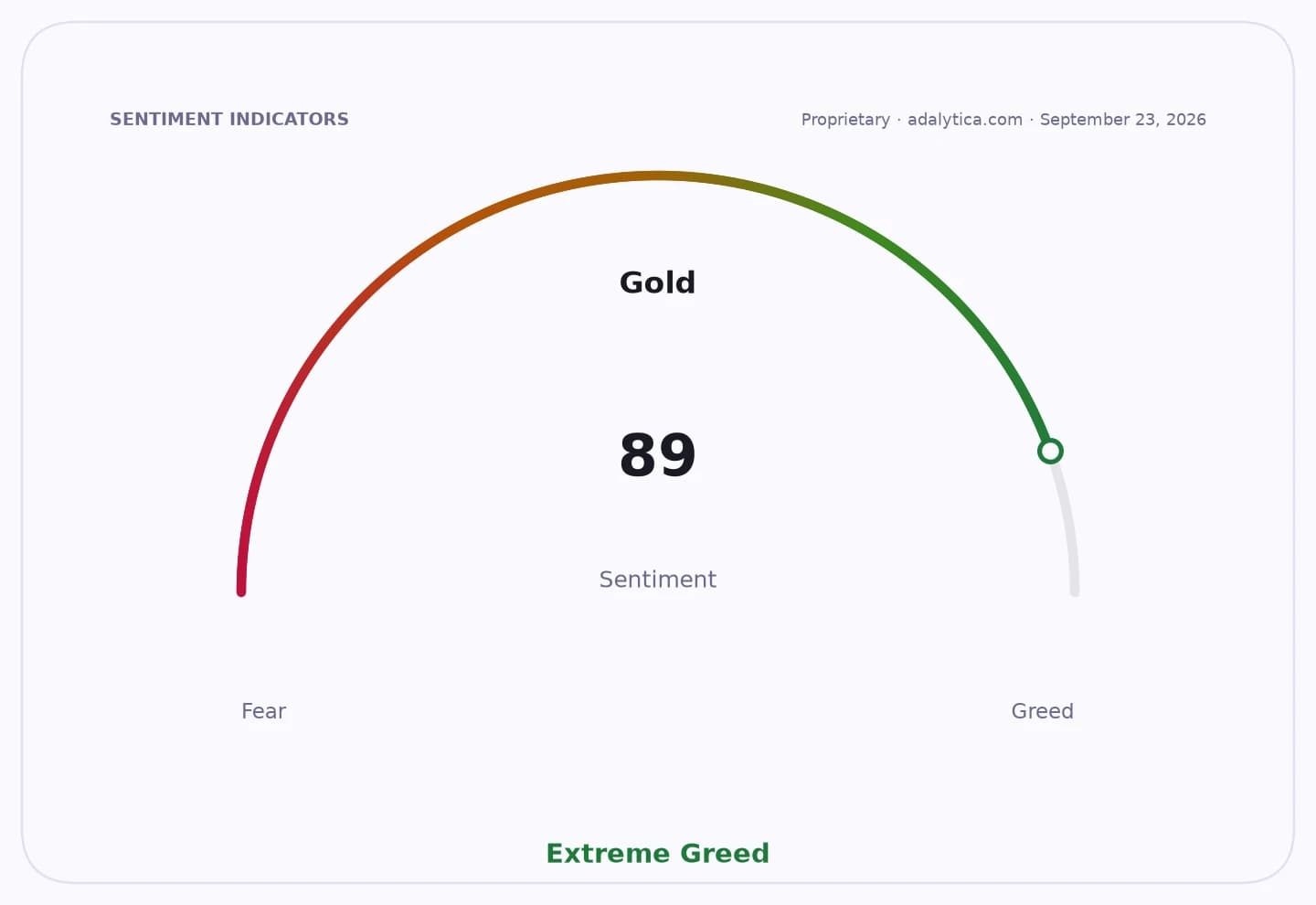
Sentiment IndicatorsⓘProprietary · adalytica.com · September 19, 2026
This is a snapshot — live sentiment, awareness and momentum for 130+ markets update continuously in the dashboard.Open AlphaPulse
For buyers, the domestic pullback offers only limited relief after months of elevated pricing. SJC bars in Hanoi, Danang and Ho Chi Minh City were quoted at 142.8 million dong buying and 145.8 million dong selling, while 9999 rings at major dealers ranged from 142.3 million to 146.7 million dong. Those levels remain near historic highs in local currency terms, keeping jewelry and bar purchases expensive for Vietnamese consumers and leaving many would-be buyers sidelined.
For investors, the more important point is that gold’s global uptrend is intact. Bullion has stayed above $4,300 an ounce despite a firm U.S. dollar and rising Treasury yields, which normally pressure non-yielding assets. Adalytica’s Gold Fear & Greed Index showed sentiment rebounding to 69 from 31 a day earlier, even as its awareness reading remained at “Extreme Fear,” suggesting the market is still reacting to rapid swings rather than settling into a calm trend. That mix usually supports both bullion and gold miners, even if short-term momentum remains volatile.
The move in U.S. rates also helps explain why gold is still attracting demand. The 10-year Treasury yield slipped to 4.94% on Sept. 17 from 5.01% the previous day, while the two-year yield held at 4.67%. That drop is modest, but it keeps the broader macro backdrop favorable for gold compared with cash and bonds, especially if traders continue to bet that policy rates will eventually ease. At the same time, the dollar’s strong trend remains a headwind for the metal and a reason why some analysts expect pullbacks.
The message for markets is that gold is being pulled in two directions: global macro support on one side, and local price resets, dollar strength and yield pressure on the other. Until those forces converge, investors may see continued divergence between international spot prices, exchange-traded products and physical retail markets in Asia.
| Entity | Gains | Losses |
|---|---|---|
| Global gold bulls | ▲Higher bullion prices | ▼None in the near term |
| Vietnamese retailers | ▲Wider pricing flexibility | ▼Lower near-term volumes |
| Vietnamese consumers | ▲Slightly cheaper local buying points | ▼Still elevated purchase costs |
| Gold miners / ETFs | ▲Stronger investment appetite | ▼Dollar/yield pressure |