Gold in Vietnam is getting hit from both sides: domestic dealers are marking down prices aggressively while global bullion continues to slide, leaving buyers facing a fast-changing market and investors asking whether this is a pause or the start of a deeper reset.
Vietnam Gold Prices Fall as SJC Cuts Rates
The most important development is the broad, coordinated drop across Vietnam’s gold market on Oct. 20, with SJC gold rings falling as much as 1.6 million dong per tael on the buy side and the country’s benchmark SJC bars continuing to weaken across major retailers. That matters because Vietnam’s gold market is highly sensitive to imported bullion pricing, the dollar, and local retail demand, so a sharp move like this can quickly squeeze traders and prompt cautious consumers to step back.
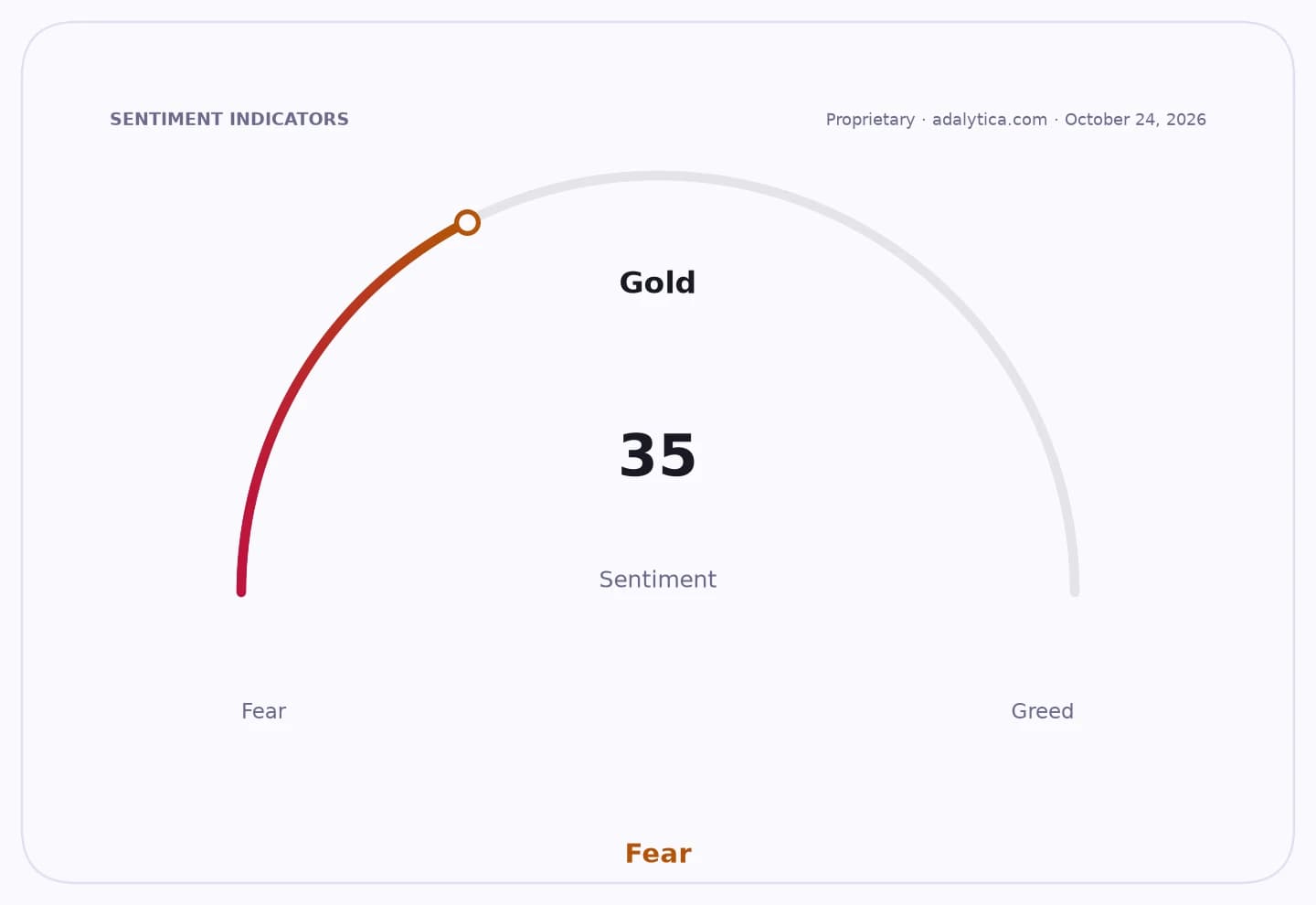
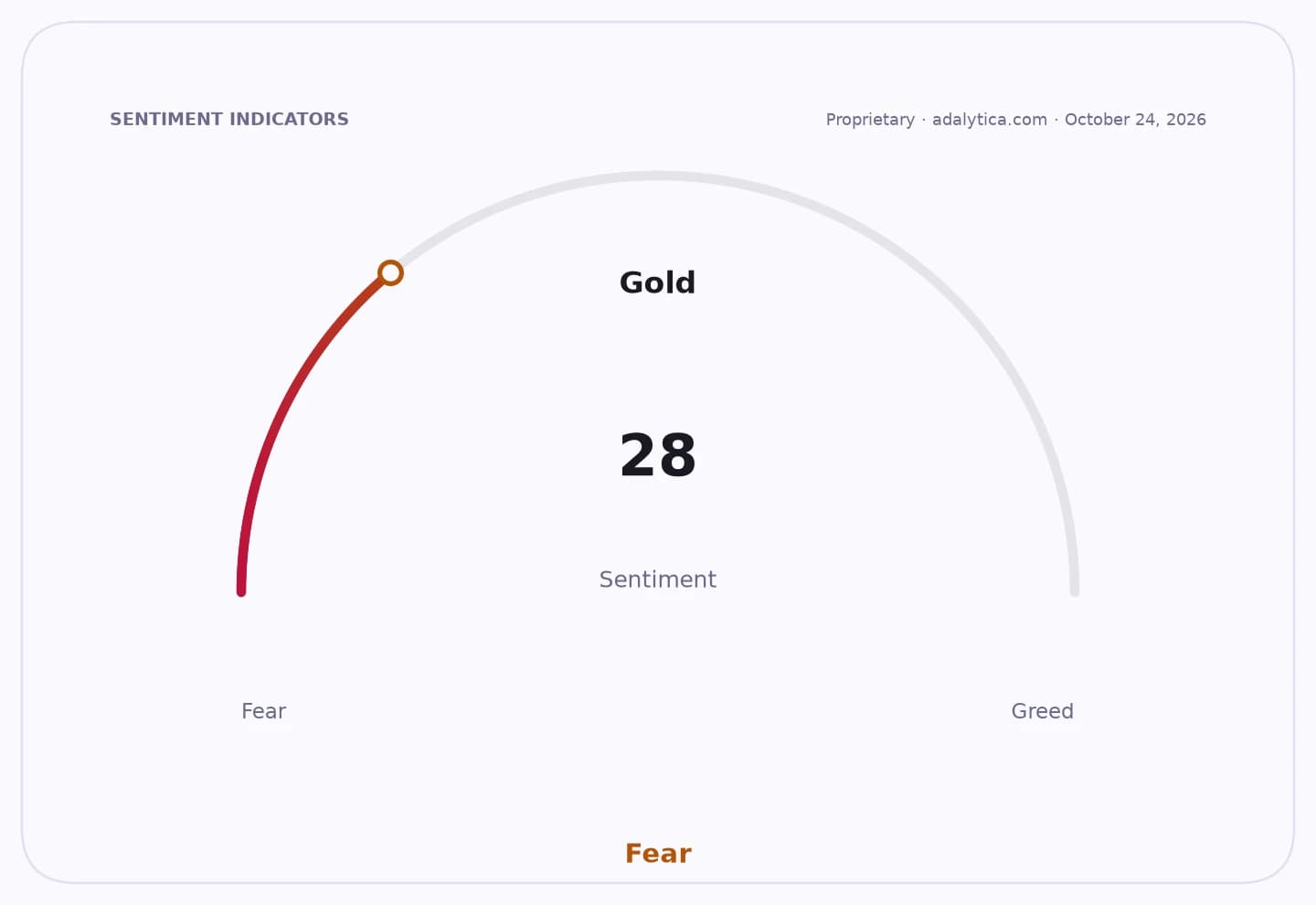
Sentiment IndicatorsⓘProprietary · adalytica.com · October 24, 2026
This is a snapshot — live sentiment, awareness and momentum for 130+ markets update continuously in the dashboard.Open AlphaPulse
At SJC, ring gold was quoted at 137.7 million dong a tael for purchases and 141.2 million dong for sales after the steep cut. Other branded rings also fell, including PNJ, which dropped 900,000 dong a tael, while DOJI and Phu Quy each cut prices by 600,000 dong. On the bar side, SJC bars lost 500,000 dong a tael on both sides to 139.6 million dong bought and 142.6 million dong sold, with several rivals making similar reductions.
The pressure is not just local. Spot gold slipped to $4,132.70 an ounce, while the December contract eased to $4,134.24, reinforcing the sense that the retreat is part of a broader precious-metals selloff rather than a purely domestic dislocation. Converted at Vietcombank’s rate, global gold works out to roughly 129.8 million dong a tael, still far below retail prices in Vietnam, which shows that local premiums remain elevated even after the latest slide.
For investors, that premium matters. When domestic gold trades well above international levels, any cooling in sentiment can hit retail demand quickly, especially for ring and jewelry products that households often treat as both adornment and savings. The latest moves suggest buyers may get more selective, while dealers face the risk of thinner turnover if prices keep falling.
There are also signs the pullback may not be over. The Adalytica Gold Fear & Greed Index for GLD has dropped to 28, firmly in “Fear,” while its 7-day change shows a steep deterioration in sentiment. At the same time, gold exchange-traded funds such as GLD and IAU have been under pressure, with their prices slipping below recent levels and momentum indicators softening, a reminder that the metal is losing some of the defensive bid that carried it earlier in the year.
That does not make gold a broken asset class. For long-term investors, gold still serves as a portfolio diversifier and a hedge against policy mistakes, currency swings and geopolitical shocks. But when prices are falling in both the global market and a retail-heavy market like Vietnam, discipline matters more than headlines. If you are considering buying, this is a moment to think in years, not days, and to avoid chasing every dip.
For now, the key takeaway is simple: Vietnam’s gold market is repricing fast, and SJC remains at the center of the move. That makes the current weakness worth watching, but not a reason to abandon a well-diversified long-term strategy.
| Entity | Gains | Losses |
|---|---|---|
| Buyers of gold jewelry/rings | ▲Lower entry prices | ▼Recent holders of inventory |
| SJC and other dealers | ▲Potential restocking later | ▼Near-term retail margins |
| Long-term gold investors | ▲Better valuation if weakness persists | ▼Mark-to-market losses |
| USD and cash savers | ▲Relative appeal improves | ▼Gold sentiment and demand |