Vietnam’s biggest property lobby is pressing lawmakers to bring land subdivisions outside formal projects under the real estate law, a move that could close a long-standing gap in buyer protections and tighten oversight of a market segment prone to opaque plot-splitting and speculative dealing.
Vietnam property lobby seeks land law changes
The proposal from the Ho Chi Minh City Real Estate Association, or HoREA, would expand the draft amended Law on Real Estate Business to cover transfers, leases and subleases of land-use rights with technical infrastructure even when the land is not part of a real estate project. The group argues that without that change, transactions created through parcel-splitting and land-use conversion can escape the protections normally attached to project-based property deals.
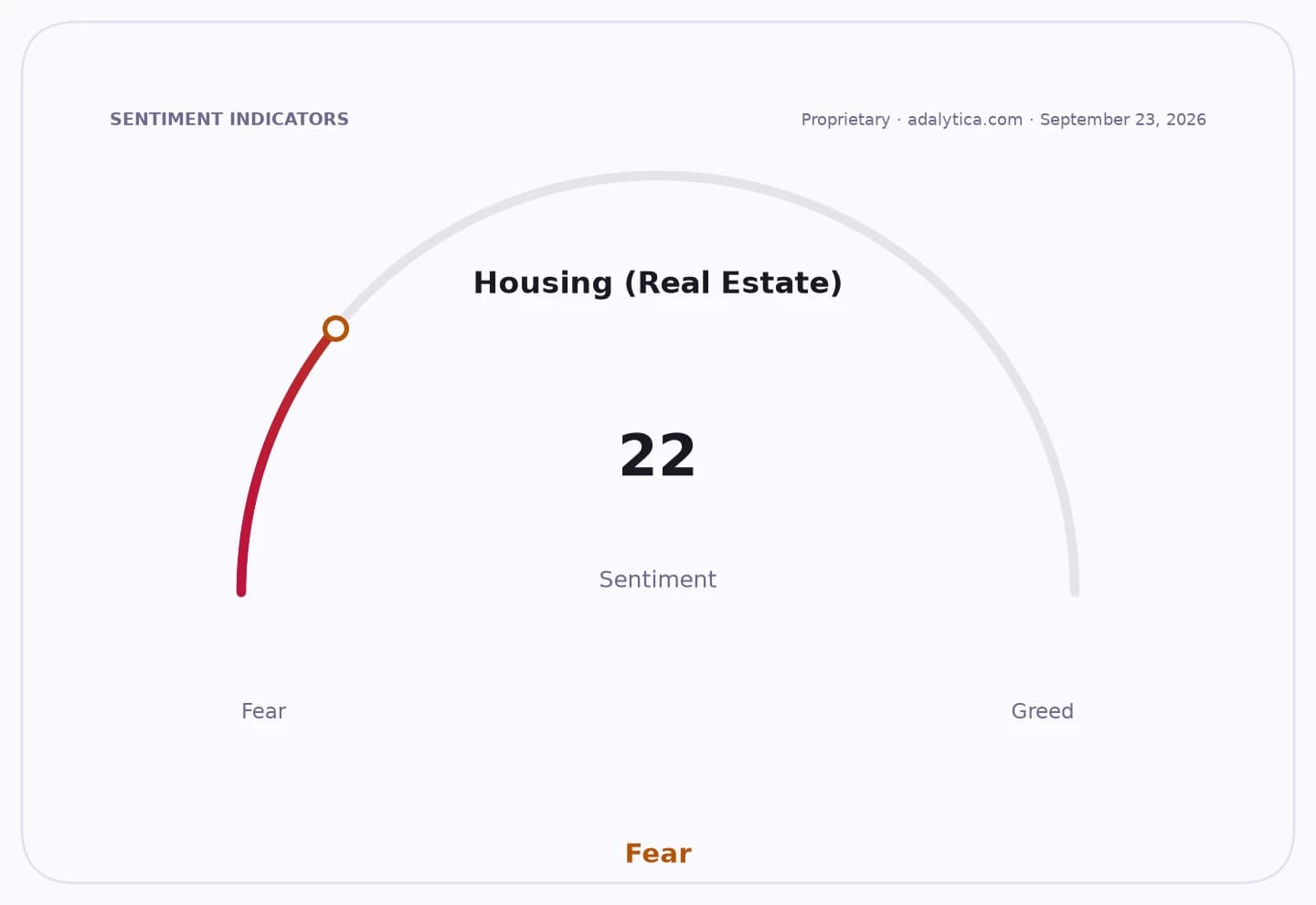
Sentiment IndicatorsⓘProprietary · adalytica.com · September 25, 2026
This is a snapshot — live sentiment, awareness and momentum for 130+ markets update continuously in the dashboard.Open AlphaPulse
That matters because the economic risk is not just legal formality. HoREA says the current framework leaves room for so-called dealers, or developers operating through nominal land users, to divide plots and sell them outside the project regime. In practice, that can mean weaker disclosure, less certainty on infrastructure, and fewer remedies if a sale goes wrong — all of which raise transaction risk and can depress confidence in a segment that remains important for household wealth and local housing supply.
The association is also asking lawmakers to rewrite the definition of real estate business so it explicitly includes the transfer, lease and sublease of land with technical infrastructure, plus project transfers and brokerage-related activities. It wants corresponding changes to the list of legally recognized contracts, arguing that the law must be internally consistent if it is to regulate the market effectively.
The policy case is strengthened by Vietnam’s broader land reforms. HoREA points to the 2023 Housing Law, which limits land subdivision for self-build housing in special-class, class I, II and III urban areas, and to the 2024 Land Law, which still allows households and individuals to split or merge plots if technical and minimum-size conditions are met. That combination can leave “leftover” plots that still reach the market, creating a grey zone between ordinary civil transactions and property business activity.
For investors, the key question is who wins from a tighter regime. A clearer law would likely favor developers with formal projects, institutional brokers and buyers seeking better protections. It would weigh on smaller operators and informal intermediaries whose business model depends on regulatory arbitrage. If adopted, the change could also improve market transparency over time, potentially reducing the kinds of fraudulent or poorly documented sales that have periodically damaged sentiment in Vietnam’s land market.
The proposal does not mean an immediate tightening, but it signals where regulation is heading: toward treating infrastructure-equipped land sales as property business rather than a loosely supervised civil transaction. That could reshape margins and deal structures across the sector, especially in peri-urban markets where plot-splitting has been most common and where future supply will increasingly depend on how aggressively the state draws the line between land dealing and formal project development.
| Entity | Gains | Losses |
|---|---|---|
| Project developers | ▲Clearer rules | ▼Informal rivals |
| Homebuyers | ▲Stronger protection | ▼Speculative sellers |
| Regulators | ▲Better oversight | ▼Grey-market operators |
| Brokers/institutional firms | ▲More formal market | ▼Small land dealers |