Vietnam is moving from using foreign direct investment as a source of capital to treating it as a tool for building homegrown industrial capacity, a shift that matters for growth, productivity and the country’s role in global supply chains.
Vietnam FDI Policy Shifts Toward High-Tech Industry

After nearly 40 years of opening up, the central economic question is no longer how much FDI Vietnam can attract, but how much technology, management expertise, local supplier depth and value-added the economy can retain. That is the core message behind a new policy push under Resolution 10-NQ/TW, which sets a target of $40 billion to $50 billion in registered FDI a year by 2030 while tightening the focus toward high-tech and strategically important sectors.
The numbers underscore why the debate has moved from quantity to quality. In the first eight months of 2026, registered FDI reached $40.63 billion, up 55.4% from a year earlier, while disbursed capital hit $17.25 billion, the highest in five years. Yet the foreign-invested sector still accounted for 79.9% of Vietnam’s total exports, including 99.4% of electronics, 99.9% of phones and 95.4% of machinery and equipment. In other words, foreign capital is powering the export machine, but domestic firms are capturing only a limited share of the value chain.
That imbalance matters economically because Vietnam’s next stage of growth depends less on attracting more assembly lines and more on building the capabilities to design, source, manufacture and manage higher-value activities at home. If the economy remains dependent on a narrow foreign-invested export base, it risks stronger headline trade performance without a corresponding rise in domestic productivity, local supplier development or technological spillovers.
For investors, the policy shift points to a more selective FDI regime. Vietnam is signaling preference for projects in electronics, semiconductors, digital equipment, artificial intelligence, big data, cloud computing, biotechnology, advanced medicine, clean energy, new materials, modern logistics and high-value services. That favors multinational companies able to bring technology, integrate local suppliers and commit to knowledge transfer. It is less accommodating to capital that merely exploits low-cost labor without building domestic linkages.
The bull case is that a more deliberate strategy could make Vietnam a larger beneficiary of the reconfiguration of global supply chains, especially as firms diversify away from China and seek resilient manufacturing bases in Southeast Asia. A better FDI filter could deepen industrial clustering, improve productivity and create a more durable earnings base for companies tied to logistics, industrial parks, utilities and domestic manufacturing support.
The bear case is execution. Vietnam’s policy direction is clear, but the binding constraint is implementation at the provincial and project level. A selective regime only works if local authorities can screen projects well, enforce technology-transfer expectations and build supplier ecosystems that allow domestic firms to scale. Without that, “high-tech FDI” risks becoming just another enclave, with export volumes rising but domestic linkages remaining shallow.
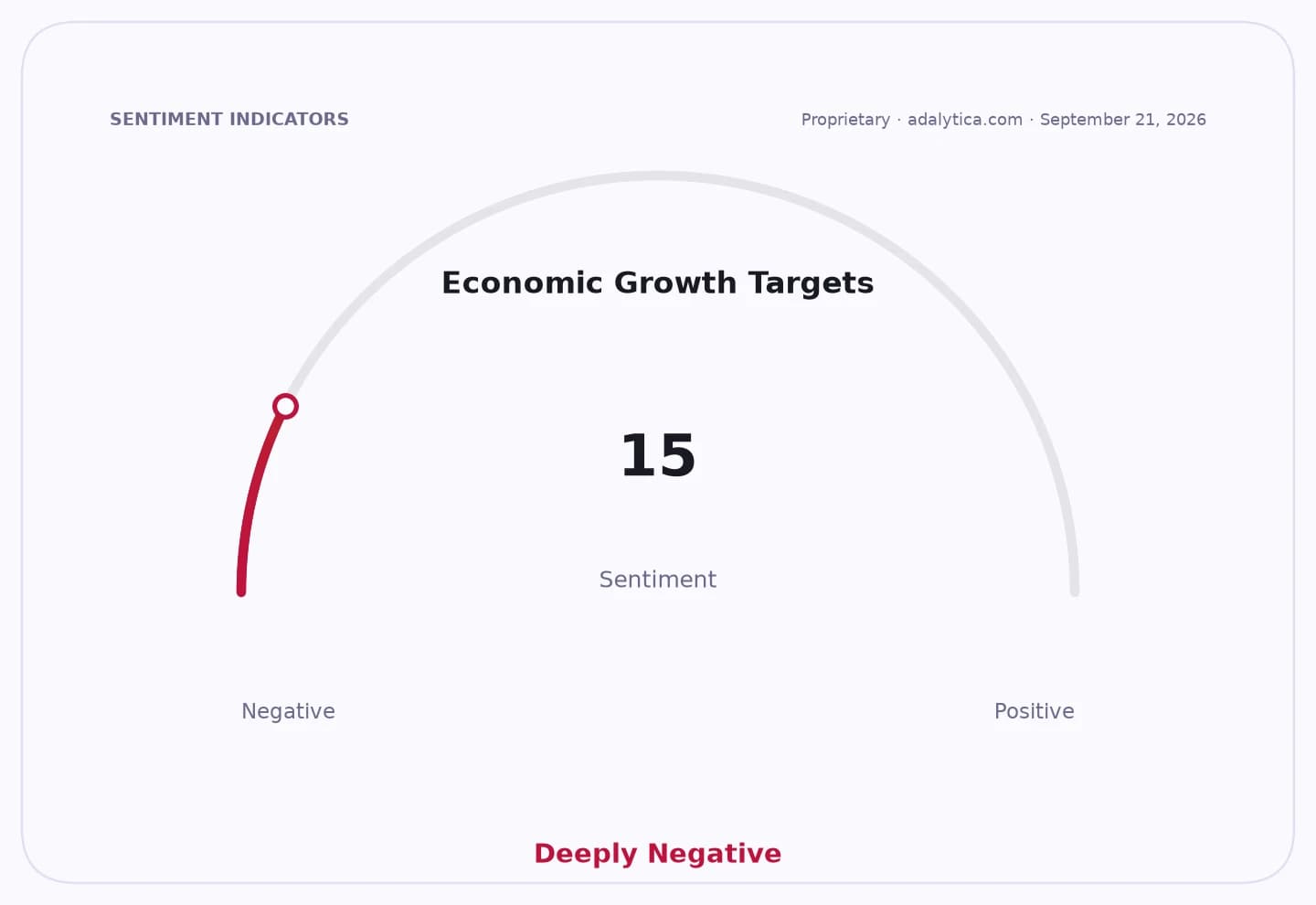
The broader narrative is that Vietnam has already won the first phase of FDI-led development. The next phase is whether it can convert foreign capital into endogenous capacity — a domestic industrial base that keeps more of the gains from growth inside the economy. That will determine whether the country can realistically support double-digit growth ambitions without repeating the old model at a larger scale.
| Entity | Gains | Losses |
|---|---|---|
| Vietnam policymakers | ▲Higher domestic value capture | ▼Easy FDI-at-any-cost model |
| High-tech multinationals | ▲Preferred access to projects | ▼Low-value assembly investors |
| Domestic suppliers | ▲More linkages and spillovers | ▼Continued marginalization |
| Export-dependent economy | ▲Deeper industrial capacity | ▼Foreign-led enclave growth |