Vietnam’s car import mix is tilting sharply toward China, and the shift is no longer about cheap models but higher-value vehicles that are reshaping the country’s auto market.
Vietnam imports more higher-value cars from China
Vietnam imported 44,335 complete cars from China in the first eight months of 2026, worth nearly $1.6 billion, according to preliminary customs data. That made China one of the most important suppliers of fully built vehicles into Vietnam by value, and the standout development is the average price per vehicle: China’s exports to Vietnam now outstrip Indonesia and Thailand on value despite similar or lower unit volumes, suggesting Chinese brands are moving decisively into more expensive segments.
The numbers underline how the competitive map has changed. Indonesia shipped 70,366 vehicles to Vietnam over the same period, far more than China, but the value was just over $1 billion. Thailand exported 44,411 vehicles — almost the same number as China — yet the value was only $923 million. In other words, Vietnamese buyers paid roughly $556 million more for China-built vehicles than for Indonesian imports and more than $644 million more than for Thai imports, reflecting a materially higher average selling price.
That shift matters economically because it points to deeper penetration by Chinese automakers into Vietnam’s most profitable segments, including SUVs, premium electric vehicles and multi-purpose vehicles. For Vietnam, it means a larger share of vehicle demand is being met by imports rather than local assembly, with implications for the trade balance, dealer networks and the country’s industrial policy ambitions. For China, it shows how excess manufacturing capacity at home is being converted into export growth in markets where consumers are increasingly willing to pay for technology-rich cars.
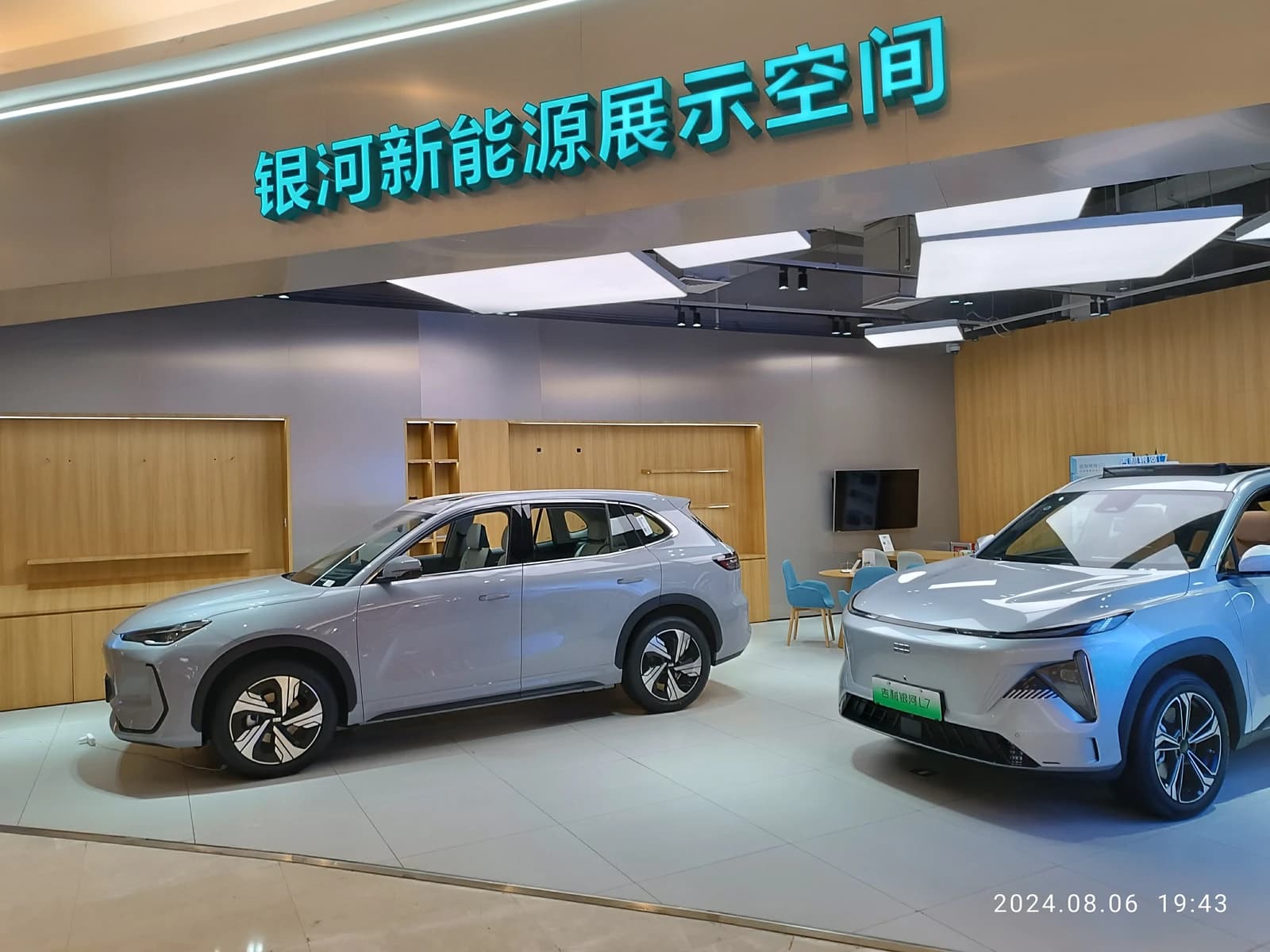
The data also helps explain why Chinese carmakers are gaining traction in Southeast Asia after an earlier failed push in the 2000s. Back then, they were associated with low-cost, lower-quality models sold through fragmented dealer networks. Today, the lineup has broadened and moved upmarket as Chinese manufacturers, under pressure from domestic oversupply, lean harder on electrification, advanced software and aggressive pricing. Vietnam has become one of the clearest examples of that evolution, with 11 Chinese brands now present in the market, including BYD, MG, Wuling, Haval, Lynk & Co, Geely and Omoda.
The pipeline suggests the trend is still in its early stages. Zeekr, Li Auto, Forthing and Icaur are preparing Vietnam launches, while Changan-linked plans include local production through Kim Long Motor in Hue, where a plant is slated to have capacity for 50,000 vehicles a year. If those projects proceed, the story may shift from import-led expansion to a broader China-backed industrial footprint inside Vietnam.
For investors, the implications cut both ways. Chinese auto exporters and their distribution partners stand to gain from a fast-growing market where Chinese brands are now competing on quality as well as price. Traditional Japanese, Thai and Indonesian suppliers face pressure from the higher-value end of the market. The bull case is that Chinese brands deepen share in a still-fragmented market and potentially localize production. The bear case is that rising trade frictions, regulatory scrutiny and intense competition could cap margins even as volumes rise.
What happens next will hinge on whether Vietnam’s consumer demand continues to favor imported Chinese EVs and premium models, and whether planned assembly investments can convert sales momentum into a durable manufacturing base.
| Entity | Gains | Losses |
|---|---|---|
| Chinese automakers | ▲Higher-value exports | ▼Domestic overcapacity |
| Vietnamese dealers/distributors | ▲Wider model lineup | ▼Greater import dependence |
| Japan, Thailand, Indonesia exporters | ▲— | ▼Share in Vietnam imports |
| Vietnam’s auto industry | ▲Potential new factories | ▼Trade deficit pressure |