Vietnam’s finance ministry has told ministries, agencies and local governments to accelerate the review and disposal of redundant houses and land, and to finish updating the data by 12:00 on Sept. 25, a move that underscores how central public-asset cleanup has become to fiscal discipline and anti-waste efforts.
Vietnam finance ministry orders surplus land review
The directive matters because idle state property is more than an administrative backlog: it ties up land, buildings and capital that could otherwise be reused, transferred, converted or monetized to support public services and economic activity. For a government facing pressure to improve efficiency and reduce losses from misallocated assets, the speed of this process affects both balance-sheet quality in the public sector and the availability of land resources for development.
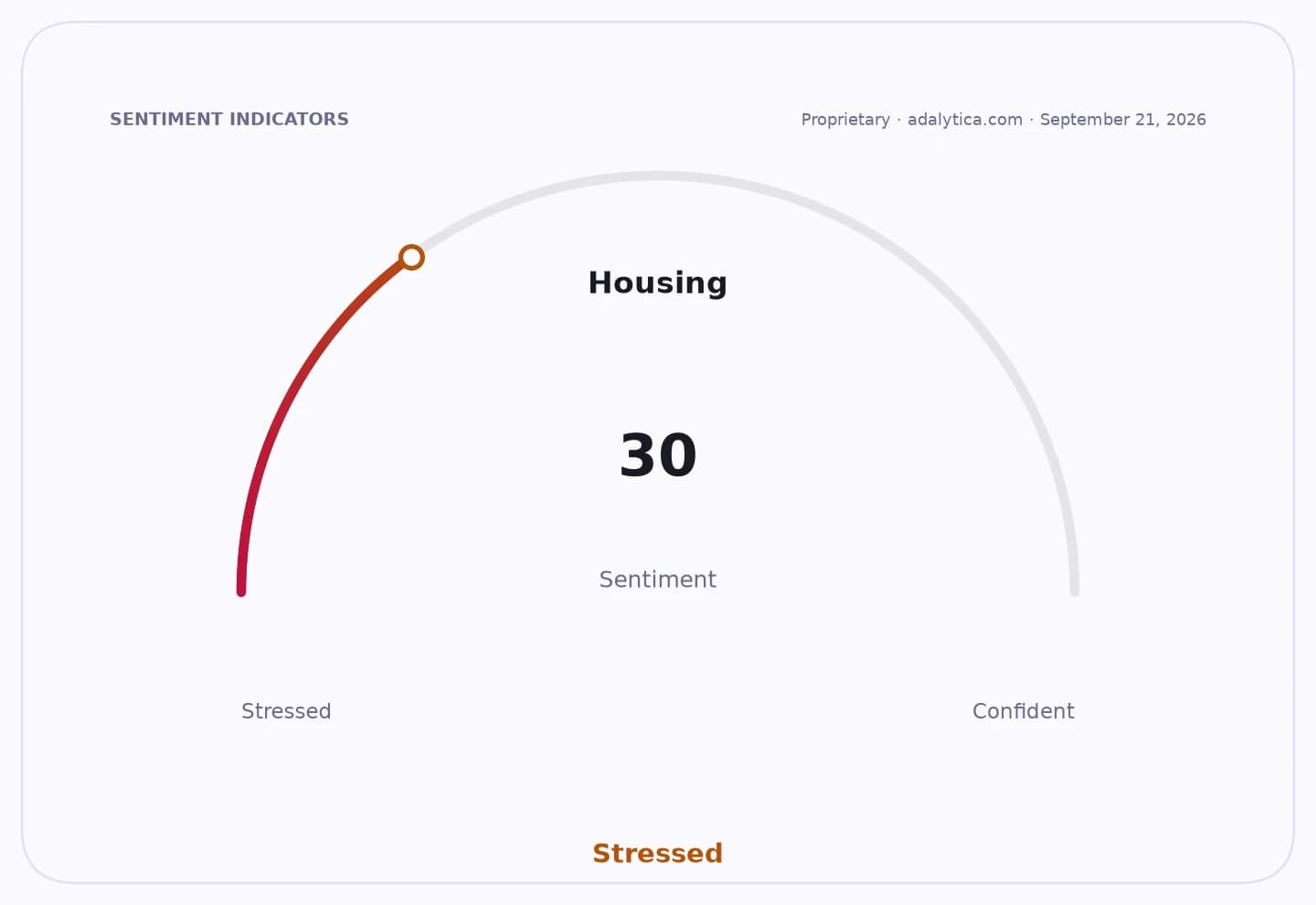
Sentiment IndicatorsⓘProprietary · adalytica.com · September 24, 2026
This is a snapshot — live sentiment, awareness and momentum for 130+ markets update continuously in the dashboard.Open AlphaPulse
The ministry said the deadline is part of a broader push to complete the handling of surplus houses and land this year, with the aim of ensuring data are complete and accurate for aggregation, reporting and follow-up enforcement. Agencies have been told to urgently approve disposal plans and clearly classify assets for continued use, change of function, recovery, transfer, handover or other treatment under the rules.
That reflects a policy shift that has been building across the legislature, government and finance ministry, which have already amended and issued multiple rules on the management of public assets and special mechanisms to speed disposal. The authorities want to prevent a repeat of long-running inefficiencies in which unused offices, warehouses and plots remain on the books while public bodies struggle to find space or funding for more productive uses.
For investors, the relevance is indirect but real. Faster disposal can improve the efficiency of state-owned land use, create fresh supply for redevelopment and reduce the drag from stranded assets. It can also support broader reforms around public finance and urban planning, both of which matter for sectors exposed to land values, construction activity and local infrastructure spending.
The risk, however, is that implementation remains uneven. The finance ministry acknowledged that reports and inspections show progress is still slow in some ministries, central agencies and provinces. If the Sept. 25 data deadline becomes another administrative milestone rather than a catalyst for actual asset transfers, the economic payoff will be limited.
The near-term focus will be on whether local authorities can complete classifications and approvals on time, and whether the central government follows through with enforcement. If it does, Vietnam could unlock a meaningful amount of public land and property for more productive use; if not, the surplus-asset backlog will remain a reminder of how hard it is to convert reform directives into economic value.
| Entity | Gains | Losses |
|---|---|---|
| Finance Ministry | ▲Better data control | ▼Continued backlog if delayed |
| Local governments | ▲Clearer asset mandates | ▼Higher compliance burden |
| State agencies | ▲More efficient property use | ▼Idle assets under scrutiny |
| Investors/developers | ▲Potential land supply | ▼Fewer quick transactions if stalled |