Vietnam’s State Treasury raised more than 70 trillion dong in government bond auctions in September as borrowing costs climbed to their highest levels in nearly four years, underscoring how tighter domestic funding conditions are reshaping fiscal financing.
Vietnam Treasury Bond Yields Rise in September
The Hanoi Stock Exchange said the Treasury mobilized 70.14 trillion dong in 25 auctions last month, up 152% from August, even as winning yields on the most actively issued tenors edged up again. The increase shows the government can still place debt in size, but only at a higher cost, a trend that matters because it feeds directly into budget pressures, debt service costs and the pace of public investment.
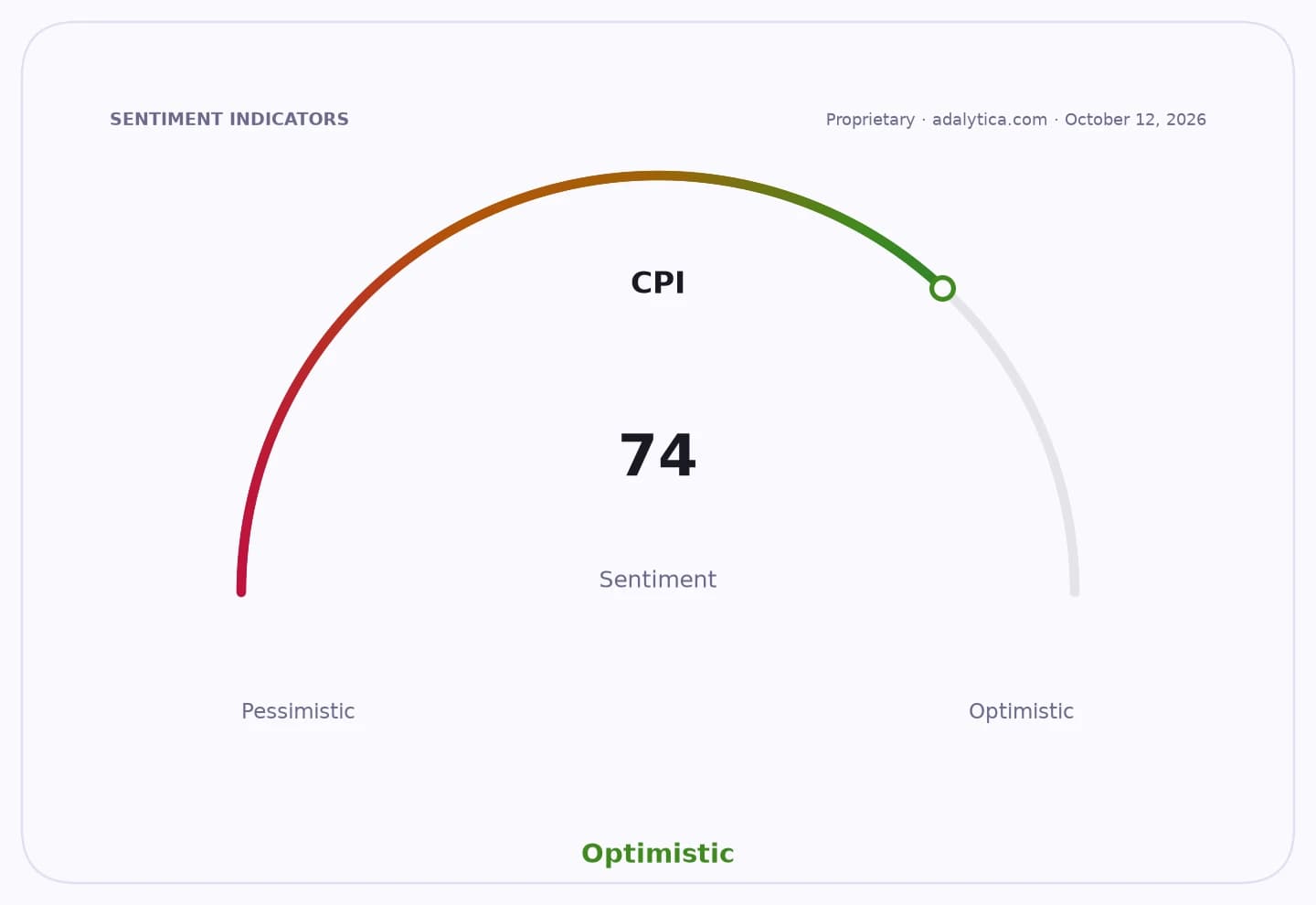
Sentiment IndicatorsⓘProprietary · adalytica.com · October 10, 2026
This is a snapshot — live sentiment, awareness and momentum for 130+ markets update continuously in the dashboard.Open AlphaPulse
Year to date, the Treasury has raised 299.06 trillion dong, equal to 60% of its full-year issuance plan. Most of the supply has been concentrated in five- and 10-year paper, which together accounted for nearly all issuance in September, suggesting demand remains strongest in the belly of the curve even as investors demand more compensation for duration risk.
At the end of September, winning yields on five-, 10- and 30-year bonds rose by 2 basis points from the late-August auction to 4.27%, 4.43% and 4.62%, respectively. That may look modest, but it reinforces a broader move that has pushed Vietnamese government borrowing costs to levels not seen since around 2022. For the fiscal authorities, the risk is not an auction failure but a gradual repricing of sovereign funding that can squeeze room for spending priorities and force more careful debt management.
The secondary market data point to a market that is still functioning, but with less foreign participation. Listed government bond value rose to 2.81 quadrillion dong at end-September, while average daily trading jumped 26.7% month on month to 21.78 trillion dong. Outright trades made up 65.5% of activity and repos 34.5%, indicating healthy turnover. But foreign investors accounted for just 2.5% of market volume and sold a net 80 billion dong, a reminder that higher yields have not yet been enough to bring in meaningful overseas demand.
For investors, the immediate implication is a firmer rates backdrop across Vietnam’s fixed-income market. Higher sovereign yields can lift benchmark funding costs for banks and corporates, influence pricing for future municipal or infrastructure bonds and make risk assets more sensitive to any further tightening in domestic liquidity. That is especially relevant as Ho Chi Minh City considers tapping international bonds through its financial center to fund infrastructure, while the Finance Ministry says there are no immediate plans for national-level foreign issuance.
The broader narrative is one of a government still able to fund itself, but in an environment where the cost of capital is rising faster than previous budget assumptions. If yields stay elevated, the pressure will build not only on the Treasury’s issuance strategy, but also on local authorities seeking alternative financing and on investors weighing duration exposure against still-rising returns.
| Entity | Gains | Losses |
|---|---|---|
| Vietnam Treasury | ▲raises funds in size | ▼pays higher borrowing costs |
| Bond investors | ▲earn higher yields | ▼face price risk |
| Banks and issuers | ▲clearer benchmark pricing | ▼higher funding costs |
| Ho Chi Minh City infrastructure plans | ▲case for new financing channels | ▼budget flexibility under pressure |