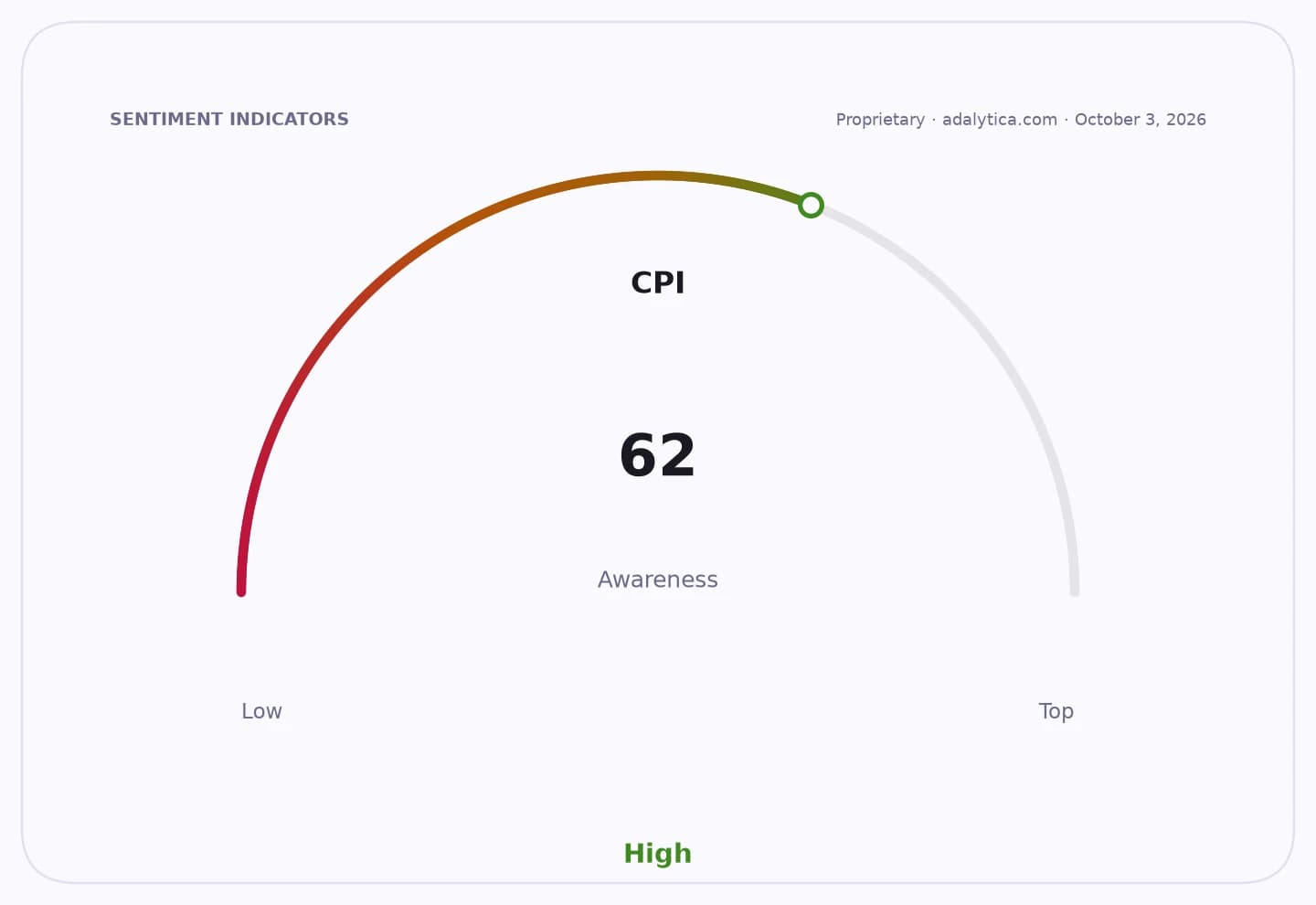
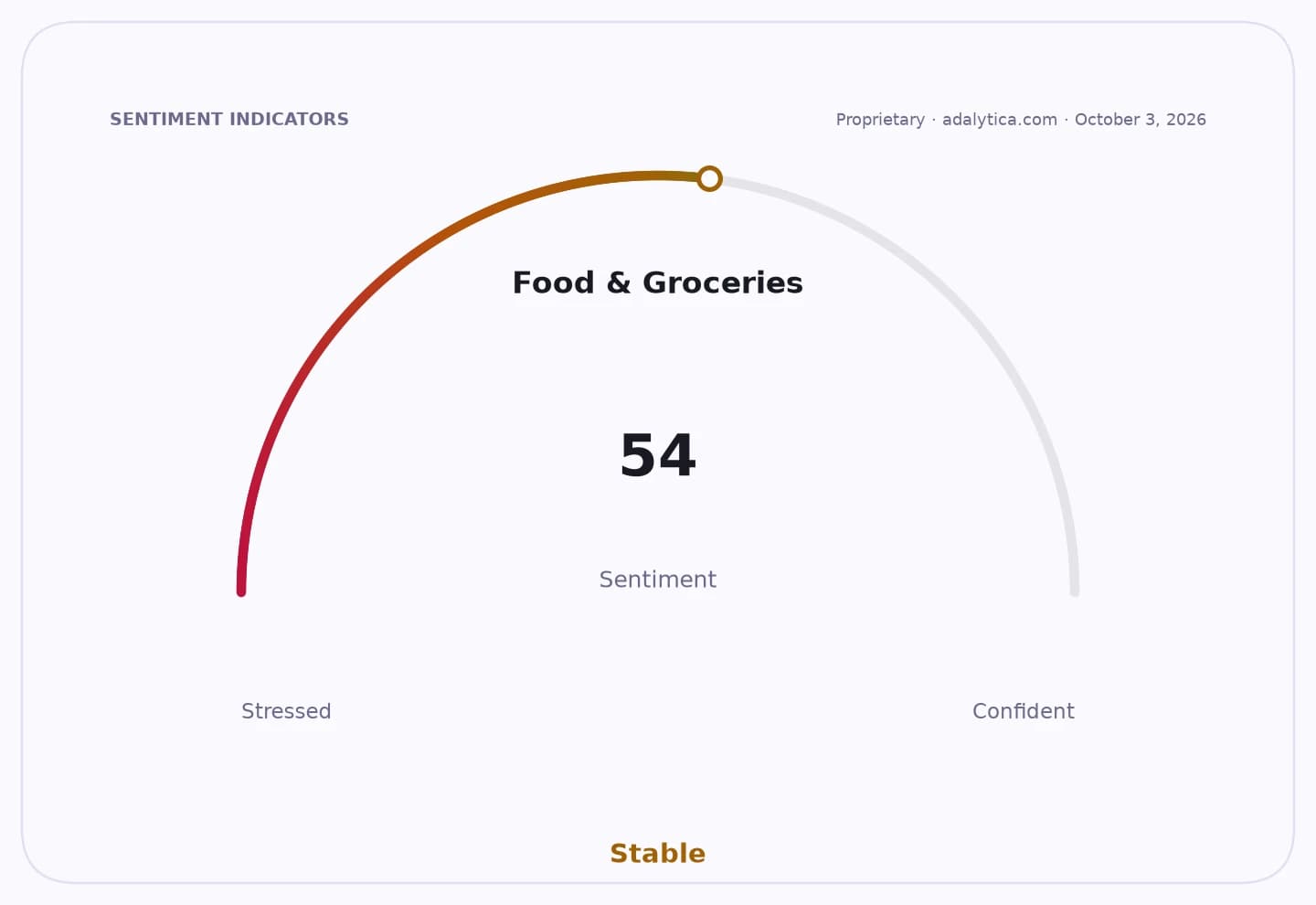
Vietnam is preparing for another year of inflation above the government’s comfort zone, with the finance ministry outlining two 2026 scenarios of 4.5% and 4.8% as policymakers brace for energy shocks, supply-chain disruptions and stronger year-end demand.
Vietnam Inflation Forecast Set at 4.5% to 4.8% for 2026
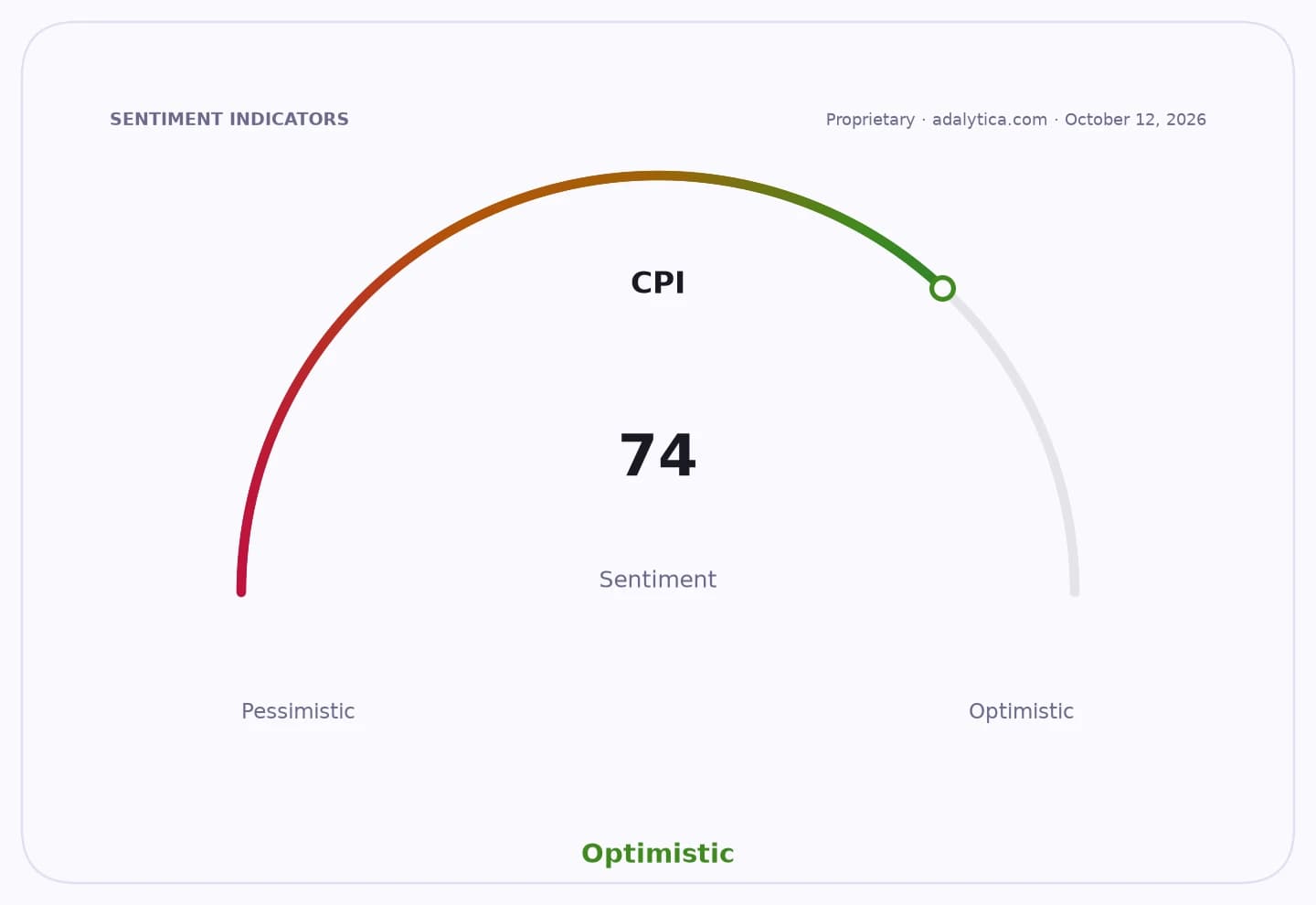
The forecast matters because it suggests price pressures are no longer just a short-term post-pandemic hangover but a policy variable that could shape fiscal, monetary and local-government decisions through 2026 and into 2027. With consumer prices up 4.52% in the first nine months of this year and core inflation at 4.26%, Hanoi is effectively warning that the disinflation path remains fragile even before next year’s demand cycle fully kicks in.
Sentiment IndicatorsⓘProprietary · adalytica.com · October 12, 2026
This is a snapshot — live sentiment, awareness and momentum for 130+ markets update continuously in the dashboard.Open AlphaPulse
Deputy Finance Minister Tran Quoc Phuong said fourth-quarter inflation risks remain elevated from global energy markets, supply-chain interruptions and the usual seasonal lift from public investment and holiday consumption. The ministry’s 2026 range is broadly in line with the State Bank of Vietnam’s estimate of 4.5%-5.0% and sits within the 4.2%-5.5% band from international institutions, suggesting officials and external forecasters are converging on a message that inflation is contained, but only just.
For investors, the implications are twofold. First, a 4.5%-4.8% inflation environment limits room for aggressive monetary easing and keeps attention on real rates, bond yields and the currency. Second, it raises the stakes for sectors exposed to regulated pricing, imported fuel and food costs, as well as consumer staples and discretionary names that depend on household purchasing power. The State Bank’s willingness to stay vigilant will matter as much as the headline CPI number itself.
The government is already signaling a more hands-on response. Deputy Prime Minister Nguyen Van Thang ordered ministries and provinces to coordinate price-setting for state-controlled goods, intensify checks on posted prices and crack down on hoarding, speculation and opportunistic markups. He also pushed companies to pass through lower input costs more quickly when raw materials fall, an attempt to prevent margin expansion from feeding into broader price instability.
That reflects the core policy tension in Vietnam’s inflation outlook: sustaining growth through investment and consumption while preventing locally uneven price control from turning into a national CPI problem. The finance ministry said some provinces are managing prices well while others are not, and from 2027 the government plans to assign CPI-control targets to each locality, effectively making inflation accountability more granular.
The broader market message is that Vietnam is not facing an inflation crisis, but it is entering a period where price stability will be harder to maintain than growth advocates may like. If energy prices stay volatile and public investment accelerates as planned, inflation could hover near the top of the official range, leaving policymakers with less room to support activity and forcing investors to focus on sectors with pricing power and lower import sensitivity.
| Entity | Gains | Losses |
|---|---|---|
| Vietnamese government | ▲tighter inflation control | ▼less policy flexibility |
| Consumers | ▲price enforcement | ▼weaker purchasing power |
| Banks and bond investors | ▲stable policy credibility | ▼higher for longer rates risk |
| Importers and fuel-sensitive firms | ▲lower inflation pass-through | ▼higher input-cost volatility |