Inflation in Britain accelerated to a five-month high in August, underscoring the risk that households will face a fresh squeeze on living standards just as the government prepares its autumn Budget and markets begin to price a higher-for-longer interest-rate path.
UK inflation rises to five-month high in August

Consumer prices rose 3.1% from a year earlier, up from 2.9% in July, driven largely by a jump in fuel prices after the breakdown of the US-Iran ceasefire and by more expensive air travel. Petrol climbed 9.1 pence a litre to 161.3 pence, its highest level since 2022, while diesel rose 14.2 pence to 181.8 pence. Airfares also increased 6.2%, adding to the month’s inflationary pressure.
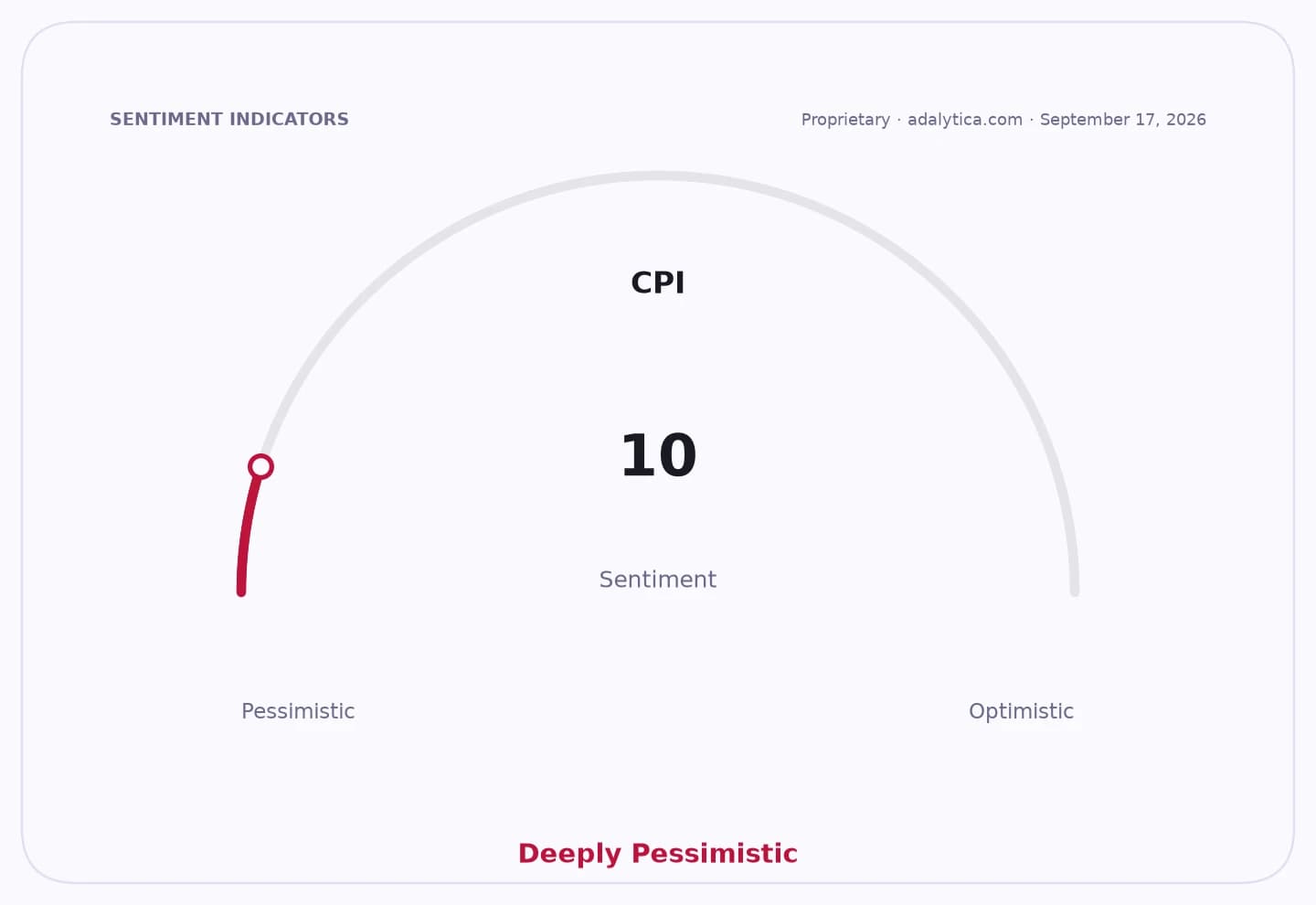
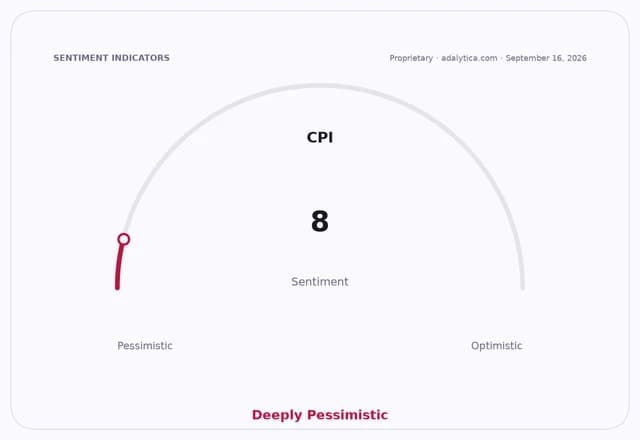
Sentiment IndicatorsⓘProprietary · adalytica.com · September 16, 2026
This is a snapshot — live sentiment, awareness and momentum for 130+ markets update continuously in the dashboard.Open AlphaPulse
The economic significance is less the one-month rise itself than the direction of travel. Inflation is moving away from the Bank of England’s 2% target just as energy costs are expected to feed through again in October and potentially more sharply in January. Pantheon Macroeconomics sees inflation reaching about 4.5% in January, while RSM UK expects it to peak at almost 4% in early 2027. Even if food and drink inflation stayed flat at 1.3%, a near five-year low, the broader picture points to another leg higher in headline prices rather than a quick retreat.
That matters because the Bank is already in a difficult spot. The Monetary Policy Committee is widely expected to hold rates at 3.75% on Thursday, but the August inflation data strengthens the case for a rate increase later this year if energy-driven price pressures persist. Markets are now pricing around four rate rises by the end of 2027, a trajectory that would take borrowing costs to 4.75%. For investors, that shifts the balance of risks toward tighter financial conditions for longer, keeping pressure on rate-sensitive assets and on companies reliant on consumer demand.

The gilt market is already signalling the strain. The 10-year gilt yield has risen to a 19-year high of 5.41%, making government borrowing more expensive and narrowing Chancellor John Healey’s room for manoeuvre ahead of next month’s Budget. Higher yields also raise the discount rate applied to future cash flows, a headwind for equities more broadly, even as inflation-linked assets and sectors with pricing power look comparatively better placed.
For households, the immediate impact is a renewed cost-of-living squeeze after a brief period of relief. For policymakers, the harder question is whether the inflation rebound is a temporary energy shock or the start of a more persistent problem. The next few prints will be crucial, but with fuel prices still elevated and energy bills set to rise, the burden of proof now lies with those arguing inflation will quickly fade.
| Entity | Gains | Losses |
|---|---|---|
| Energy producers | ▲Higher realized prices | ▼Price-sensitive consumers |
| Inflation-linked bonds | ▲Better inflation protection | ▼Conventional gilts |
| Banks and cash savers | ▲Higher rate expectations | ▼Borrowers and rate-sensitive sectors |
| UK households | ▲Little to none | ▼Cost-of-living budgets |