The Vietnamese dong is under fresh pressure as banks lifted the U.S. dollar to as high as 26,140 per dollar, the strongest selling rate quoted in the market today and a sign that global dollar demand is still overpowering local currency stability.
Vietnamese dong weakens as banks lift dollar to 26,140

That level matters because it comes just ahead of U.S. consumer inflation data, when traders are trying to gauge whether the Federal Reserve can stay relatively hawkish for longer. A firmer dollar typically tightens financial conditions across emerging Asia, raises import costs and can force central banks to defend their currencies more aggressively. For Vietnam, where trade and foreign-currency funding are central to the economy, even a modest move higher in the greenback can ripple through pricing, corporate margins and portfolio flows.
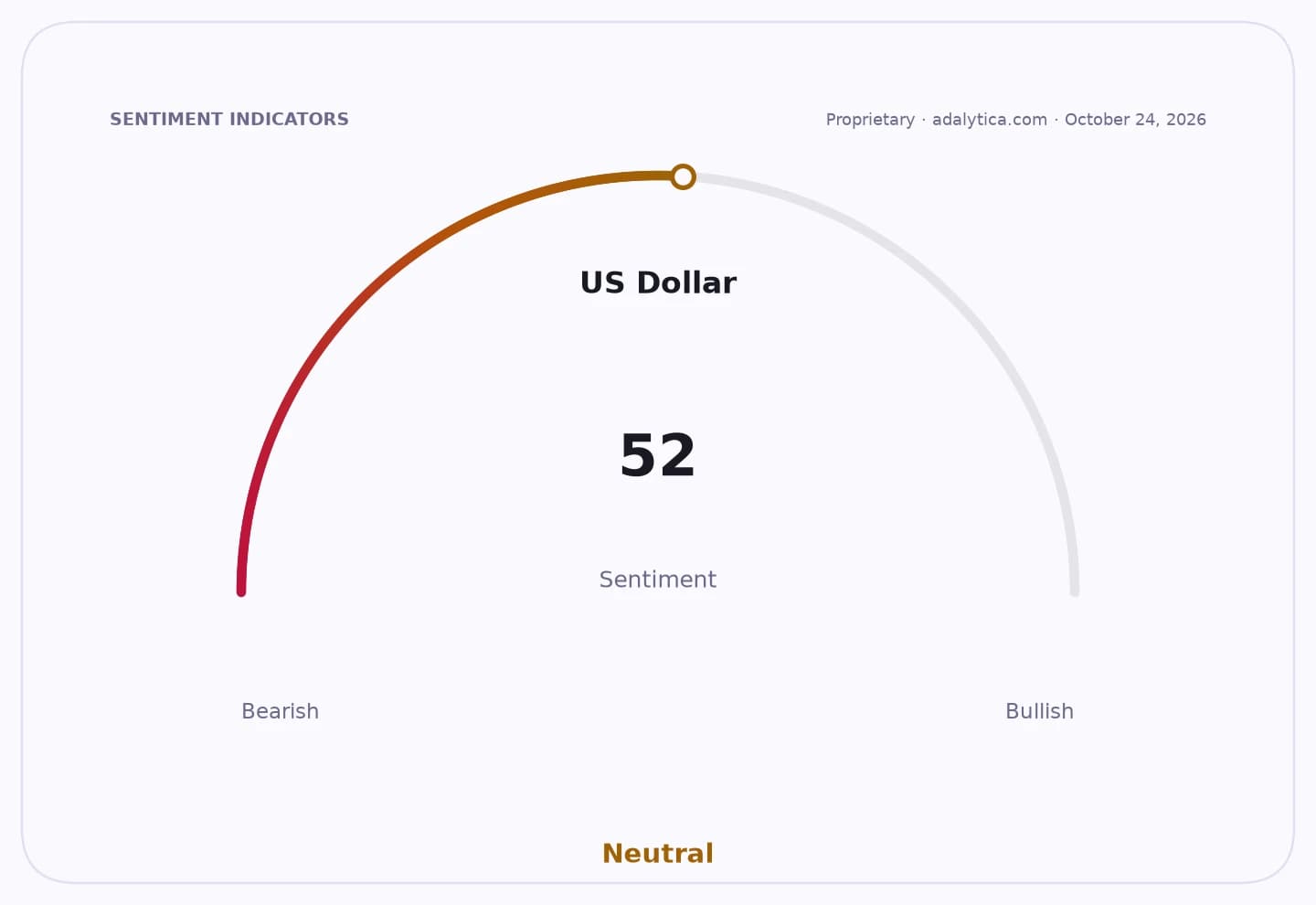
Sentiment IndicatorsⓘProprietary · adalytica.com · October 25, 2026
This is a snapshot — live sentiment, awareness and momentum for 130+ markets update continuously in the dashboard.Open AlphaPulse
Local banks were largely steady, but Techcombank pushed its selling price to 26,140 dong, above Vietcombank’s 26,060 and BIDV’s 26,060. Eximbank and ACB quoted 26,050 on the sell side. In the free market, the dollar hovered around 26,060 dong, also little changed. The message is not panic, but persistence: the dollar is finding buyers every time it softens.
That backdrop fits with broader FX conditions. The dollar index has stayed above its 50-day and 200-day moving averages in recent sessions, while RSI readings around the mid-40s to low-50s suggest the currency is not stretched enough to trigger a meaningful reversal. Adalytica’s dollar trade signals also show neutral sentiment but elevated recent awareness, a combination that often appears when traders are positioning for a catalyst rather than chasing a trend.
For investors, this is not just a Vietnam story. It is a reminder that dollar strength still acts as a hidden tax on risk assets, especially in markets that rely on imported energy, intermediate goods or dollar funding. A stronger greenback can weigh on Asian currencies, pressure emerging-market equities and complicate central-bank policy paths.
The most actionable takeaway is that the market is still paying up for dollar protection. Until U.S. inflation data or the Fed’s tone shifts decisively, the dollar likely remains the asset to own on dips, while import-sensitive sectors, local-currency borrowers and emerging-market FX assets remain the parts of the market most exposed.
| Entity | Gains | Losses |
|---|---|---|
| U.S. dollar | ▲Safe-haven demand | ▼Harder to sustain losses |
| Vietnamese importers | ▲None | ▼Higher input costs |
| Vietnamese exporters | ▲Better FX conversion | ▼Margins can still face volatility |
| Emerging-market assets | ▲Selective carry opportunities | ▼Pressure from firmer dollar |