PayPal and Visa are leaning harder on foreign-exchange fees and cross-border conversion charges at a time when payments growth alone is no longer enough to keep margins expanding.
Visa and PayPal Lean on FX Fees

That matters because FX revenue is one of the least disruptive ways for payments networks and wallets to monetize volume: it does not look like a blunt platform tax, but it captures value from activity that is already moving across borders. In a slower macro backdrop, with the Federal Reserve’s policy rate at 3.63% and the 10-year Treasury yield near 4.79%, investors are increasingly focused on whether payments companies can protect earnings without relying on interchange hikes or heavy new user fees.
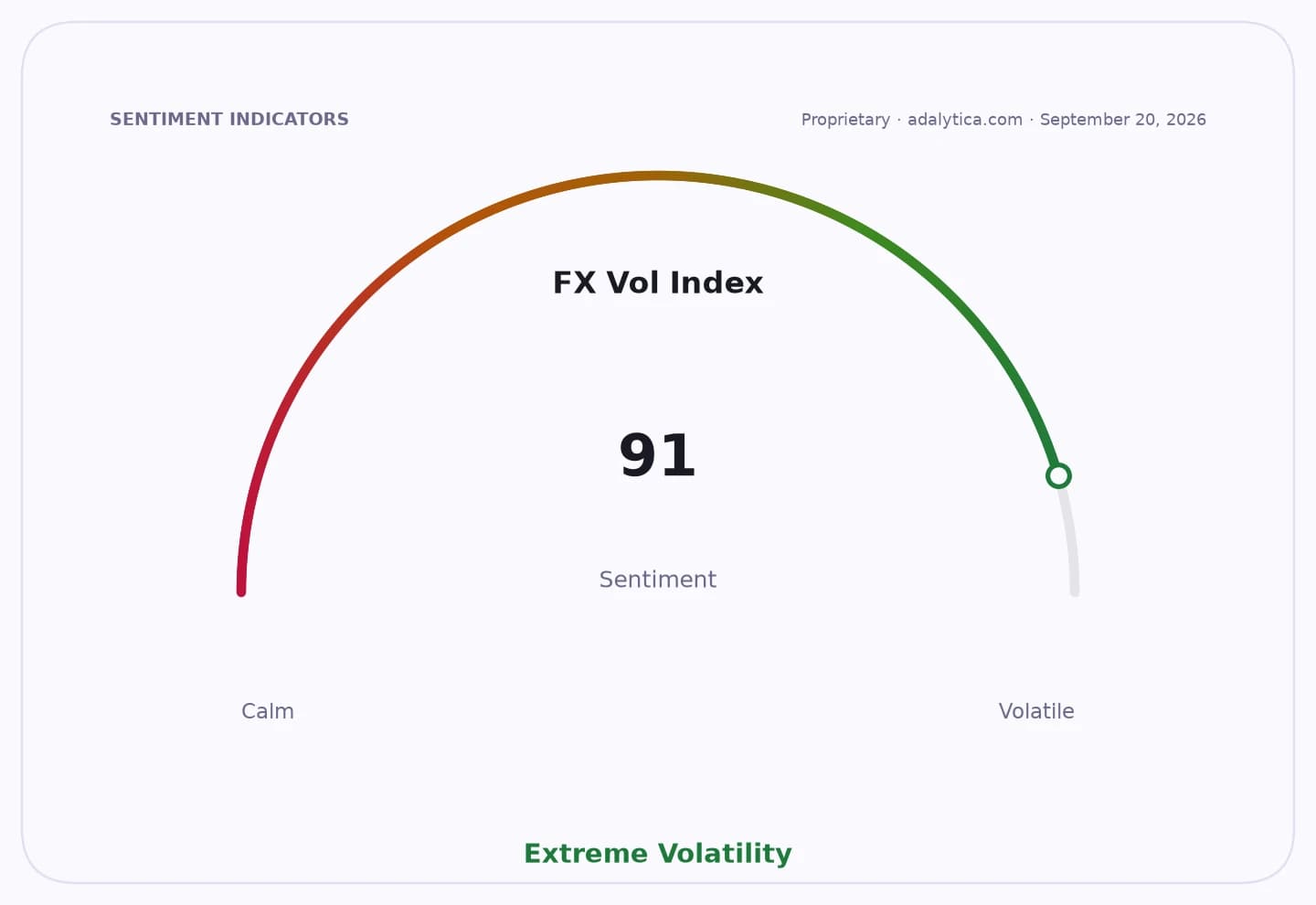
Sentiment IndicatorsⓘProprietary · adalytica.com · September 5, 2026
This is a snapshot — live sentiment, awareness and momentum for 130+ markets update continuously in the dashboard.Open AlphaPulse
For PayPal, foreign-exchange monetization is especially important. The company’s filings show it makes additional revenue when it performs currency conversion and when it enables cross-border transactions. That gives it a built-in lever as more commerce flows outside domestic markets. It also helps explain why FX fees can be attractive from a product standpoint: they are embedded in the transaction, not imposed as a visible subscription or platform charge that risks user backlash.
Visa is even more exposed to the same theme. Its latest quarterly filing said net revenue rose 14% in the June quarter and 15% in the first six months of 2026, driven in part by nominal cross-border volume and processed transactions. Cross-border activity is a premium business for card networks because it carries higher take rates than plain domestic spending, and currency conversion is part of that profit mix. In other words, the more global the spend, the better the economics.
The market is starting to reflect that logic. Visa shares have climbed to about $375, above both the 50-day and 200-day moving averages, while PayPal has recovered to about $55 from a February low near $39, though it remains well below its summer peak. PayPal’s recent price action has been more volatile, and its relative weakness suggests investors still want proof that monetization can translate into durable earnings rather than just another fee layer.
The macro backdrop is helping the case. Adalytica’s US dollar trade signals show sentiment in the greenback at 72, labeled “Greed,” which tends to reinforce the importance of currency conversion and hedging revenue across the industry. A stronger dollar also keeps demand for FX tools, hedges and conversion services elevated, especially for companies with merchant, consumer and cross-border exposure.
The bull case for FX fees is simple: they are recurring, scalable and less politically sensitive than explicit account charges. The bear case is that regulators, merchants or consumers could eventually push back if foreign-exchange markups become too visible, or if competitive pressure forces networks and wallets to share more of the economics with partners.
For investors, the key question is whether FX-related revenue can keep offsetting slower domestic payments growth and higher client incentives. Visa’s scale and pricing power make that easier to believe. For PayPal, it is part of a broader turnaround story: if cross-border conversion and FX take rates keep rising, the company can improve monetization without alienating users in the way a direct platform fee might.
The next catalyst will be whether cross-border volumes and reported FX revenue continue to outpace core payments activity into the year-end shopping season. If they do, the market is likely to keep rewarding the companies best able to turn currency friction into fee income.
| Entity | Gains | Losses |
|---|---|---|
| Visa | ▲Higher cross-border revenue | ▼Domestic-only pricing pressure |
| PayPal | ▲Embedded FX monetization | ▼Users sensitive to visible fees |
| Merchants | ▲More payment options | ▼Higher conversion costs |
| Consumers | ▲Easier cross-border checkout | ▼Worse FX spreads |