Volvo Cars has moved to slash 2,500 jobs and cut costs by 5 billion kronor as a sharp sales slowdown and a deep third-quarter loss force the Swedish carmaker into a more aggressive turnaround, sending its stock down 18% at the open in Stockholm.
Volvo Cars Cuts 2,500 Jobs After Quarterly Loss

The announcement is economically important because it shows the pressure now hitting Europe’s premium auto makers from both sides of the business: weak volumes and heavy pricing strain on the revenue line, and rising fixed costs on the other. Volvo said it posted an operating loss of 5.6 billion kronor in the third quarter, compared with a 6.4 billion-kronor profit a year earlier, underscoring how quickly the profit cycle has turned.
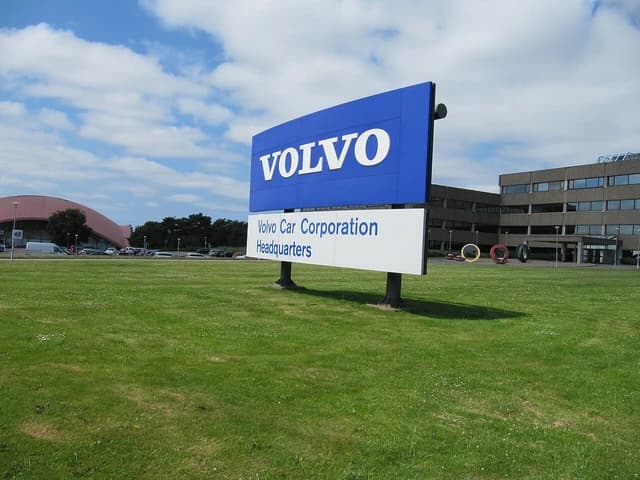
The company said about 2,000 of the cuts will be in Sweden, with the rest spread globally. Most of the reduction will come through ending consultancy contracts, natural attrition and targeted exit packages. Volvo expects the measures to show up late next year and says indirect costs should be nearly 25% lower than in full-year 2024.
For investors, the message is blunt: this is no routine efficiency drive, but a reset of the earnings base. Volvo is trying to push down its break-even level and protect cash flow at a time when it says volumes remain “strongly pressured.” That matters because automotive stocks are levered to marginal changes in unit sales, and when the cycle weakens, cost discipline becomes the only real defense for equity holders.
The selloff also reflects a deeper concern that the company is still fighting structural problems in two of the world’s most important markets, China and the United States. Management pointed directly to a “very challenging environment,” citing deglobalization, hypercompetition and climate change. In practical terms, that means more uncertainty around demand, margins and the pace at which electric-vehicle investment can pay off.
Volvo’s warning should also be read as part of a broader repricing in the auto sector, where electrification, supply-chain friction and slowing consumer demand are forcing companies to trade growth for resilience. The market is increasingly rewarding firms that can defend free cash flow and punish those that cannot. Volvo’s 18% drop shows investors are not waiting for a cleaner quarter.
The next catalyst will be execution. If the company can reduce overhead without derailing production or product rollout, the shares could stabilize from depressed levels. If not, this latest restructuring may prove to be only one more step in a longer earnings reset. For now, the stock looks like a high-risk turnaround, but also one with the potential for sharp upside if management can prove the savings are real and the volume slump is temporary.
| Entity | Gains | Losses |
|---|---|---|
| Volvo Cars management | ▲Lower cost base | ▼Near-term credibility |
| Shareholders who bought the dip | ▲Possible turnaround upside | ▼Immediate mark-to-market losses |
| Swedish workers and consultants | ▲Severance/exit packages | ▼Job losses and uncertainty |
| Rival automakers with stronger balance sheets | ▲Relative competitive advantage | ▼None directly |