Vanguard’s S&P 500 index fund helped turn passive investing into the market’s default setting, but the next leg of returns may favor investors who own the benchmark without letting mega-cap winners dominate it.
VOO vs RSP as S&P 500 breadth shifts

The case is straightforward: the S&P 500 has become heavily concentrated in a handful of giant stocks, and that concentration is now creating a different risk-return profile than the one many investors think they own. Vanguard’s VOO was trading at 708.01 on Sept. 4, while State Street’s equal-weight rival RSP finished at 219.00, both near recent highs, but the real story is not the price level. It is the widening gap between a market-cap-weighted index and a portfolio that forces discipline by giving every stock the same starting position.
That matters economically because the S&P 500 is no longer just a broad proxy for U.S. corporate America. It is increasingly a concentrated bet on a narrow cluster of mega-cap growth and AI-linked names. When those leaders keep compounding, cap-weighted funds win. When leadership broadens, valuation leadership changes, or the giants stumble, equal-weight strategies can outperform with far less dependency on a few names. For an economy facing uneven earnings growth, sticky capital spending, and a market that has already priced in a lot of perfection, that diversification is not a footnote — it is the edge.
The technical picture also argues that investors should be selective rather than complacent. VOO’s 50-day moving average sits around 695.71, with the fund still above its 200-day average near 652.39, but its relative strength index was 47.5 on Sept. 4, down from overheated levels earlier in the year. SPY showed a similar pattern, with RSI at 47.5 and a 50-day average near 756.86. RSP, by contrast, was holding at 219.00, above its 50-day average of 217.12 and 200-day average of 202.63, suggesting the equal-weight trade is regaining traction after a year dominated by a handful of giants.
That divergence is what investors should care about. The market is effectively telling you that broad participation is becoming more attractive than blind concentration. If earnings breadth improves, if the Federal Reserve eventually eases financial conditions, or if AI spending starts to ripple beyond the largest platforms into industrials, utilities, energy, and software, equal-weight exposure can capture the next phase of the rally more efficiently than a cap-weighted fund that already has enormous exposure to the winners everyone owns.
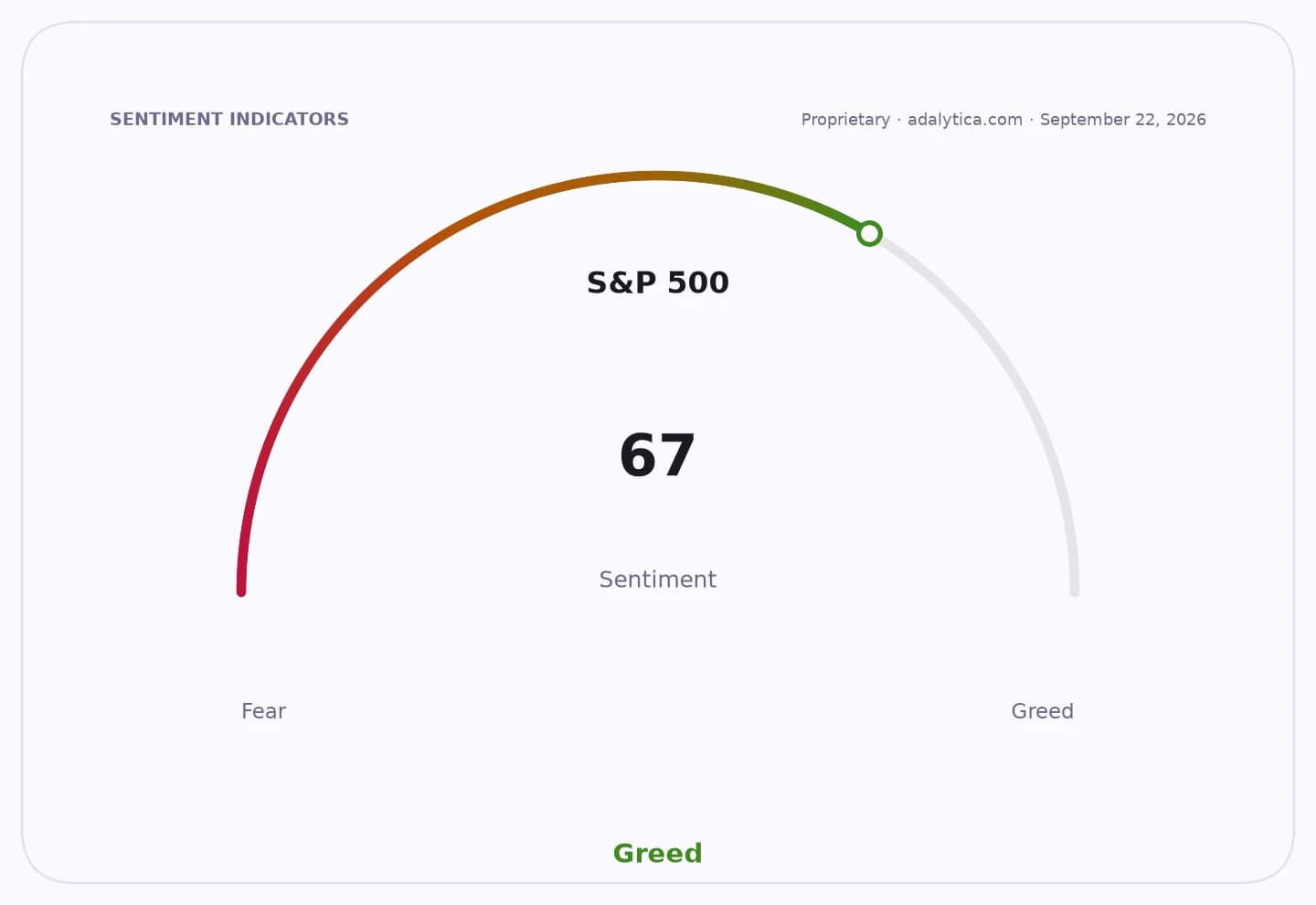
The Adalytica S&P 500 Trade Signals snapshot also shows Extreme Fear in SPY, even as the fund remains close to record territory. That kind of fear is often a warning sign for the crowd, not a reason to abandon equities. It is a reminder that investors are nervous about the very concentration they have tolerated during the last stretch of outperformance.
My thesis is simple: Vanguard’s VOO remains the cleanest way to own the U.S. market, but it is no longer automatically the smartest. If you believe the next market phase will be driven by broader participation, not just the same handful of mega-caps, then RSP deserves a place alongside VOO rather than behind it. The best move now is not to choose one and ignore the other — it is to use both, with equal-weight exposure as the higher-upside complement to the market’s most familiar core holding.
| Entity | Gains | Losses |
|---|---|---|
| RSP | ▲Broader participation | ▼Mega-cap concentration |
| VOO/SPY holders | ▲Simple market exposure | ▼Overreliance on few stocks |
| Mega-cap leaders | ▲Index-driven inflows | ▼Relative dominance if breadth improves |
| Active broad-market pickers | ▲More stock-picking opportunity | ▼Fewer passive concentration gains |