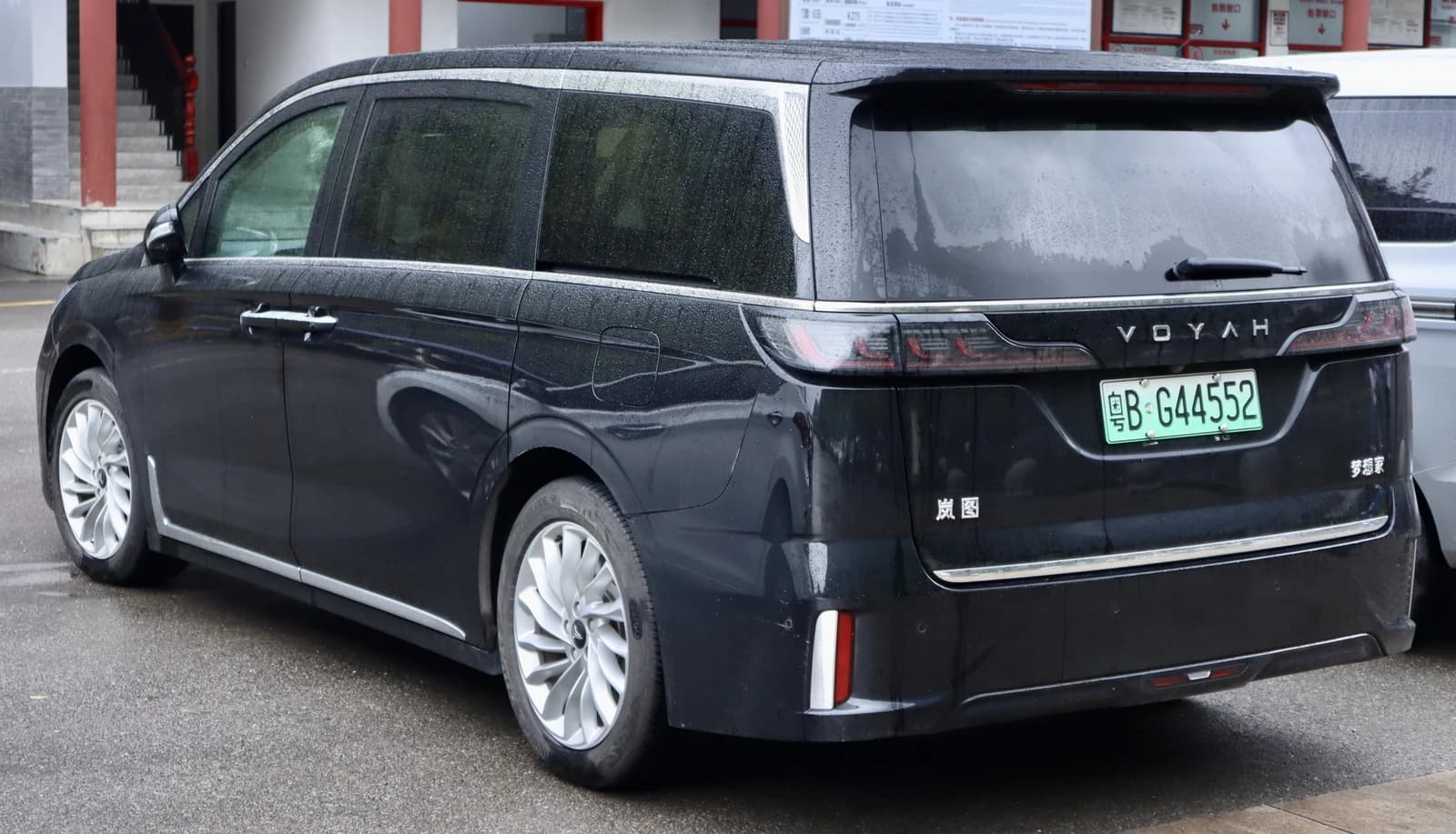
China’s premium-car market just got a new reminder that the most profitable automotive battles are increasingly being fought above the family-hauler aisle. Voyah and German tuner Lorinser have launched the Dreamer Mountain, a four-seat plug-in hybrid MPV priced at 809,900 yuan, or about 3.127 billion dong, aimed squarely at affluent buyers who want executive-class privacy, long-distance flexibility and a cabin that feels more like a private jet than a minivan.
Voyah Dreamer Mountain Launches in China
That matters because China’s auto market is no longer just about volume. It is about margin, brand positioning and whether domestic makers can move up the value chain fast enough to protect profits in a brutal price war. A vehicle like the Dreamer Mountain sits at the intersection of two of the strongest trends in the sector: the rise of electrified luxury vehicles and the growing appetite among wealthy Chinese consumers for large, chauffeur-driven MPVs that double as mobile offices and private lounges.
Sentiment IndicatorsⓘProprietary · adalytica.com · October 12, 2026
This is a snapshot — live sentiment, awareness and momentum for 130+ markets update continuously in the dashboard.Open AlphaPulse
Voyah, the premium arm of Dongfeng, is clearly trying to sell more than transport. The Dreamer Mountain adds a higher roofline, bespoke Lorinser styling, two-tone paint, 20-inch wheels and a grille inspired by traditional Chinese architecture. Inside, the pitch is all about exclusivity: separated rear quarters, Nappa leather, carved wood trim, gold accents, a 50-inch partition display, Dynaudio audio, a 13-liter drawer fridge and rear seats that recline to 166 degrees with massage functions. For buyers in the highest income brackets, those details are not frivolous. They are the product.
The powertrain is just as important to the investment story. The plug-in hybrid setup pairs a 1.5-liter turbo engine with dual electric motors, 62.5 kWh of battery capacity, up to 320 kilometers of pure-electric range and a combined range of 1,405 kilometers under China’s CLTC test cycle. That combination gives the model a practical edge over fully electric luxury vans for executives who still want long-range confidence without depending on charging stops. In other words, it is a hedge against infrastructure anxiety as much as a prestige purchase.
For investors, the launch is a window into where China’s auto profits may be made next. Mainstream MPVs are a fiercely competitive, price-sensitive segment, but luxury variants can command far better economics if brands can sustain demand and keep their cost bases under control. The use of Huawei’s Qiankun ADS driver-assistance system also shows how domestic automakers are leaning on China’s wider tech ecosystem to make premium vehicles feel differentiated without relying entirely on foreign branding.
The competitive backdrop is worth watching. Vietnam’s popular Mitsubishi Xpander and rivals like the Kia Carens Clavis and Honda BR-V are still winning buyers on affordability and practicality, but the Voyah-Lorinser product shows how the MPV class is splitting in two: one track for value-conscious families, another for wealthy owners who want privacy, status and electrified convenience. That split favors manufacturers that can build a credible luxury image while still delivering range and software features that justify a premium.
The big question is whether this kind of halo vehicle can translate into meaningful scale. Luxury MPVs will never be the volume engine of the industry, but they can support brand strength, showroom traffic and higher margins — all crucial in a market where price cuts have become the norm. For long-term investors, that makes Voyah’s move worth watching not as a one-off launch, but as part of China’s broader push to create globally relevant premium automotive brands.
| Entity | Gains | Losses |
|---|---|---|
| Voyah | ▲Higher-margin luxury image | ▼Mass-market volume focus |
| Lorinser | ▲Brand visibility in China | ▼Dependence on niche demand |
| Affluent buyers | ▲Executive-level comfort | ▼Lower-cost MPV shoppers |
| Mainstream MPV rivals | ▲None | ▼Premium differentiation pressure |