Walmart is widening one of its most effective loyalty tools — cheaper gas — in a move that goes straight at Costco’s value proposition and could help the retailer pull in more high-frequency shoppers over time.
Walmart Expands Gas Discounts to Boost Store Traffic
That matters because fuel discounts are not just a perk. They are a traffic driver. For a retailer like Walmart, every extra visit raises the odds that a customer also buys groceries, household staples and private-label products with better margins than gasoline itself. In other words, the savings at the pump can translate into a bigger basket in the store, and that is exactly the kind of habit-forming economics long-term investors want to see.
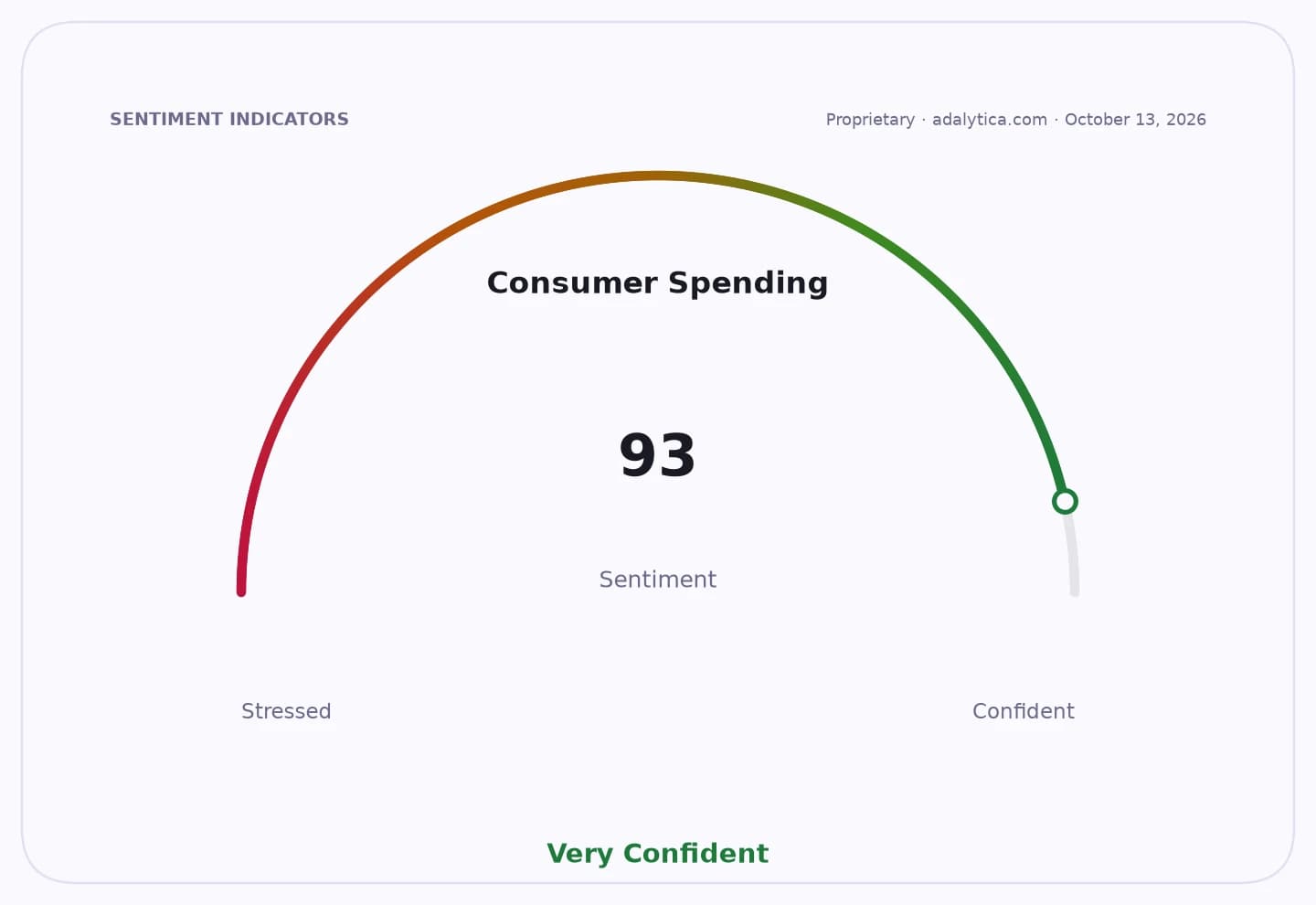
Sentiment IndicatorsⓘProprietary · adalytica.com · September 30, 2026
This is a snapshot — live sentiment, awareness and momentum for 130+ markets update continuously in the dashboard.Open AlphaPulse
The competitive angle is clear. Costco has built a loyal membership base around bulk savings and low everyday prices, and fuel has become an important part of that equation. By expanding gas savings, Walmart is making its own membership and retail ecosystem more sticky, especially for budget-conscious households still looking for relief on essential spending. It is another way to turn price leadership into recurring customer behavior rather than one-off promotions.
The move also fits a broader consumer backdrop that remains cautious even if not outright weak. Consumers are still looking for value, and that favors retailers with scale, supply-chain leverage and enough traffic to spread fixed costs. Walmart has long been the clearest beneficiary of that pattern, while Costco has also thrived by making shoppers feel they are winning on price. When both companies lean harder into gasoline as an incentive, the fight becomes less about the station itself and more about who captures the next shopping trip.
Walmart’s stock reflects that tug of war. The shares recently hovered around $106.80, below the 200-day moving average near $118.05, even after a rebound from earlier weakness. By contrast, Costco finished around $924.59, still far above its 200-day moving average near $958.79 after a summer run that showed how investors continue to reward its club model. Price action like that does not change the business case, but it does remind investors that Walmart is still priced more like a steadier defensive retailer than a fast-growth story, even as it keeps finding new ways to deepen customer loyalty.
For investors, the bigger question is whether this is a temporary promotion or part of a durable ecosystem advantage. If Walmart can use fuel savings to increase store visits, app engagement and membership retention, the payoff could compound slowly but meaningfully in years, not weeks. That is the kind of incremental advantage that matters in retail, where small shifts in customer behavior can add up to large gains in market share.
The risks are straightforward. Gas incentives can pressure margins if they do not produce enough incremental traffic, and Costco remains a formidable competitor with a deeply entrenched brand around savings. But Walmart does not need to “beat” Costco at its own game to win. It only needs to make itself the easiest, cheapest and most convenient place for millions of shoppers to keep coming back.
For long-term investors, Walmart’s expanded gas savings is worth watching as another sign that the company is sharpening its value proposition in a very competitive consumer market. If the strategy drives more repeat visits and strengthens loyalty, it could be another quiet but powerful engine for compounding.
| Entity | Gains | Losses |
|---|---|---|
| Walmart | ▲More store visits | ▼Some fuel margin |
| Costco | ▲Membership loyalty | ▼Value leadership pressure |
| Consumers | ▲Lower pump prices | ▼Less pricing relief if promos fade |
| Investors in WMT | ▲Stronger traffic mix | ▼Execution risk |