Walmart’s recall of about 16,000 dressers is a reminder that for even the world’s biggest retailer, a single product-safety failure can quickly turn into a brand and liability issue that investors can’t ignore.
Walmart Recall Raises Brand and Margin Risks
The economics are straightforward: unstable furniture can injure consumers, trigger refunds, and expose sellers to legal and reputational costs that far exceed the value of the merchandise itself. For Walmart, whose business depends on trust, convenience and scale, recalls like this are less about the units pulled from shelves than about protecting the low-friction shopping experience that keeps customers coming back.
That matters because Walmart is selling far more than groceries and household essentials. Its broader general merchandise business, including furniture, helps drive basket size and online fulfillment volumes. When a product in that category is deemed unsafe, it can chill demand, force additional oversight on suppliers and add friction to margins already under pressure from logistics, shrink and inventory controls.
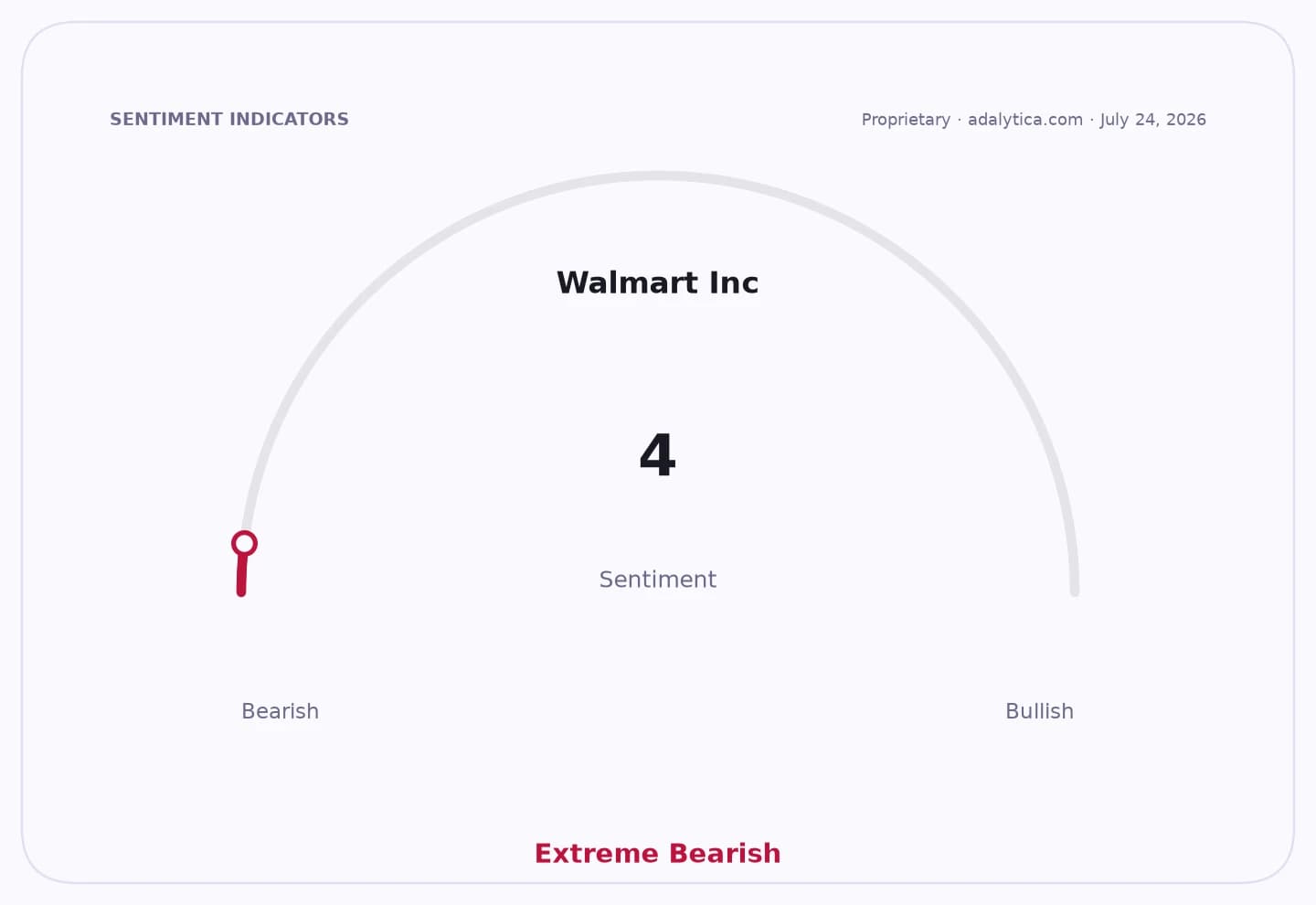
The timing also lands in a market that is already uneasy. Walmart shares have been volatile, and conventional technical indicators show the stock recently slipping back toward its 50-day average after a sharp run-up earlier this year. Adalytica’s earnings sentiment gauge is in “Extreme Fear,” suggesting investors are more sensitive than usual to any headline that could dent confidence in the company’s execution.
Walmart Inc — 30-day sentimentadalytica.com
Explore this data interactively — full history, time series and cross-market comparisons.Open AlphaPulse
Still, this is not the sort of event that changes Walmart’s long-term investment case. Recalls happen across retail, and the company’s scale, supplier leverage and relentless focus on traffic give it advantages smaller chains do not have. The bigger issue is whether Walmart can keep expanding into higher-margin general merchandise and e-commerce categories without letting quality-control lapses undermine the brand promise that supports its dominance.
For long-term investors, that makes this a watchlist item rather than a thesis-breaker. Walmart still looks like the kind of resilient consumer-staples giant that can compound steadily over years, but episodes like this are a useful reminder that operational discipline is part of the moat. The company’s ability to contain the fallout will matter more than the recall itself.
| Entity | Gains | Losses |
|---|---|---|
| Walmart | ▲Reinforces safety controls | ▼Faces recall costs |
| Consumers | ▲Safer products | ▼Inconvenience from returns |
| Suppliers | ▲Tighter compliance demand | ▼Scrutiny and possible penalties |
| Short-term traders | ▲Volatility opportunity | ▼Headline risk |