Walmart has withdrawn 11 products from the market, a move that underscores how product safety lapses can quickly turn into a brand and legal problem for the world’s largest retailer.
Walmart Recalls Pressure Sentiment And Shares
The recalls matter economically because Walmart’s model depends on traffic, trust and scale. A cluster of safety-related removals can raise liability costs, invite regulatory scrutiny and dent customer confidence at a time when consumers are already selective about spending and retailers are fighting hard on price, convenience and private-label loyalty.
The most immediate concern is the potential for injury and the cost of getting tainted merchandise off the shelves and out of homes. In the latest wave, Walmart joins a broader retail recall cycle that has included a dresser recall involving more than 16,000 units over injury risks, a Pillsbury item pulled for possible glass contamination and Panasonic toaster ovens recalled over shock and fire hazards.
For investors, the issue is less about the direct dollar hit from any single recall than the signal it sends about execution across sourcing, quality control and supplier oversight. Walmart’s shares have been volatile in recent weeks, with the stock closing at $109.47 on July 24 after a sharp drop from $131.78 in late April; the 50-day moving average sits at $117.67, while RSI readings have cooled from overbought levels, suggesting momentum has weakened alongside the news flow.
Walmart Inc — 30-day sentimentadalytica.com
Explore this data interactively — full history, time series and cross-market comparisons.Open AlphaPulse
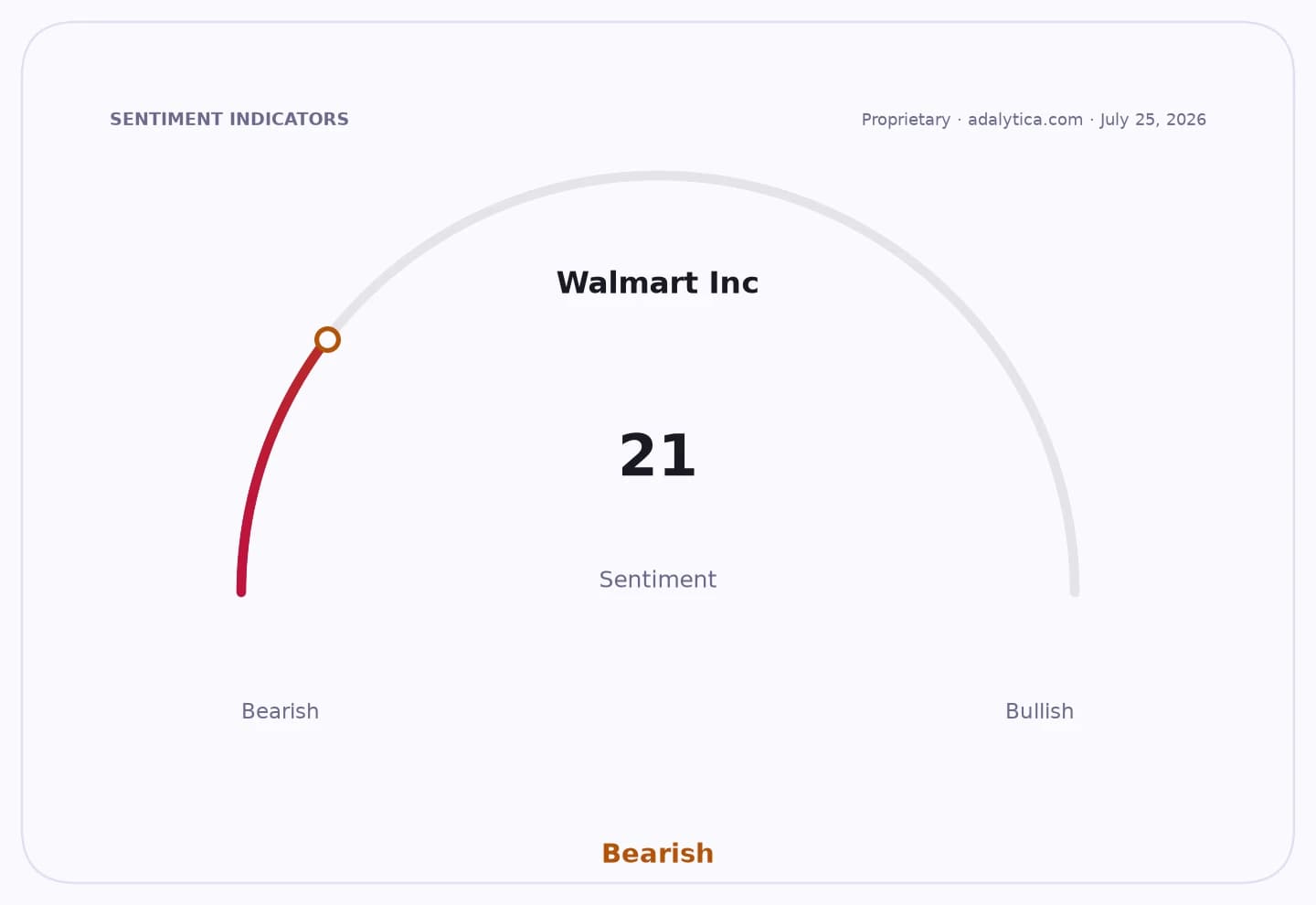
Adalytica’s Walmart Earnings Sentiment snapshot shows sentiment at 21, labeled “Fear,” with awareness at 32 and both measures well below earlier levels. That mirrors the market’s sensitivity to operational missteps even as the stock remains above its 200-day moving average of $117.41 and the broader S&P 500 trade signals sit in “Extreme Fear,” highlighting a defensive backdrop for U.S. equities.
The narrative is straightforward: Walmart is still winning on scale and pricing, but repeated product withdrawals show how quickly safety issues can complicate that advantage. The next catalyst is whether the company can contain the recall fallout and demonstrate tighter controls before the issue spreads beyond reputation into margins and shopper behavior.
| Entity | Gains | Losses |
|---|---|---|
| Walmart | ▲faster cleanup, safety reset | ▼recall costs, trust hit |
| Consumers | ▲lower injury risk | ▼product disruption |
| Regulators | ▲stronger oversight case | ▼more workload |
| Short sellers | ▲volatility catalyst | ▼upside if recalls fade |