Walmart still looks like one of the most dependable long-term names in retail, but the real story for investors is that its next phase of gains will come from profit mix, not just sales growth.
Walmart Sales Rose 4.5% to $117.2 Billion
That matters because Walmart is no longer just a defensive grocery stock for shaky economies. It has become a scaled omnichannel platform that can grow earnings by leaning on membership income, advertising, marketplace activity and efficiency gains, even when consumers stay cautious. For long-term investors, that combination is what turns a mature retailer into a compounding machine.
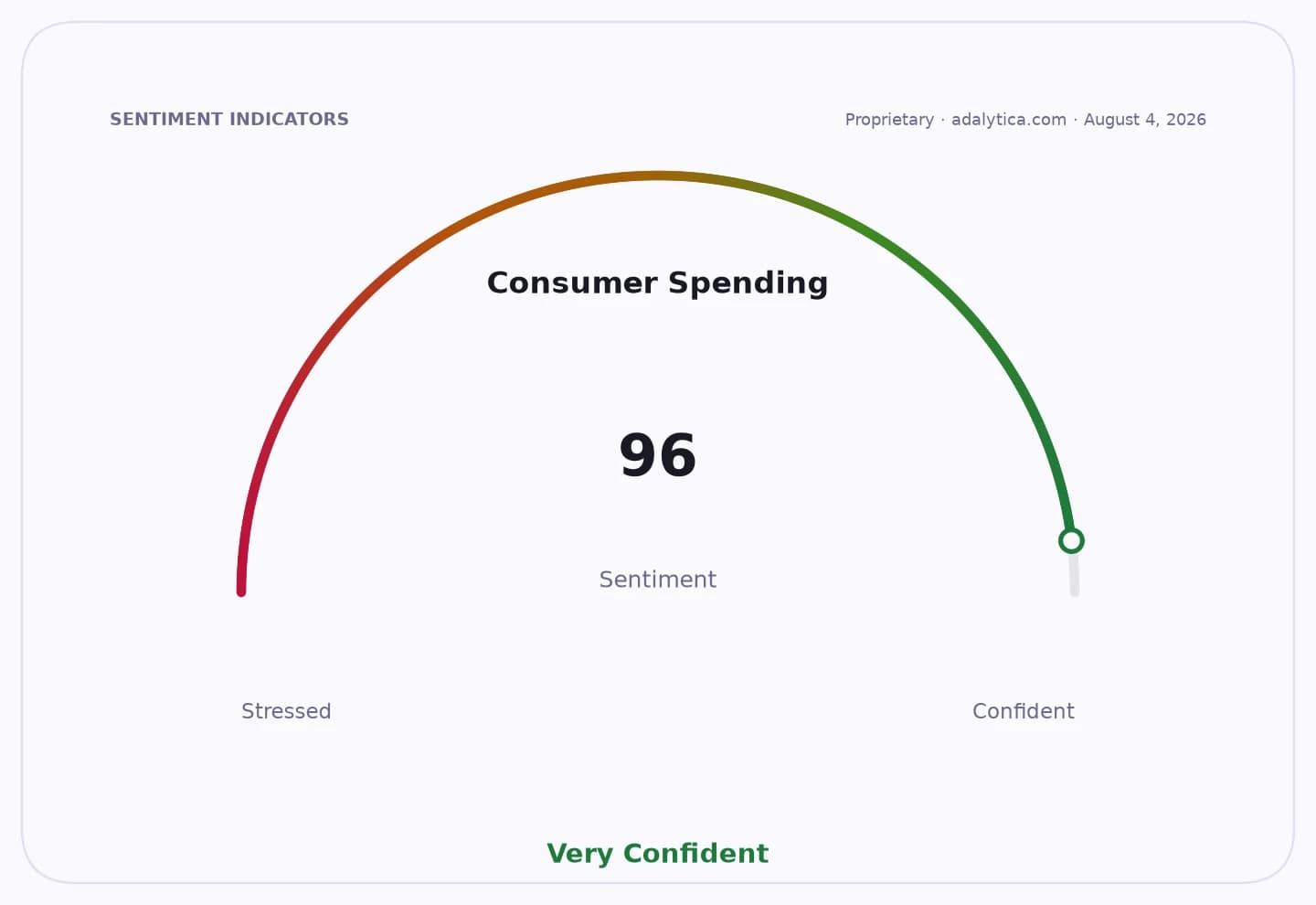
Sentiment IndicatorsⓘProprietary · adalytica.com · August 4, 2026
This is a snapshot — live sentiment, awareness and momentum for 130+ markets update continuously in the dashboard.Open AlphaPulse

The company’s latest reported quarter showed net sales up 4.5% to $117.2 billion, with comparable sales rising 4.3%. More important than the top line, membership and other income jumped to $926 million from $636 million a year earlier, underscoring how Walmart is monetizing its customer base beyond the checkout aisle. That is the kind of economics that supports durable free cash flow and gives management room to keep investing while still rewarding shareholders.
The market has also been willing to pay up for that resilience. Walmart’s shares have climbed from about $99.81 in September to $110.71 in early August, even after a sharp summer pullback from a peak above $130. The stock is still trading above its 200-day moving average, though it sits below its 50-day line, suggesting the long-term trend remains intact even as momentum cools. The relative strength index near 42 points to a stock that has pulled back from overheated levels, which can matter to buy-and-hold investors looking for a more reasonable entry.

Adalytica’s Walmart earnings sentiment snapshot shows “Extreme Fear” even while awareness remains elevated. That gap is useful for patient investors: short-term uncertainty often creates better long-term prices in businesses with strong competitive advantages. By contrast, consumer spending sentiment sits at “Extreme Greed,” which suggests households are still spending, but it also reminds investors that Walmart’s appeal is not tied to a single economic backdrop. It wins when consumers trade down, and it can still grow when spending is healthy.
That is why Walmart remains such a powerful holding for a diversified portfolio. Its scale gives it pricing power, supply-chain leverage and the ability to invest in e-commerce, logistics and membership programs at a level smaller rivals cannot easily match. In a world where many retailers are fighting for survival, Walmart can use its size to compound over years, not quarters.
There are risks, of course. Competition from Costco and Target remains intense, and retail margins can move around with inventory, wages and freight costs. But Walmart’s advantage is that it does not need flawless conditions to keep advancing. It only needs to keep executing better than most of the industry, and it has done that for a long time.
For investors with a multiyear horizon, Walmart still belongs on the list of stocks you can comfortably own and revisit over decades, not months. The pullbacks may create better entry points, but the core thesis remains unchanged: this is a resilient business with a wide moat, steady demand and multiple ways to grow earnings. If you are building wealth patiently, Walmart is still worth holding and worth buying on weakness.
| Entity | Gains | Losses |
|---|---|---|
| Walmart shareholders | ▲Steady compounding | ▼Missing the long game |
| Walmart | ▲Higher-margin income streams | ▼Purely sales-driven growth |
| Costco and Target | ▲Category demand growth | ▼Share if Walmart executes well |
| Patient investors | ▲Better entry points on pullbacks | ▼Chasing momentum |