Wholesale prices are rising again just as Walmart and Target head into the critical holiday stretch, forcing the two biggest U.S. general merchandisers to decide how much margin they can give up before shoppers push back.
Walmart and Target face higher wholesale costs
That is the real market story behind the latest inflation data: producer prices have climbed to 295.708 in September from 287.735 in August, while consumer prices rose to 336.298 from 334.131. The combination means retailers are not dealing with a one-off cost spike, but with a renewed squeeze that can either be absorbed in earnings or passed on through higher shelf prices.
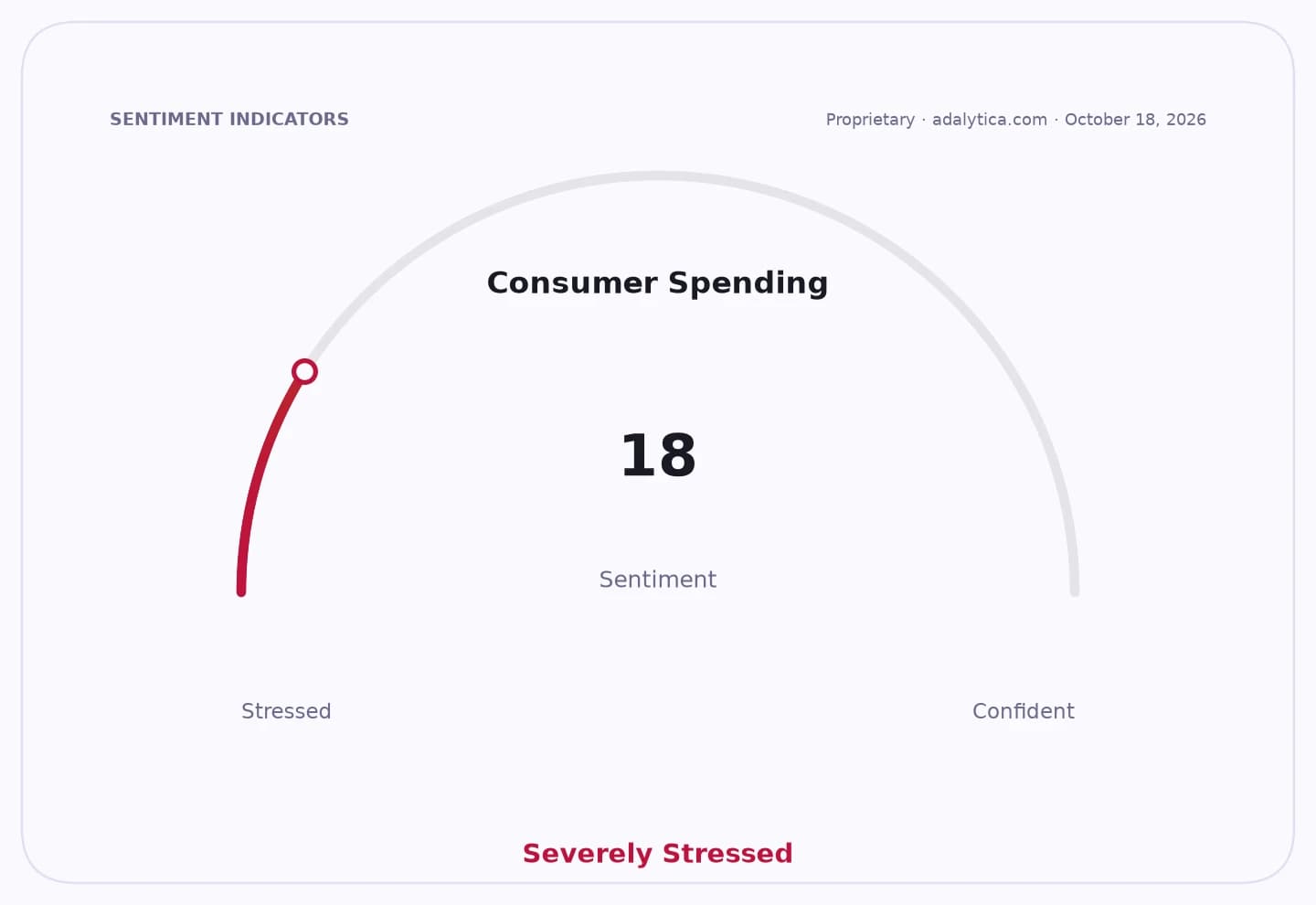
Sentiment IndicatorsⓘProprietary · adalytica.com · October 18, 2026
This is a snapshot — live sentiment, awareness and momentum for 130+ markets update continuously in the dashboard.Open AlphaPulse
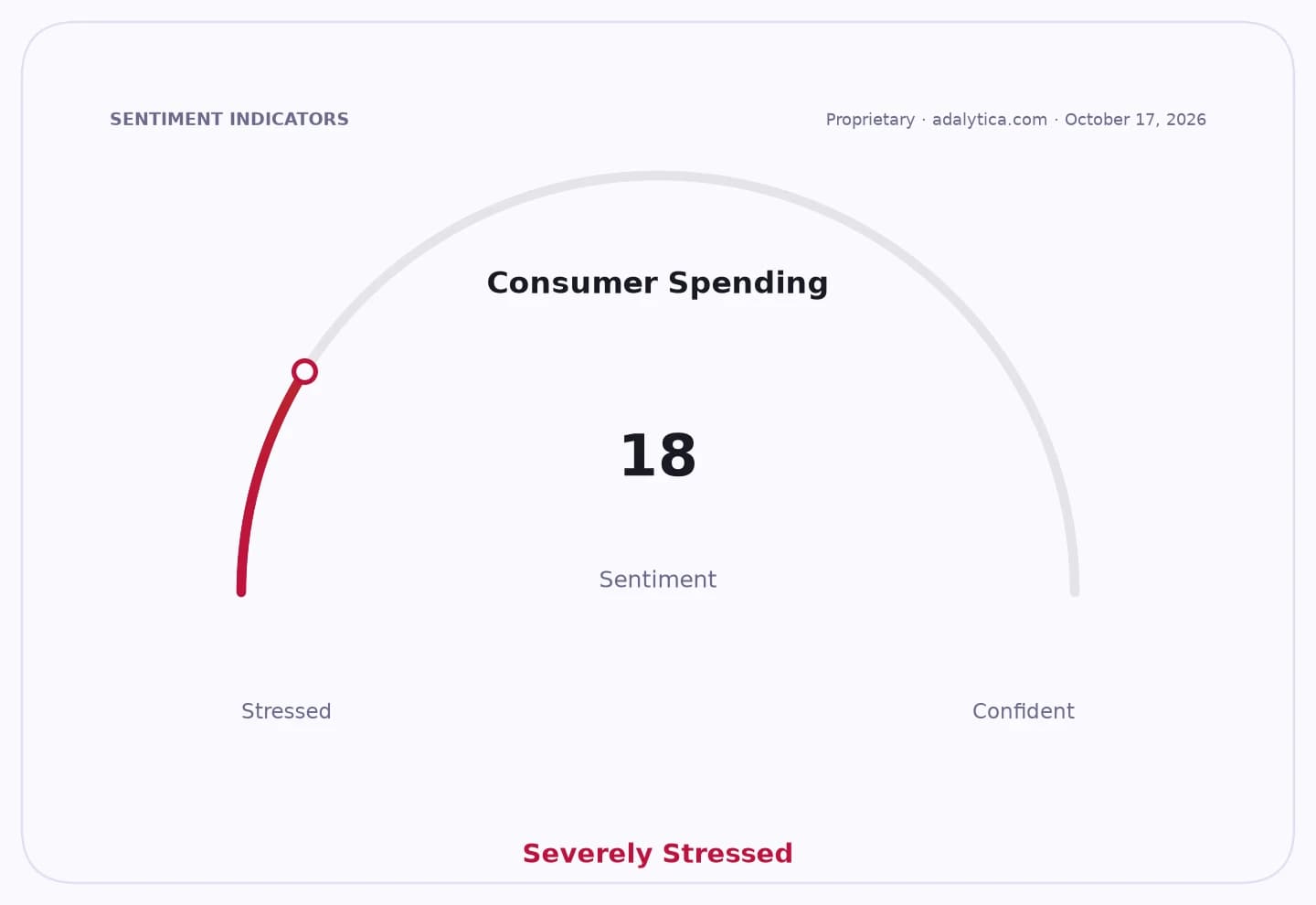
For investors, that is why this matters now. Walmart and Target sit at the center of the U.S. consumer trade. If they hold pricing to protect traffic, gross margins come under pressure. If they raise prices too fast, volumes can soften. In an environment where consumers are already showing strain — Adalytica’s consumer spending sentiment sits in “fear” territory at 18 — the balance is getting harder to strike.
Walmart is the better-positioned operator. The stock closed at $118.81 on Oct. 16, above its 50-day moving average of $108.86 and just under its 200-day average of $117.86, with RSI readings in overbought territory near 73.7, a sign that the market already expects resilience. That premium reflects Walmart’s scale, grocery mix and ability to use everyday-low-price messaging to pull share when households trade down.
PPIACO vs CPIAUCSL — macro contextadalytica.com
Explore this data interactively — full history, time series and cross-market comparisons.Open AlphaPulse
Target is more exposed. The shares finished at $154.26 on Oct. 16, well above its 50-day average of $157.41 but still below the summer highs, after a sharp run that pushed RSI down from overheated levels. Target has more discretionary exposure and less pricing power in a cost environment where consumers are still hunting for value. Even small pricing missteps can show up quickly in traffic and margin trends.
The broader inflation backdrop reinforces the point. Wholesale inflation remains elevated enough to keep retail input costs sticky, and that gives suppliers and distributors more leverage than the market may be pricing in. Walmart has already told investors in filings that economic, geopolitical and competitor conditions can affect demand and pricing. Target has also highlighted margin sensitivity tied to merchandising and supply-chain execution.
The investable takeaway is straightforward: this is a relative-strength setup, not a sector-wide buy signal. Walmart remains the cleaner defensive play on consumer trade-down behavior and inflation pass-through, while Target faces a more delicate holiday test. If wholesale prices keep rising into year-end, the market will reward the retailer that can defend volume without giving away too much margin — and punish the one that cannot.
| Entity | Gains | Losses |
|---|---|---|
| Walmart | ▲Trade-down demand | ▼Margin pressure |
| Target | ▲Holiday traffic if pricing holds | ▼Discretionary sales |
| Consumers | ▲Short-term promotions | ▼Higher shelf prices |
| Suppliers | ▲Pricing leverage | ▼Retail pushback |