Retailers built on thin grocery margins are under pressure from a persistent rise in inventory shrink, and the cost is increasingly showing up where investors care most: gross profit.
Walmart, Target, Kroger Face Shrink Margin Pressure

Walmart, Target and Kroger have all signaled that theft and shrink remain a meaningful drag on profitability, with Walmart’s latest filing specifically flagging “the amount of inventory shrinkage” as a risk to margins. Kroger said in its most recent quarterly report that higher shrink was among the factors weighing on gross margin, while Target has spent the past year trying to move past a period of elevated losses tied to theft and damage.
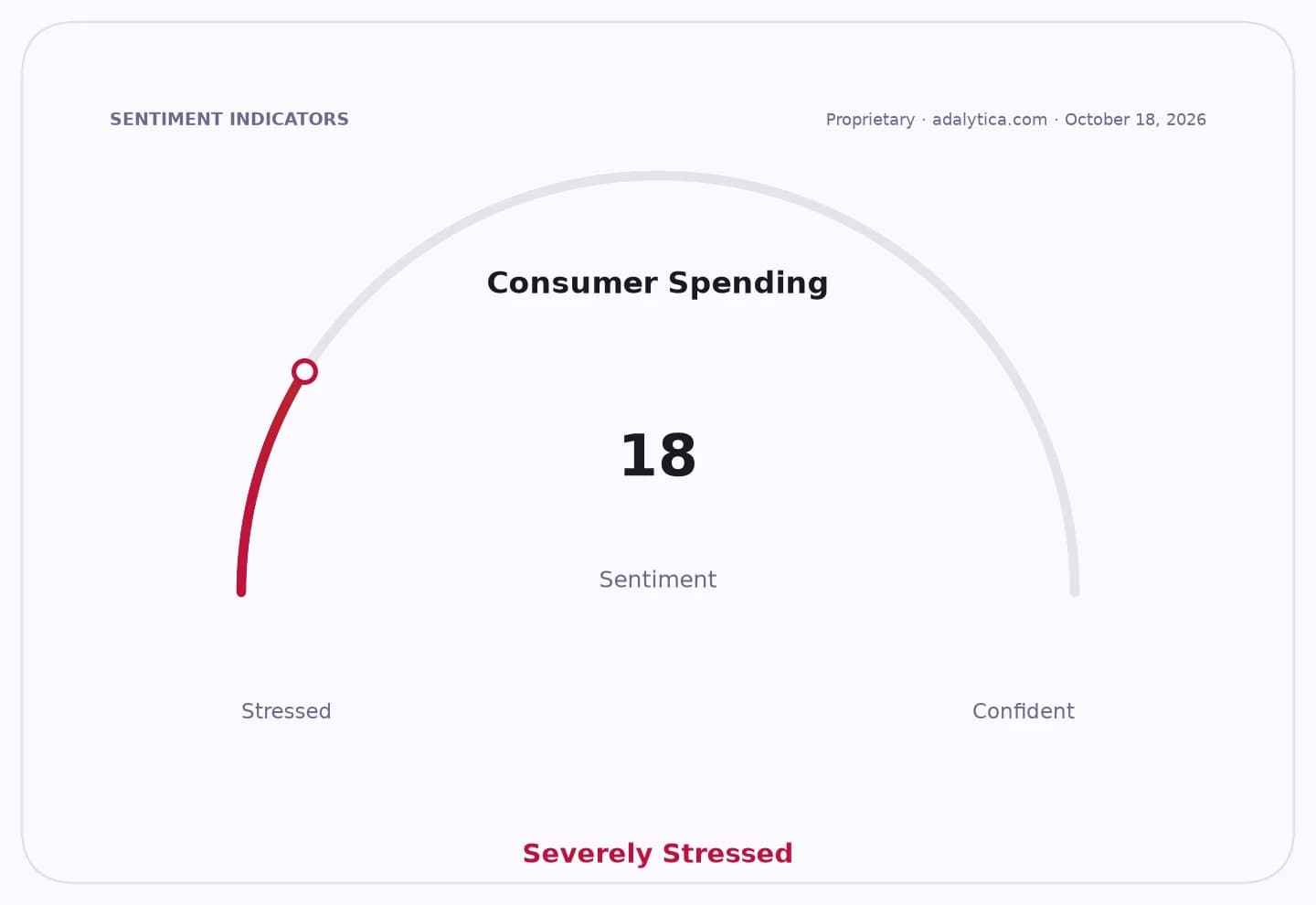
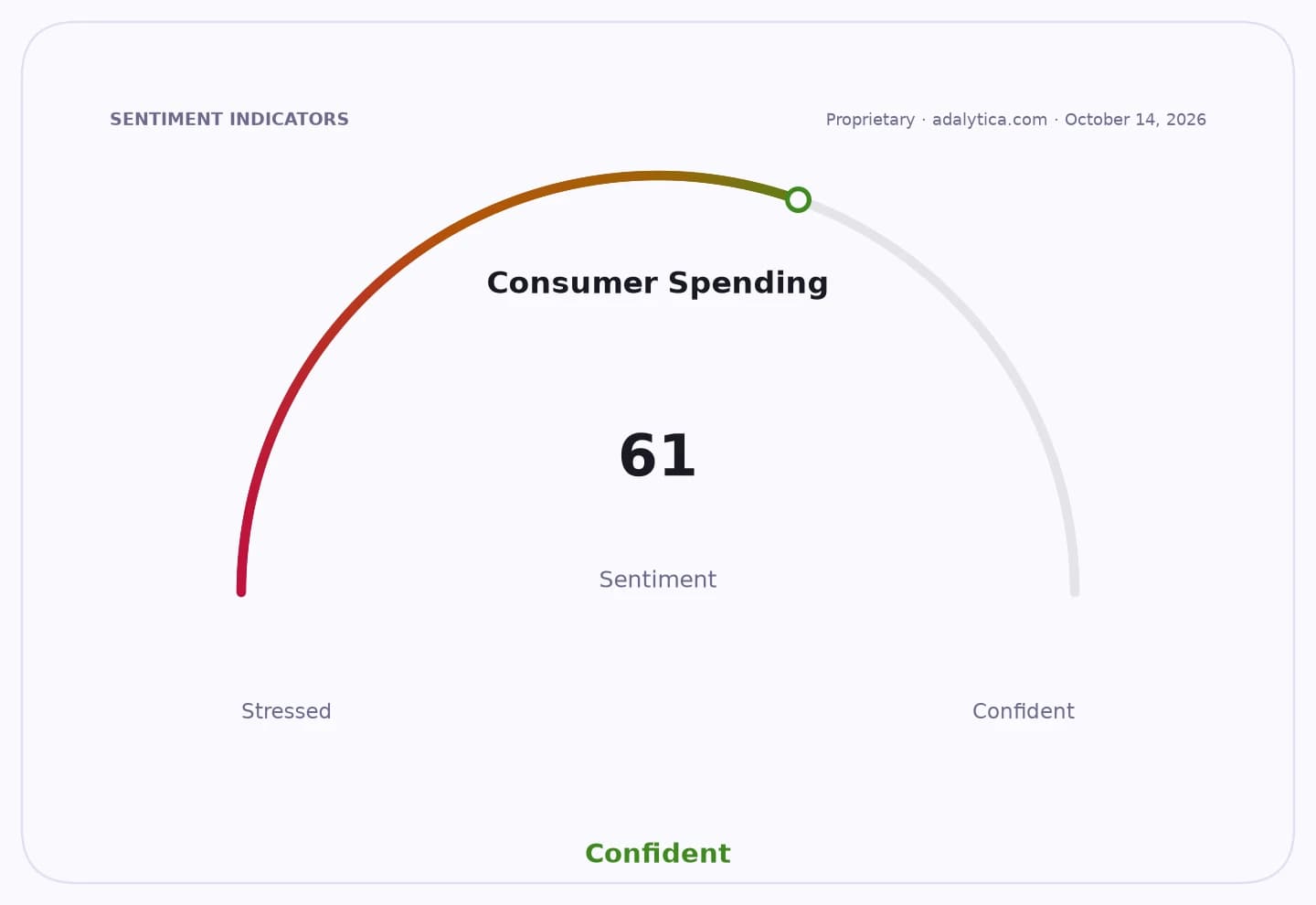
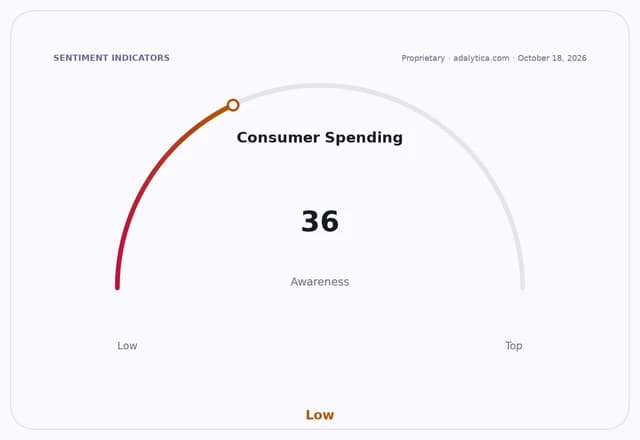
Sentiment IndicatorsⓘProprietary · adalytica.com · October 18, 2026
This is a snapshot — live sentiment, awareness and momentum for 130+ markets update continuously in the dashboard.Open AlphaPulse
The issue matters because grocery and mass-market chains run on volume, not pricing power. Even modest increases in shrink can erase gains from traffic, ticket growth or private-label mix, especially when consumers are still price-sensitive and the sector is competing aggressively on promotions. For Walmart, the largest U.S. grocer by sales, the impact is especially important because its U.S. business is the anchor of household spending and a benchmark for the broader consumer economy. For Target and Kroger, which have less scale and less diversification than Walmart, the margin hit can be more immediate.
The sector has long treated shoplifting as a cost of doing business, but the recent pattern is harder to dismiss as noise. Management teams are investing more in locked merchandise, electronic article surveillance, camera systems and staffing changes, all of which add operating expense while attempting to reduce loss. That creates a blunt trade-off for investors: spending more to protect inventory can help preserve gross margin, but it can also slow sales if shopping becomes less convenient.
Market reaction has reflected that tension. Walmart’s shares have outperformed on the view that its scale, grocery mix and supply-chain discipline can absorb some of the pressure, while Target’s stock has remained more vulnerable to margin concerns. Kroger sits somewhere in between, with investors watching whether food inflation, fuel mix and shrink can be offset by volume, pharmacy and digital growth. Technical indicators on the stocks underscore the divergence: Walmart has held above its 50-day average and traded near its longer-term trend, while Target’s shares, after a sharp summer rally, have cooled from overbought levels. Kroger has been more range-bound, suggesting investors remain cautious on earnings durability.
The broader macro backdrop also matters. Adalytica’s consumer spending sentiment gauge is in “Fear,” pointing to a shopper who is more value-conscious and less forgiving of higher prices. That can worsen the shrink equation by pushing more customers toward smaller baskets, heavier promotion, and a more contested fight for traffic. In that environment, retailers can face a double squeeze: weaker real pricing power and higher losses from theft or damage.
The bull case is that the issue is manageable. Walmart’s size gives it leverage over suppliers and the ability to spread technology and security costs across a vast store base. Kroger can use data, loyalty and store-level controls to narrow losses. Target, after years of work on inventory discipline, could see incremental improvement if shrink moderates and consumer spending stabilizes.
The bear case is that theft is not isolated, but structural. If retail crime remains elevated, the industry could be forced into a cycle of higher security spending, slower merchandising and lower margin conversion. That would be especially painful for grocers and discounters, where every basis point of shrink can matter to valuation.
For investors, the key question is not whether retailers can eliminate theft, but whether they can contain it without sacrificing traffic or profitability. Next quarter’s filings and earnings calls will be watched for any sign that shrink is easing, or that retailers are still fighting to defend margins one locked case at a time.
| Entity | Gains | Losses |
|---|---|---|
| Walmart | ▲Scale to absorb losses | ▼Gross margin if shrink rises |
| Target | ▲Better control if theft eases | ▼Sales if stores feel less convenient |
| Kroger | ▲Operational discipline | ▼Margin from higher shrink |
| Shoplifters / organized theft | ▲Short-term illicit gains | ▼Greater enforcement pressure |