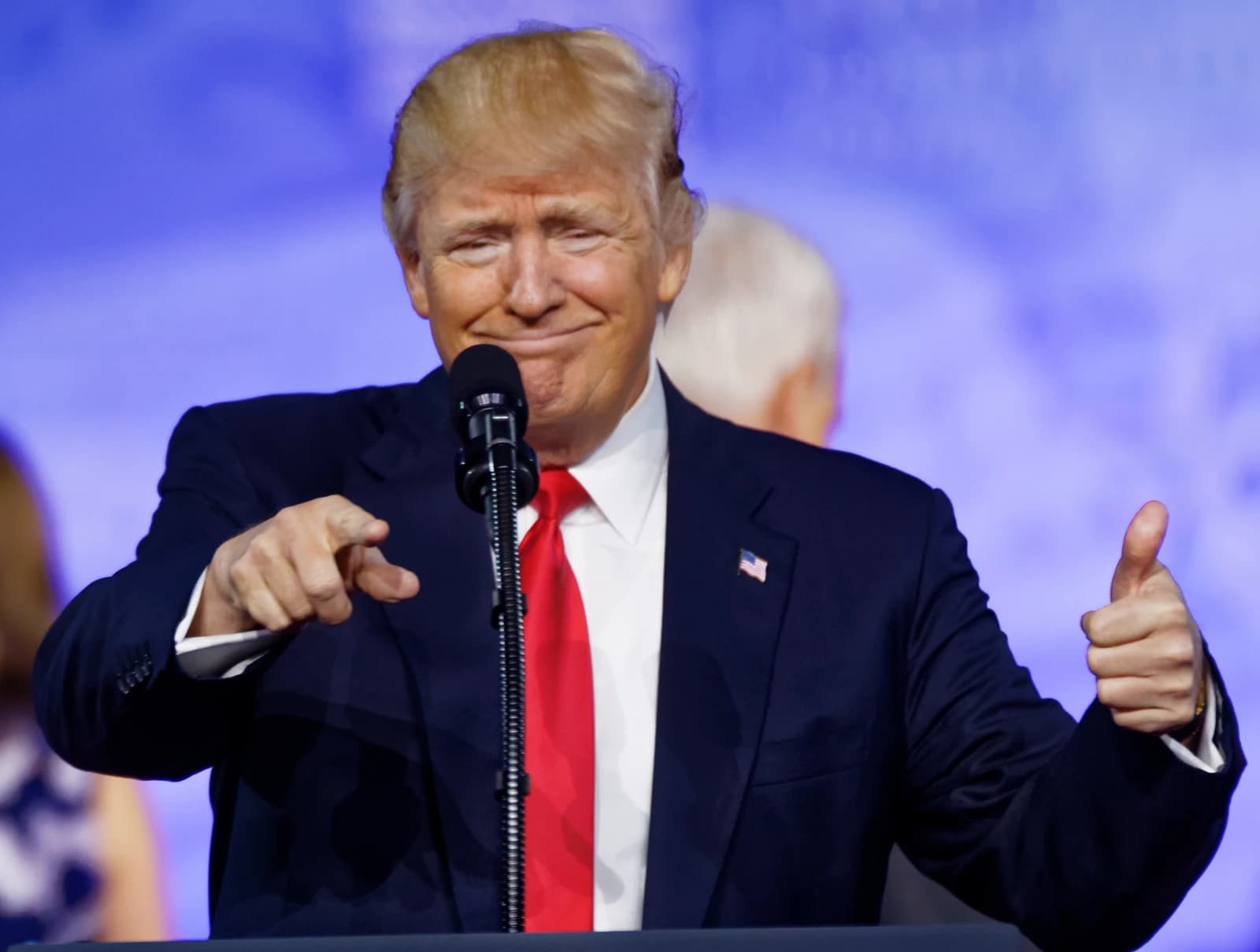
The White House has moved to centralize President Donald Trump’s public messaging with a new Trump TV streaming channel, an escalation that matters because it gives the administration its own always-on distribution pipe at the same time it is curbing access for major news organizations.
White House launches Trump TV streaming channel
The channel, launched Monday, is designed to carry Trump’s speeches, administration announcements, archival footage and other White House-approved material continuously. In practical terms, it reduces dependence on broadcasters that can edit, contextualize or ignore the president’s remarks, while also turning the White House itself into a media publisher. That is economically significant not because it changes federal spending, but because it marks another step in the fragmentation of the political information market, where control of audience, framing and reach has become as important as the underlying message.
Sentiment IndicatorsⓘProprietary · adalytica.com · September 26, 2026
This is a snapshot — live sentiment, awareness and momentum for 130+ markets update continuously in the dashboard.Open AlphaPulse
The timing underscores that this is not just a communications experiment. Trump has recently barred CNN, MS NOW and Politico from White House access, prompting those outlets to sue the administration over alleged violations of constitutional press protections. The White House has argued the First Amendment protects publication, not guaranteed access. Separately, the traditional White House pool arrangement — the system in which major networks rotate to provide shared footage of presidential events — has been disrupted, with other broadcasters pausing collective coverage after CNN was excluded.
That break has already produced visible operational consequences. During one Trump appearance on Monday, live coverage from the White House briefly lost audio because major-network crews and equipment were not on site. The episode was a reminder that the pool system is not just a convenience for journalists; it is part of the infrastructure that allows the presidency to be covered efficiently and at scale.
For investors, the broader significance lies in the media and platform economics behind the story. Trump TV reinforces a long-running shift away from intermediary-controlled distribution toward direct-to-consumer political content, a model familiar to streaming platforms and social networks but less common for the presidency itself. That helps explain why the story resonates beyond Washington: it touches the same battle for audience attention that has pressured linear television and pushed more value toward streaming, owned channels and algorithmic distribution.
The implications are mixed for media companies. CNN and other legacy outlets risk losing both access and relevance if the White House increasingly supplies its own footage and narrative. At the same time, the conflict may increase demand for competing coverage from outlets that can position themselves as independent of the administration’s messaging. The White House’s decision also raises the odds of more legal and political friction around press access, which could create further volatility in how U.S. political news is produced and consumed.
For Trump Media & Technology Group, whose shares trade under DJT, the development adds another headline tailwind to a stock already known for reacting sharply to political media developments. The shares ended recently around $9.14, well below their 200-day moving average near $10.02 and only slightly above the 50-day average around $9.20, while the relative strength index was in the low 50s after a period of heavy volatility. That suggests the market has not yet priced in a durable rerating, but it also shows the name remains highly sensitive to any expansion of Trump’s media footprint.
The bull case is that Trump TV strengthens a direct communications brand that can drive engagement across the president’s ecosystem and widen the audience for his messages without relying on traditional gatekeepers. The bear case is that the channel is mostly symbolic, with limited original programming, limited monetization and no clear proof it can attract a meaningful audience beyond core supporters.
What matters now is whether the White House turns Trump TV into a sustained distribution platform or leaves it as a messaging hub. If it becomes a permanent fixture, the dispute with mainstream media could reshape not only press access but also the economics of political attention in the U.S.
| Entity | Gains | Losses |
|---|---|---|
| White House | ▲Direct control of messaging | ▼Reliance on legacy broadcasters |
| Trump Media & Technology Group (DJT) | ▲Attention and political relevance | ▼Risk of hype without monetization |
| CNN, MS NOW, Politico | ▲Legal visibility | ▼White House access |
| Major TV networks | ▲Scarcity of official footage alternatives | ▼Pool-system disruption |