President Donald Trump’s approval rating has fallen to 32%, the lowest of his political career, as anger over living costs and the Iran war begins to erode Republican support ahead of next month’s midterm elections.
Trump approval falls to 32% in Reuters/Ipsos poll
The Reuters/Ipsos poll is significant not just because it marks a new low for Trump, but because it shows the damage spreading inside his own party. Republican approval of Trump dropped to 73% from 82% in just one week, a sharp deterioration that suggests the White House is losing part of the coalition that powered his return to office and could be crucial in congressional races.
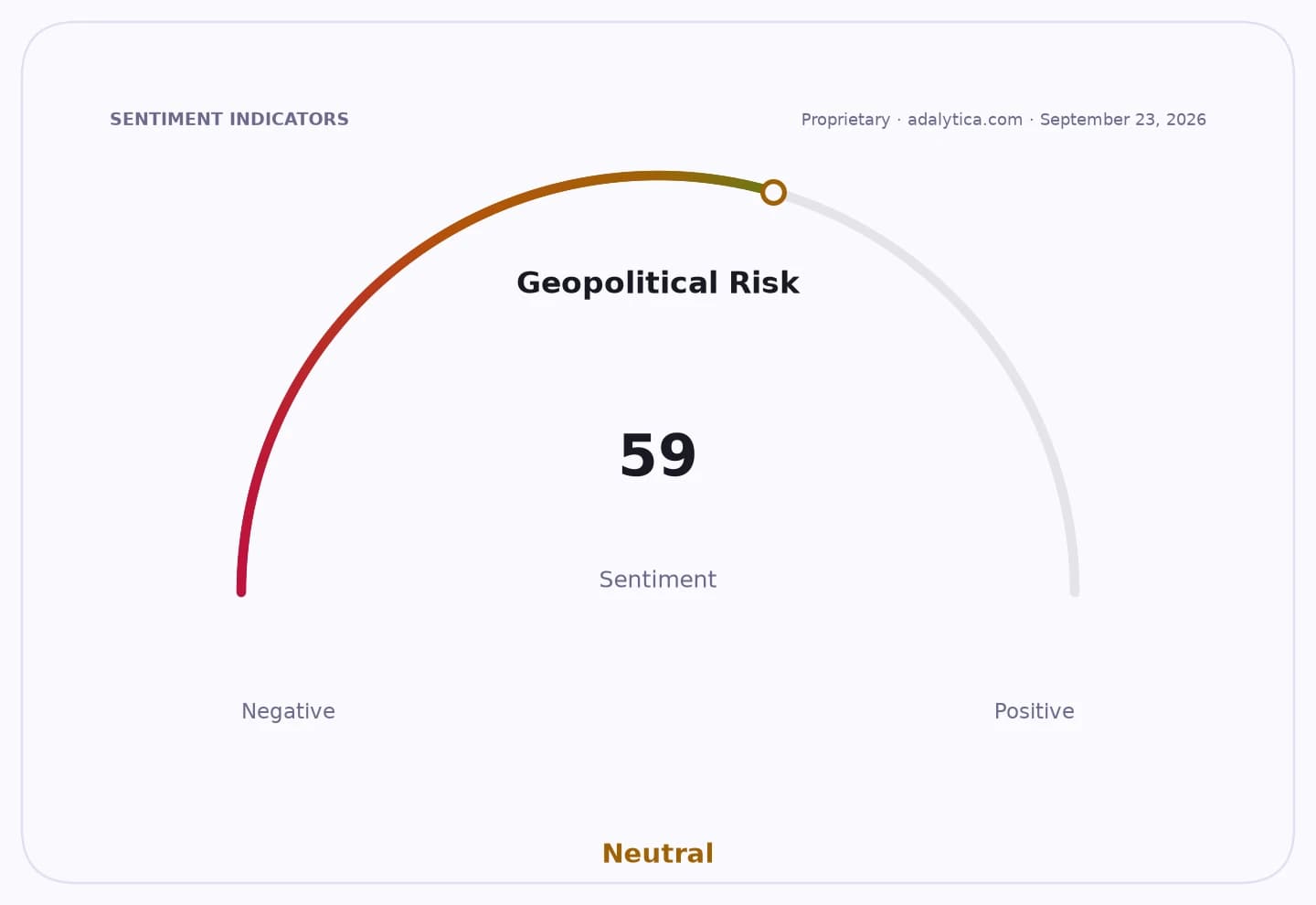
Sentiment IndicatorsⓘProprietary · adalytica.com · September 26, 2026
This is a snapshot — live sentiment, awareness and momentum for 130+ markets update continuously in the dashboard.Open AlphaPulse
The political stakes are immediate. Democrats now lead Republicans by 8 percentage points in the national generic ballot, 43% to 35%, the widest margin Reuters/Ipsos has recorded this year. That points to a tougher environment for the GOP in the midterms, when control of Congress will determine whether Trump can advance his agenda or face two years of legislative resistance.
Cost of living remains the central vulnerability. Just 17% of respondents said they approve of Trump’s handling of inflation and everyday expenses, the top issue voters say will shape their ballot. That is a warning sign for investors because persistent dissatisfaction around prices usually feeds broader political pressure for looser fiscal policy and faster economic relief, even when inflation is still above levels voters find comfortable.
The Iran conflict is adding to that strain. Only 34% of respondents backed the airstrikes on Iran, while 82% said the war is likely to continue for a long time. The campaign has already lifted gasoline and diesel prices, and the poll suggests the public is connecting the war to household costs — a politically toxic combination for a president who promised to tame inflation and avoid foreign entanglements.
For markets, the main implication is not just election risk but policy uncertainty. A weaker Trump hand in Congress could constrain his domestic agenda, while a prolonged Middle East conflict keeps a premium on energy, supports the dollar on risk aversion and complicates the outlook for inflation and interest rates. The 10-year Treasury yield, already elevated around 5.2%, reflects how sensitive markets remain to any renewed inflation impulse from oil.
Trump still retains strong support on immigration among Republican voters, but that has not offset the broader erosion tied to prices and war. If the trend holds, the coming weeks could sharpen the divide between a president relying on base loyalty and a wider electorate increasingly focused on the cost of living — a mix that would leave both Republican candidates and risk assets exposed.
| Entity | Gains | Losses |
|---|---|---|
| Democrats | ▲Stronger midterm momentum | ▼ |
| Republicans | ▲Base loyalty on immigration | ▼Congressional control prospects |
| Trump White House | ▲ | ▼Approval ratings and agenda space |
| Consumers | ▲Potential pressure for cost relief | ▼Fuel and living-cost pain |