Politicians are pushing a new round of workplace benefits and wage support, but the money ultimately flows through employers — a point that matters for hiring, margins and how investors should price labor costs.
Workplace Subsidies May Squeeze Employer Margins
The clearest example is the planned Unified Employment Subsidy, due to start in October, which will cover workers eligible for paid holidays and wage support of $20 to $24 an hour. The program is part of a broader policy package that also includes the 2026 Youth Employment Leap Incentive and a Corporate Support Fund, with the labor ministry setting aside 50 million for training courses and active intervention measures.
Sentiment IndicatorsⓘProprietary · adalytica.com · July 15, 2026
This is a snapshot — live sentiment, awareness and momentum for 130+ markets update continuously in the dashboard.Open AlphaPulse
For companies, the immediate issue is not the headline promise of better worker protections but who carries the administrative and financial burden. Subsidies tied to payroll and benefits can lower take-home costs for workers while still forcing employers to manage compliance, staffing flexibility and benefit design, especially in sectors already dealing with layoffs and weaker demand.
That is why the policy lands squarely on investors’ radar. Workplace benefit expansion can support household income and stabilize labor markets, which is constructive for consumption and credit quality, but it can also pressure wage bills and squeeze margins if employers are expected to bridge the gap. In insurance and employee-benefits-adjacent industries, any shift in benefit funding can ripple through pricing, claims exposure and customer retention.
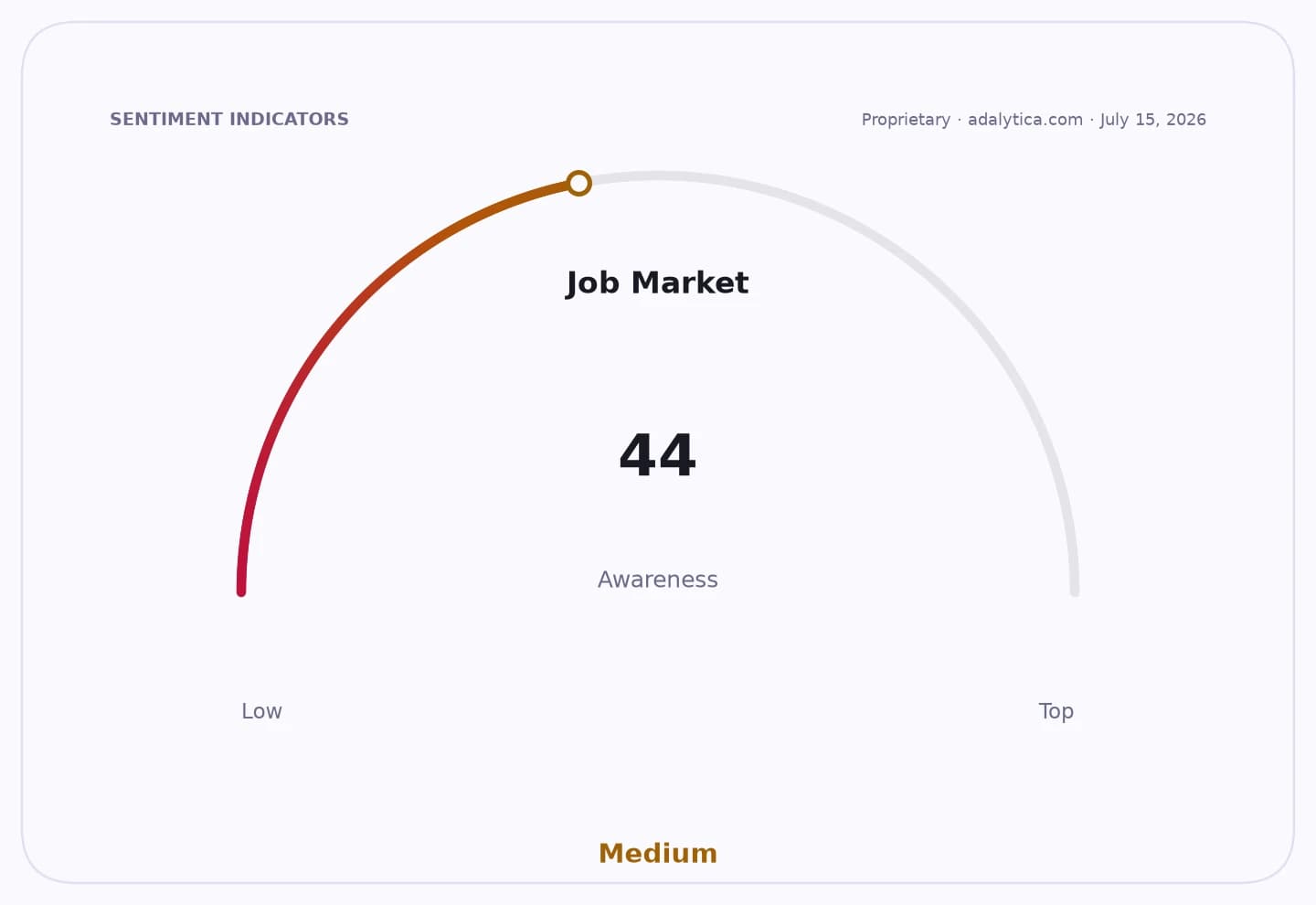
The backdrop is a labor market that still looks resilient, with the Adalytica JOB gauge showing extreme greed at 100 and consumer confidence sentiment holding neutral at 67, suggesting workers remain optimistic even as policymakers move to soften the blow from job losses and redundancy. That combination points to a government trying to shore up income security without openly saying how much of the cost will be borne by business.
For Aon and Arthur J. Gallagher, both of which trade well above their 200-day moving averages after sharp July runs, the bigger story is how employer-sponsored benefits keep evolving as policy gets more interventionist. If the October rollout broadens or triggers follow-on measures, markets will start focusing less on the politics of worker support and more on the accounting of who pays for it.
| Entity | Gains | Losses |
|---|---|---|
| Workers | ▲More income support | ▼Less direct leverage on funding debate |
| Employers | ▲Possible labor stability | ▼Higher compliance and benefit costs |
| Government | ▲Political credit for support measures | ▼Less transparency on financing |
| Benefits firms like Aon and AJG | ▲More demand for plan design and administration | ▼Margin risk if employer costs rise |