A Monero-linked token on Hyperliquid imploded in minutes on Friday, wiping out XMR1 holders and sending $13.22 million in proceeds into Ethereum, a reminder that crypto’s real trade right now is not blind speculation but liquidity, security and where capital migrates when confidence breaks.
XMR1 collapses on Hyperliquid as ETH absorbs flows
The collapse matters because it exposed how fragile tokenized wrappers and thin onchain order books can be when one wallet controls almost the entire float. XMR1 fell from about $494 to below $1 in roughly 35 minutes after 5.2 million tokens were moved from a wallet tied to its creator, triggering a sell-off that overwhelmed buyers. Bitquery said the deployer still controlled 93% of XMR1 supply before the transfers, making the market vulnerable to a single decisive move.
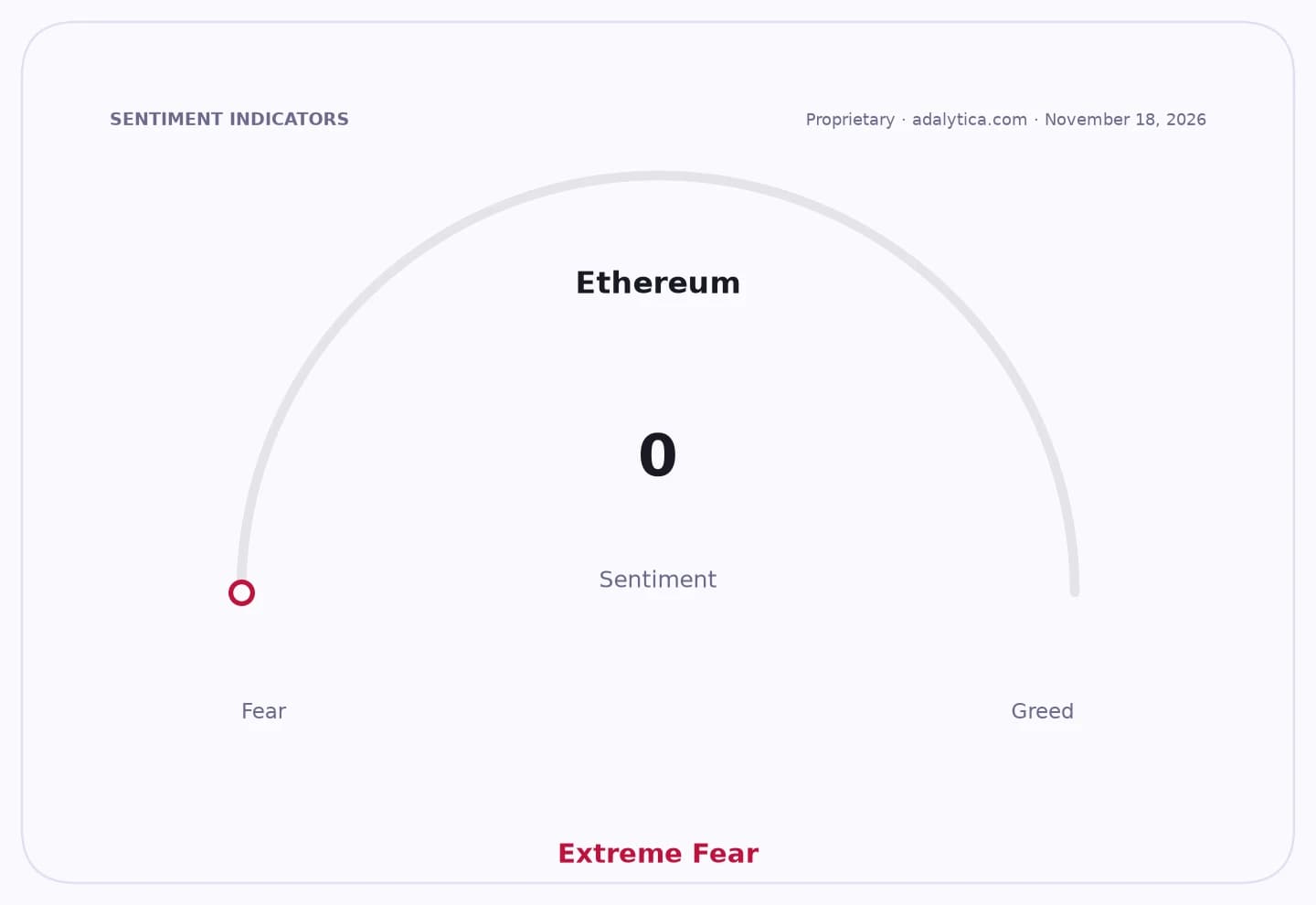
Sentiment Indicators
For investors, the more important signal is where the money went next. The seller did not just dump into stablecoins and stop. It converted $13.22 million in USDC into 7,467 ETH on Arbitrum, then routed much of it through bridges including Socket, Mayan and Stargate. That is a clear vote for Ethereum as the deeper, more liquid settlement asset when risk events hit altcoin wrappers. Ethereum itself is already trading under heavy pressure, with Adalytica’s Ethereum Fear & Greed Index at extreme fear and the token down sharply over the past month, but this flow shows that even in a stressed tape, capital still seeks the most credible large-cap crypto rail.
The damage was concentrated. Bitquery traced sales to 388 buying accounts, with 27 large buyers accounting for 77% of proceeds and one account taking in $3.56 million of the dumped tokens. That kind of market structure is exactly where forced selling becomes catastrophic: too few bids, too much supply and too little trust. It also highlights the execution risk that sits inside smaller wrapped assets on decentralized venues, where a supposed arbitrage or rebalancing event can become a near-total wipeout.
Native Monero did not crash with XMR1, which is the key distinction. XMR continued trading around $470 to $482, while the wrapped version on Hyperliquid was effectively destroyed. That split underscores the difference between a liquid underlying asset and a thin synthetic representation built on bridge infrastructure. For traders, the lesson is simple: the wrapper is only as strong as the custody, keys and redemption mechanics behind it.
The episode lands at a sensitive moment for Wagyu, the service behind XMR1, after a separate data leak was disclosed on Oct. 28. That adds a second layer of concern: not just price volatility, but whether the infrastructure and operational security supporting privacy-coin products can withstand scrutiny. The same deployer account also controls 99.97% of ZEC1, another Hyperliquid token, raising fresh questions about concentration and governance across the platform’s wrapped privacy-coin offerings.
The investable takeaway is that this is not just a one-off blowup. It is a live stress test for decentralized market structure, bridge security and the role of Ethereum as the default exit lane when smaller crypto products unravel. In a market already marked by fear, the winners are likely to be the assets and infrastructure that can absorb capital when confidence disappears — and the losers are the thinly traded wrappers whose float can be seized by a single wallet.
| Entity | Gains | Losses |
|---|---|---|
| Ethereum | ▲Inflows from panic selling | ▼Short-term volatility |
| XMR1 holders | ▲— | ▼Near-total wipeout |
| Hyperliquid traders | ▲Liquidity opportunity | ▼Severe execution losses |
| Wagyu / bridge users | ▲— | ▼Trust and security scrutiny |