A brutal heatwave in Perpignan is pushing local retailers to ask for a delay to the summer sales period and more flexible store opening hours, a reminder that extreme weather is becoming a real operating risk for shops that depend on foot traffic and seasonal demand.
XRT near $90.26 as Perpignan heatwave hits retail
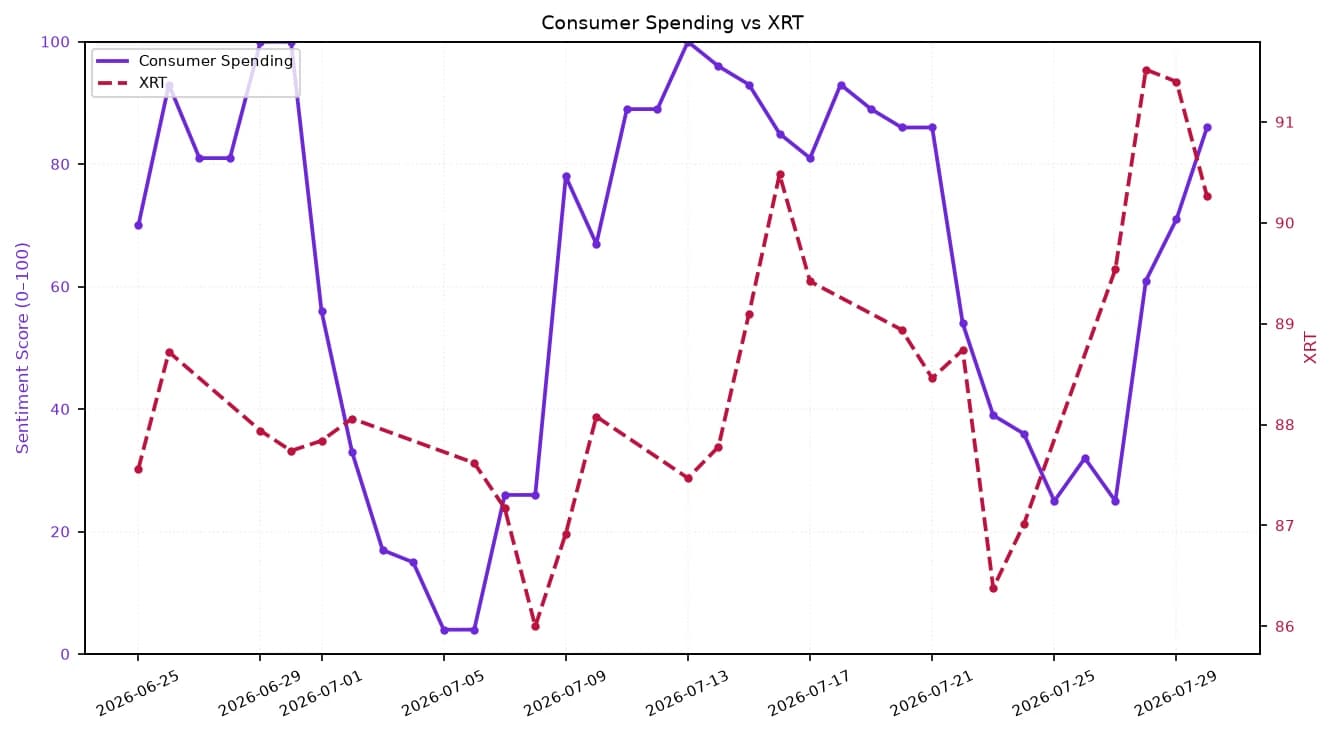
For investors, the bigger takeaway is not the weather itself but the way it can distort the economics of retail. When temperatures soar, shoppers stay home, store visits fall and the critical summer selling season can lose momentum just as merchants are trying to clear inventory. That hurts revenue quality, compresses margins and raises the value of retail models that can shift demand online or manage inventory quickly.
Sentiment IndicatorsⓘProprietary · adalytica.com · July 30, 2026
This is a snapshot — live sentiment, awareness and momentum for 130+ markets update continuously in the dashboard.Open AlphaPulse
The immediate pressure lands unevenly across the sector. Brick-and-mortar chains with dense store networks are most exposed when heatwaves empty high streets and shopping centers. More flexible operators, including off-price chains and e-commerce-heavy retailers, are better positioned because they can lean on discounted inventory and digital channels when traffic weakens. That is part of why investors have long rewarded retailers with strong inventory control and broad geographic reach.
The market backdrop also matters. Shares in the SPDR S&P Retail ETF, tracked by the ticker XRT, have been choppy but recently held near $90.26, with the 50-day moving average at $86.35 and the 200-day moving average at $84.73. The latest RSI reading of 57.4 points to a market that is no longer oversold, but not overheated either. In other words, investors are watching for evidence that retail demand can hold up through seasonal and weather-related disruptions.
That is where the longer-term story gets interesting. Heatwaves are not just a temporary inconvenience; they are another reason retailers are being pushed to modernize store hours, staffing and supply chains. The winners will be the businesses that can treat weather shocks as a planning variable rather than a surprise. The losers will be the ones stuck with rigid operating models and narrow margins.
For long-term investors, this is less a reason to avoid retail than a reason to favor the best-run names. Companies with disciplined inventory management, omnichannel reach and the ability to adapt hours quickly should prove more resilient as climate volatility becomes part of the retail playbook. In a sector where small operating changes can have an outsized effect on profits, adaptability is worth owning.
| Entity | Gains | Losses |
|---|---|---|
| Flexible retailers | ▲Better traffic management | ▼Less rigid routines |
| Brick-and-mortar chains | ▲Potential local policy relief | ▼Lower footfall in heat |
| Online retailers | ▲Demand shifts to digital | ▼Fewer in-store sales |
| Retail investors in resilient operators | ▲Stronger margins over time | ▼Exposure to weather-hit chains |