A persistently weak yen is emerging as Japan’s most dangerous macro vulnerability, squeezing consumers, inflating import costs and forcing policymakers to choose between currency defense and economic support.
Yen Weakness Raises Japan Policy Risks
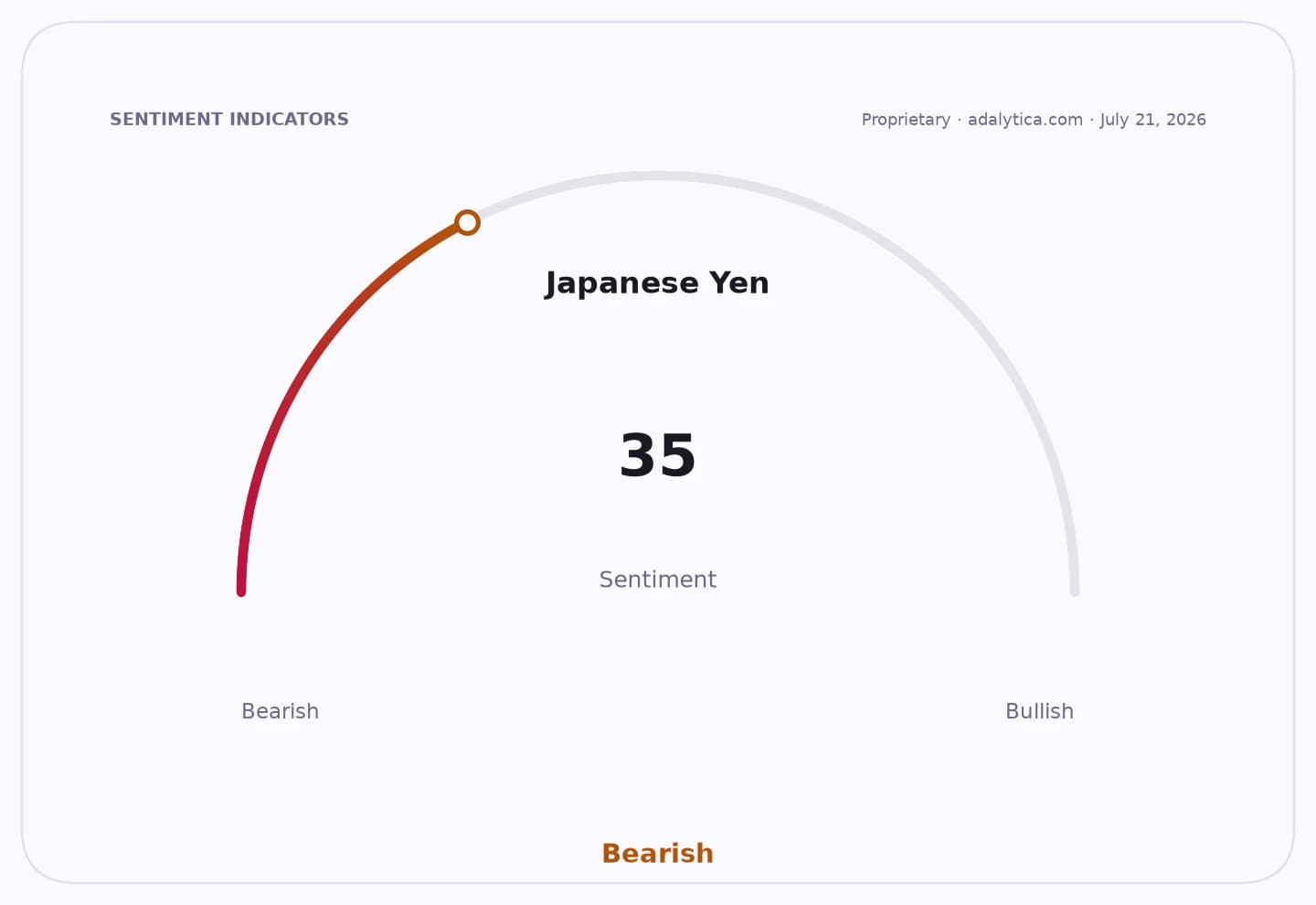
That is the message investors should take from Goldman Sachs COO’s warning, which lands as the dollar-yen rate hovers near 162.5, close to recent highs and well above its 50-day and 200-day moving averages. The move is not just a foreign-exchange story; it is a pressure test for Japan’s entire policy mix, from inflation management to corporate earnings and capital flows.
Sentiment IndicatorsⓘProprietary · adalytica.com · July 21, 2026
This is a snapshot — live sentiment, awareness and momentum for 130+ markets update continuously in the dashboard.Open AlphaPulse
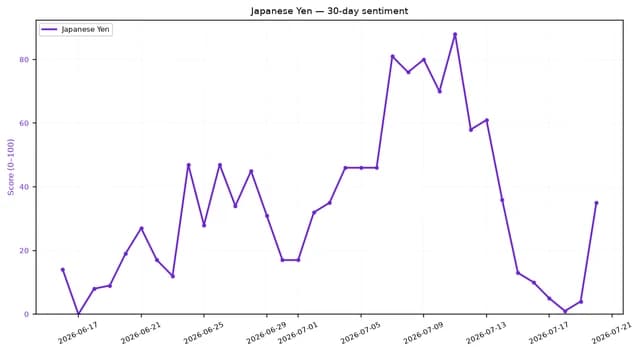
For Tokyo, the problem is that a cheap yen acts like a tax on households and a boost to imported inflation at the same time that wage growth remains uneven. It also raises the cost of energy, food and raw materials, which feeds directly into consumer prices and complicates the Bank of Japan’s path after years of ultra-loose policy. Government warnings about “decisive action” have so far not stopped the slide, underscoring how little room officials have if the market keeps selling the currency.
The market is already signaling that tension. Dollar-yen has climbed steadily from around 147 in late August to 162.5, while the yen ETF FXY has slipped to about 56.5 and remains below both its 50-day and 200-day moving averages. Japanese equities, meanwhile, have shown the mixed effect of the currency move: the EWJ ETF is still up strongly over the year, but it has lost momentum in recent sessions as the yen’s decline raises the risk of imported inflation and intervention.
The bigger economic danger is second-order damage. A weak yen can help exporters in the near term, but it also discourages outbound spending, hurts real household incomes and amplifies volatility in domestic rates and bond markets. That is why the issue matters so much for investors: if the BOJ is forced into a more hawkish response to stabilize the currency, Japanese government bond yields could rise further, pressuring duration-sensitive assets and challenging the trade that has benefited from cheap funding and a weaker yen.
Goldman’s warning should therefore be read as a signal that the market is underestimating the policy constraint now facing Japan. The BOJ cannot ignore a currency that keeps weakening into a backdrop of higher U.S. yields and renewed dollar strength, but tightening too quickly risks slowing an economy still dependent on fragile domestic demand. That policy trap is exactly why the yen remains one of the most important macro trades in global markets.
For investors, the asymmetric opportunity is to position for volatility rather than complacency. Currency hedges, beneficiaries of higher Japanese rates, and selective exporters with genuine pricing power remain the cleaner ways to play the setup than betting on a one-way yen recovery. If the BOJ finally responds more forcefully, the move could reprice Japanese assets quickly — and the market is still not fully prepared for that catalyst.
| Entity | Gains | Losses |
|---|---|---|
| Japanese exporters | ▲Stronger overseas revenue translation | ▼Higher import and hedging costs |
| Japanese households | ▲None | ▼Higher prices, weaker real wages |
| Bank of Japan | ▲Policy credibility if it acts | ▼Room for easy policy |
| Yen bears / FX sellers | ▲Trend profits while yen weakens | ▼Squeeze risk from intervention |