AEON REIT Investment Corp. has locked in JPY 24.3 billion of refinancing and paired it with interest-rate swaps, a move that should help steady cash flows at a time when borrowing costs are still volatile and investors are paying closer attention to REIT balance sheets.
AEON REIT locks in JPY 24.3 billion refinancing

That matters because real estate investment trusts live and die by the spread between rental income and financing costs. By refinancing debt that comes due on Oct. 20, 2026, and using cash on hand to redeem another JPY 1.0 billion of investment corporation bonds, AEON REIT is taking pressure off its near-term maturity wall while reducing exposure to further rate increases. In a market where commercial property valuations and dividend sustainability are heavily influenced by financing costs, that is exactly the kind of housekeeping long-term income investors want to see.
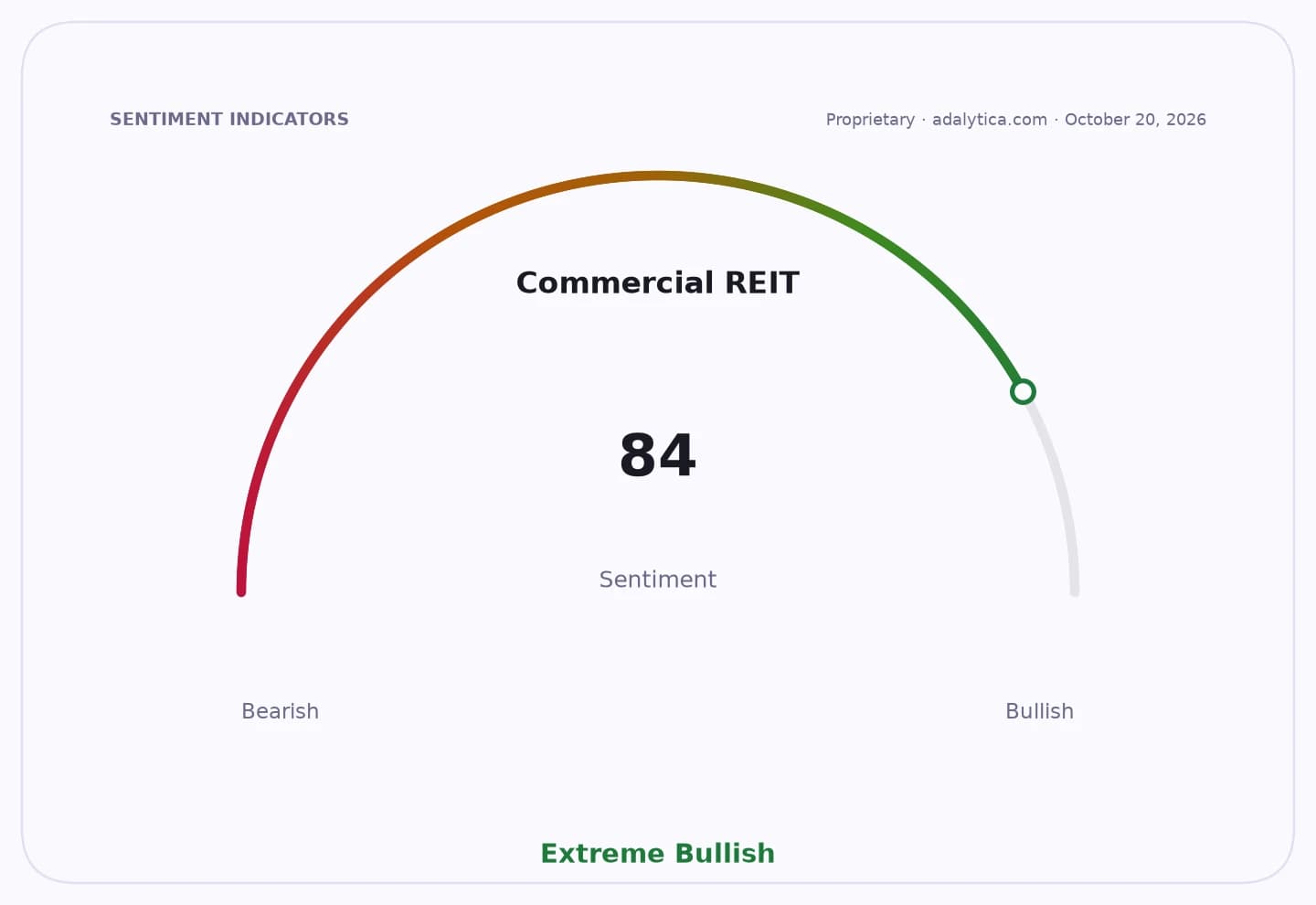
Sentiment IndicatorsⓘProprietary · adalytica.com · October 19, 2026
This is a snapshot — live sentiment, awareness and momentum for 130+ markets update continuously in the dashboard.Open AlphaPulse
The refinancing package is spread across eight unsecured, unguaranteed term loans, mostly arranged by Mizuho Bank, Sumitomo Mitsui Banking Corp. and Sumitomo Mitsui Trust Bank. The borrowings run from two to eight years, with spreads ranging from 22 basis points to 63 basis points over three-month Japanese yen TIBOR. AEON REIT also said it will use interest-rate swaps on several of the longer-dated loans, effectively turning floating-rate obligations into fixed-rate payments.
That hedge is important in Japan, where rate expectations have been changing and debt markets remain sensitive to central bank signals. Even modest increases in funding costs can erode distributable income for property trusts, especially those with multiple maturities clustered over time. Swapping floating for fixed gives AEON REIT more predictability, and predictability is one of the most valuable assets for a REIT that markets itself on stable payouts.
For investors, the message is straightforward: AEON REIT is not reaching for growth, it is defending the quality of its cash flow. That is usually the right priority for a mature REIT. If management can keep financing costs contained while preserving occupancy and rental income, the trust’s dividend profile should remain more resilient through the next rate cycle.
The shares have been trading with the broader commercial property mood, and the sector has benefited as investors search for yield in a higher-rate world. But the real test for any REIT is whether it can refinance on reasonable terms without sacrificing future distributions. AEON REIT’s latest move suggests it can, at least for now.
For long-term investors, this is a reminder to focus less on the headline size of a refinancing and more on what it does to the balance sheet. A REIT that stretches maturities and hedges its debt is usually building a better foundation for compounding. AEON REIT’s latest financing is worth watching, not because it is dramatic, but because it is the kind of disciplined move that supports durable income over years, not quarters.
| Entity | Gains | Losses |
|---|---|---|
| AEON REIT | ▲More stable funding | ▼Rate volatility risk |
| Unitholders | ▲Better dividend visibility | ▼Less upside from falling rates |
| Lenders | ▲New secured relationships | ▼Limited spread upside |
| Floating-rate borrowers | ▲No immediate benefit | ▼Higher interest burden |